
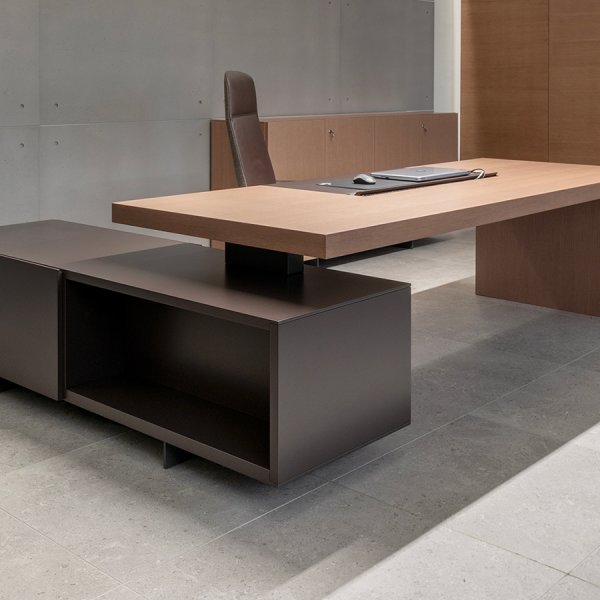
Asymmetrical
$ 43,695
There is a moment in the search for an executive desk when you stop comparing and start deciding. It happens when you find a piece that answers the question you were actually asking — not "which desk fits the room" but "which desk fits the person who sits behind it." Italian executive desks — and their modern and designer interpretations — made by producers who have been designing for C-suites, law firm partners and founder-led companies for decades answer that question differently than contract furniture does. The construction is visible in the details: top thickness that reads as substantial from across the room, edge profiles that hold up under the forensic attention of people who notice everything, drawer mechanisms that communicate quality every time they open. These are not marketing specifications. They are the things that make a desk worth keeping for twenty years instead of replacing at the next office redesign.
Italian-made executive desks, specified and delivered across the United States and Canada.
La Mercanti supplies executive desks directly from Italy's leading producers — programmes built as complete systems — Jera by Las Mobili, the most requested executive desk on this site, is the reference — with coordinated storage, credenzas and conference pieces that share the same design language as the primary desk. Solid timber tops, leather writing surfaces, lacquered finishes, signed designer collections: configured to your dimensions and delivered with full installation support. The difference between a desk you chose and a desk you settled for shows up every day — in how the room reads, in how visitors respond, and in whether you're still satisfied with the decision in year ten. Samples and technical specifications available on request. Let's talk.
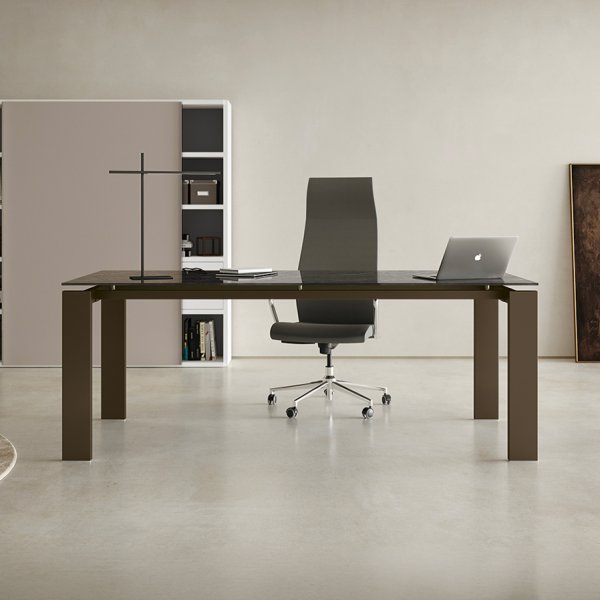
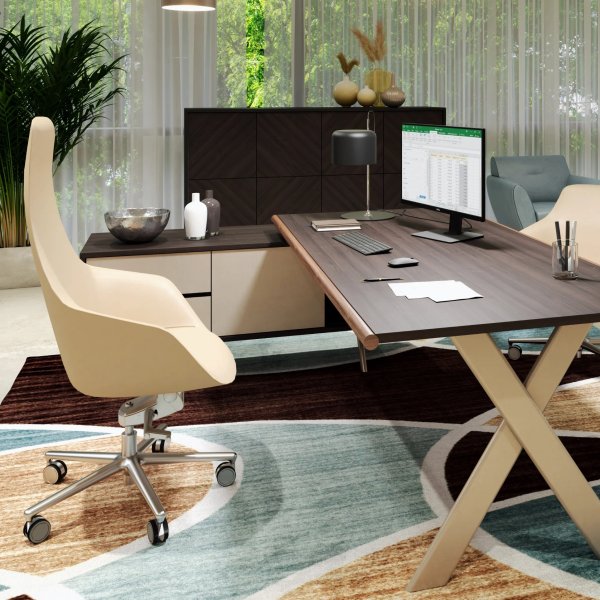
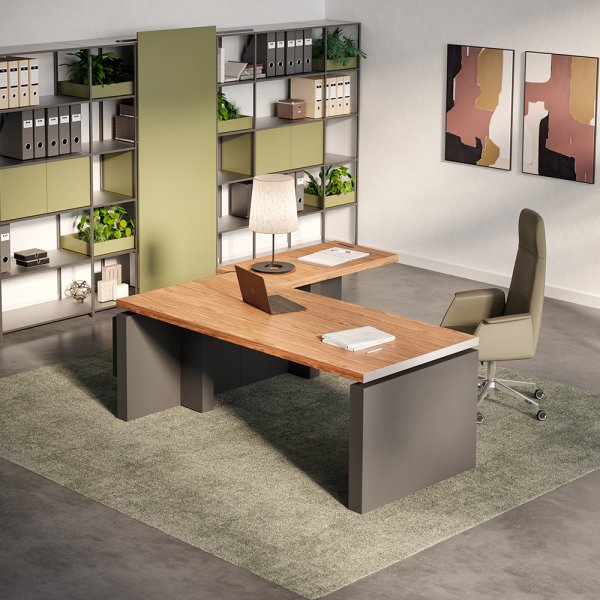
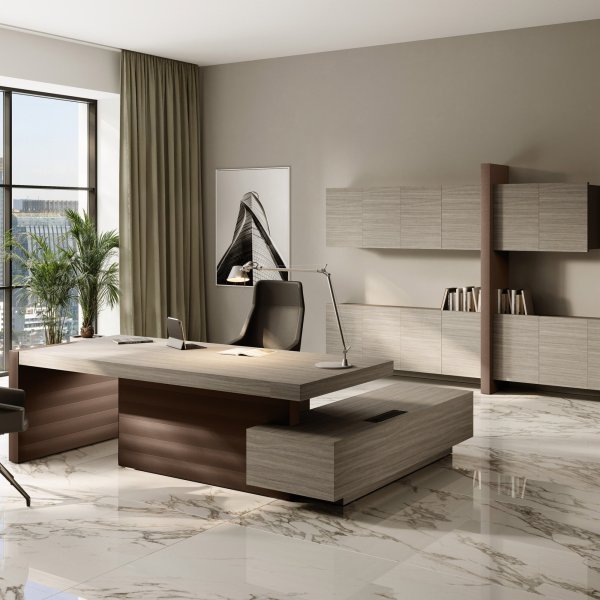
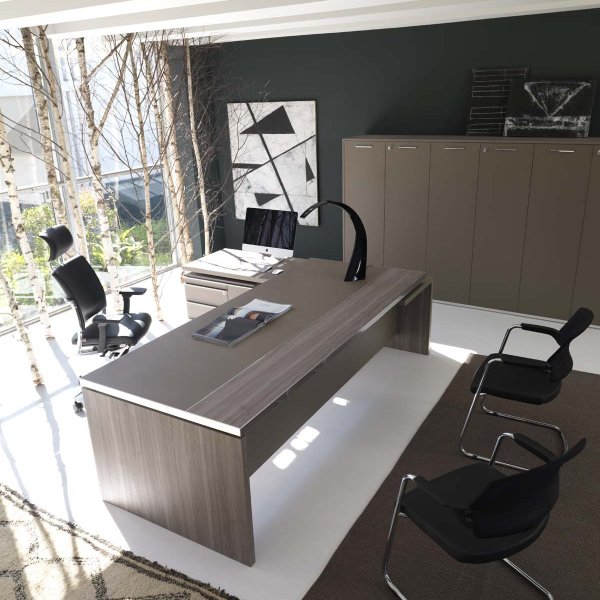
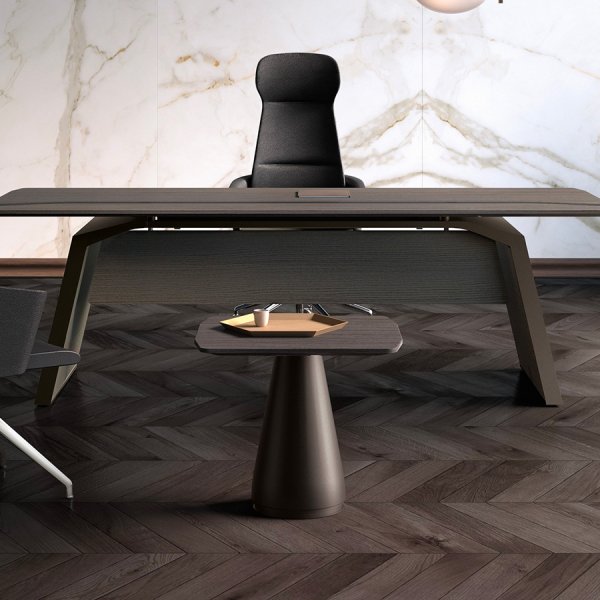
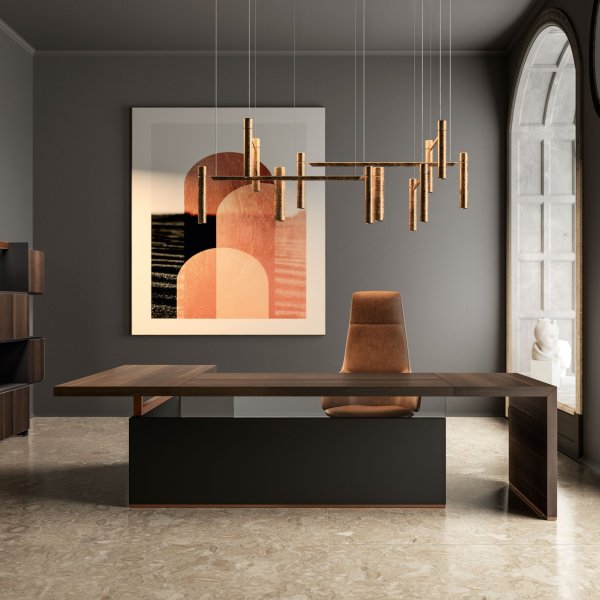
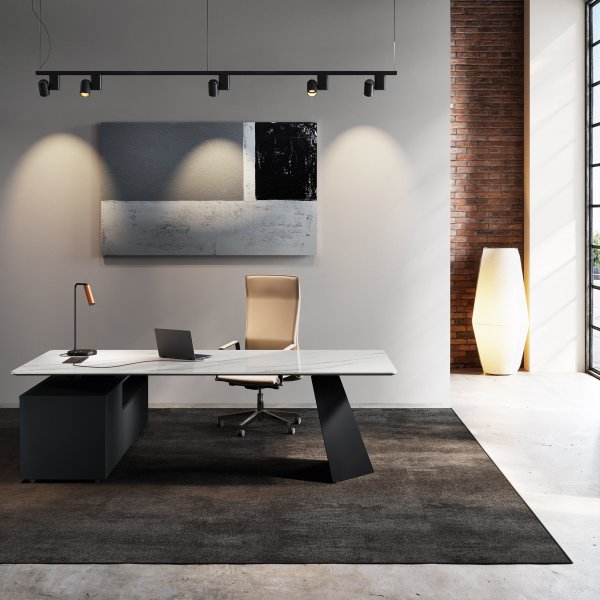
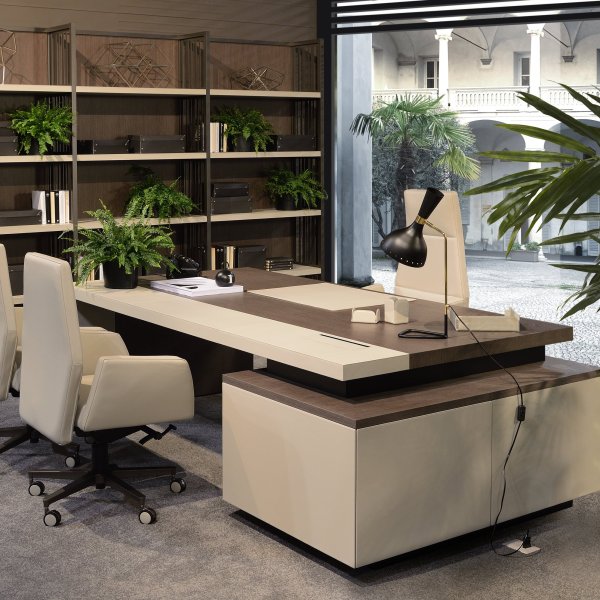
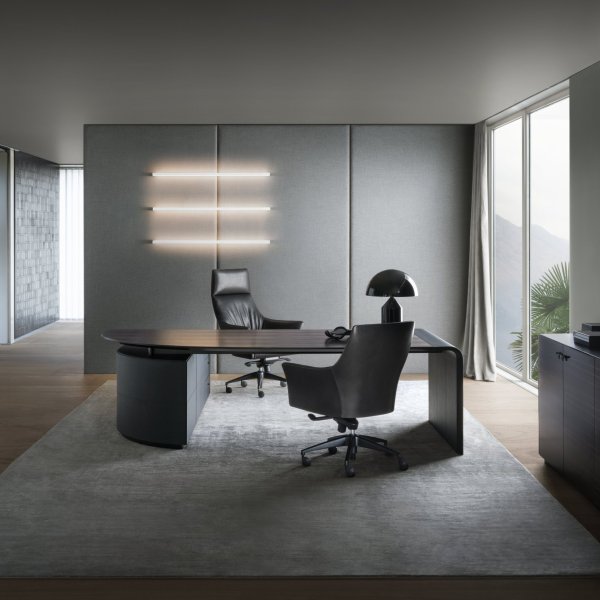
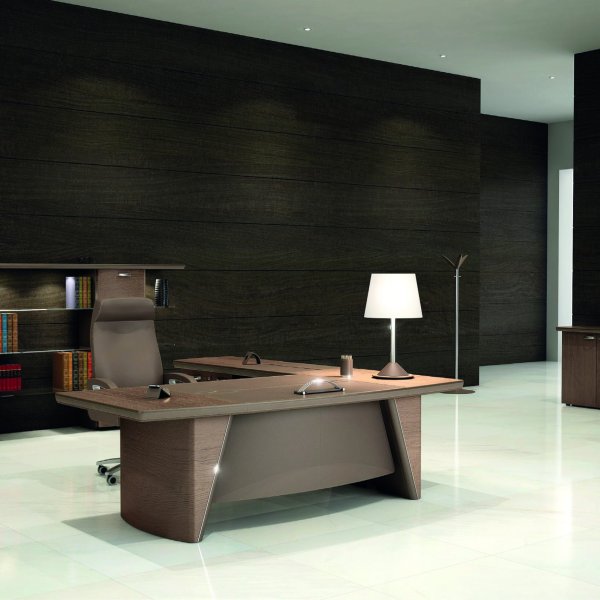
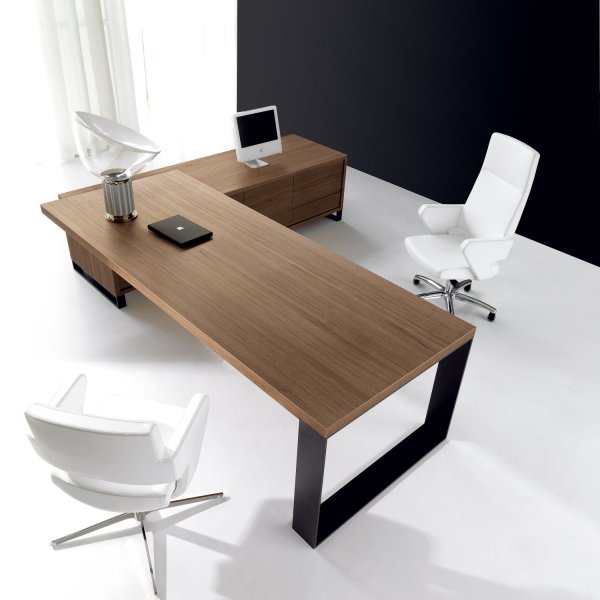
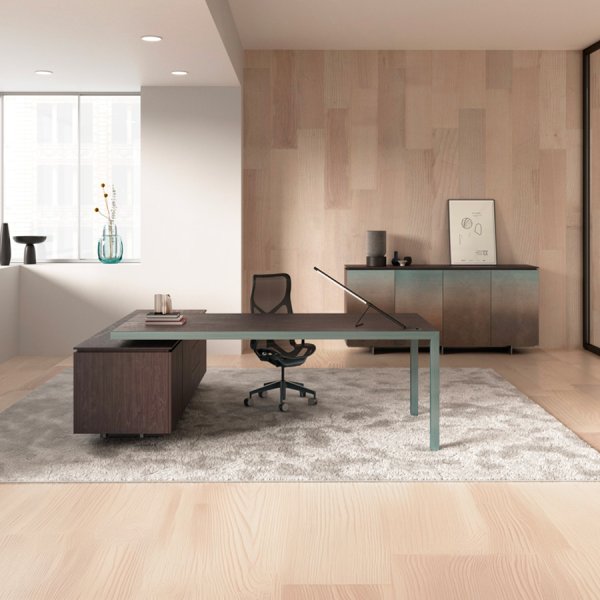
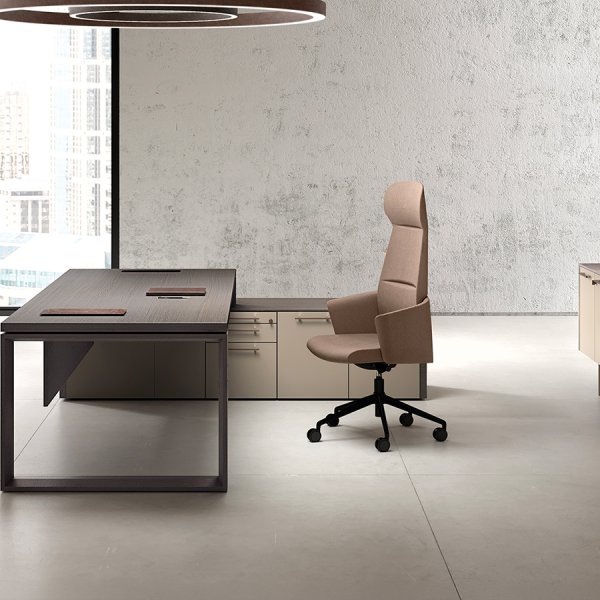
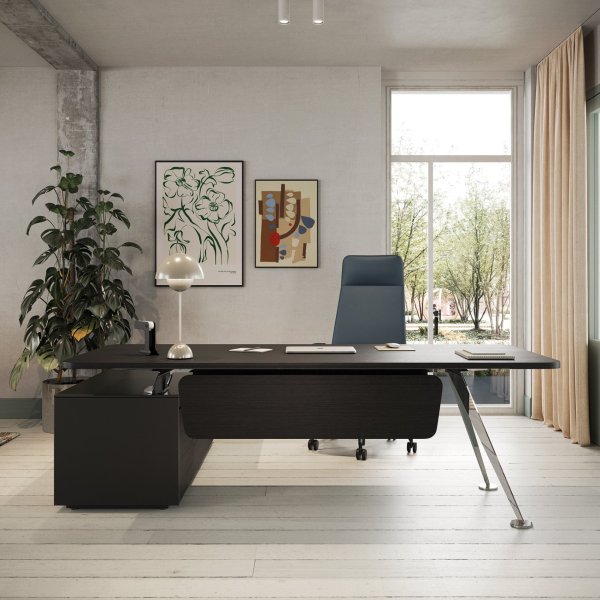
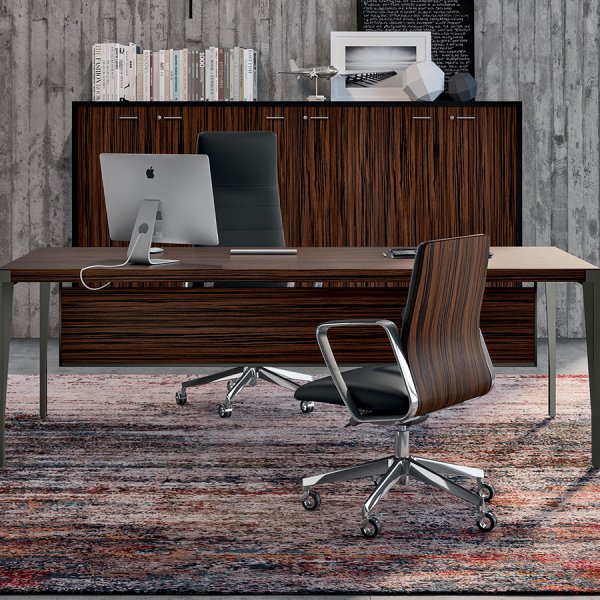
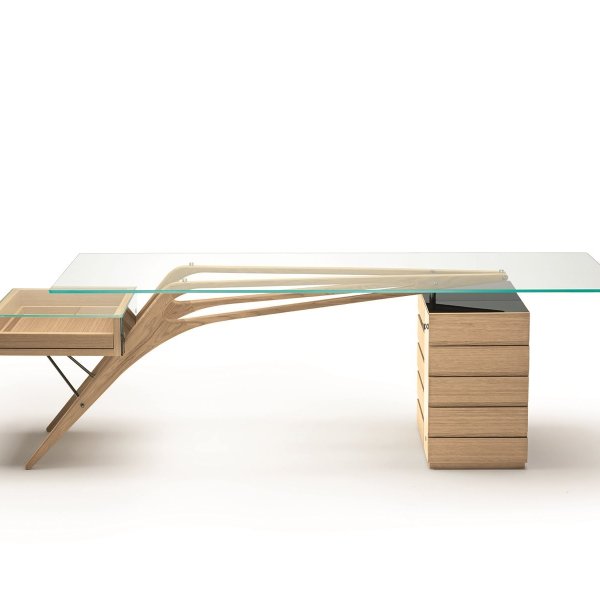
In Italian furniture production, "signed design" means the piece was designed by a named designer or design studio under a formal collaboration with the manufacturer — the design is attributable, documented, and in most cases protected. The practical implications for a buyer are three. First, design coherence: a signed programme has been developed as a complete system by a single design intelligence, which means the desk, the credenza, the storage tower and the conference table within the office share proportional logic, detail language and finish families that were resolved together rather than assembled from separate decisions. Second, production consistency: signed programmes are manufactured to the designer's specification, which is maintained across production runs. A desk specified today and a matching credenza ordered eighteen months later will be the same piece. Third, resale and residual value: signed Italian furniture from established designers holds residual value in a way that contract furniture does not. A Tecno desk designed by Foster + Partners or a Unifor system designed by Richard Sapper is a documented cultural object with a secondary market. Whether that matters to a specific buyer depends on their timeline and context — but it is a real distinction that contract furniture cannot replicate.
The specification changes, and the differences are specific enough that treating them as the same purchase is usually a mistake. Corporate executive office: the desk is specified for a space that other people see and judge — clients, employees, board members, candidates. The material register should hold up under business-register scrutiny: fine-grain timber, coordinated finish families, proportions calibrated to a room that is also used for meetings. The desk is a professional object first. Home executive office: the desk is specified for a space where the occupant spends more hours but receives fewer visitors. The material register can reflect personal preference more directly — a reclaimed timber top, a lacquer color that would read as eccentric in a Midtown office, a configuration optimized for a single-person workflow rather than for the impression it makes on entry. The desk is a personal object first. The practical implication: founders and CEOs who are furnishing both spaces often find that specifying the home office desk first — because it's the more personally expressive decision — clarifies what they actually want from the corporate piece, which is usually its more restrained counterpart. La Mercanti regularly works with principals who are specifying both simultaneously, and the design conversation between the two pieces is often the most interesting part of the brief.
The material choice for an executive desk surface is a maintenance contract as much as an aesthetic one. Each material has a specific performance profile that a buyer should understand before specifying:
Yes — and the level of customization available is significantly greater than most buyers expect, because Italian manufacturers in this category build to order as standard, not as exception.
What is routinely customizable without design compromise:
What requires more lead time and cost:
The customization question to ask upfront: "What is the minimum order quantity for a custom specification?" For direct importers with manufacturer relationships, the answer is one unit. For catalog resellers, it often isn't.
Nobody tells you these when you're buying furniture. They're the things you figure out after the desk is installed — usually while sitting behind it and wishing you'd known them six months earlier.
Most executive desks get positioned for one of two reasons: the view looks good from that spot, or it's where the previous desk was. Neither is a design decision. The position that actually works is determined by three things in this order: light source (window at your back or ninety degrees to your monitor, never facing you — otherwise you're fighting glare for eight hours a day), door relationship (you should be able to see who enters without turning your head, but not positioned so that every passerby has a direct sightline to your screen), and circulation (enough distance between your desk and the visitor seating that the space doesn't feel interrogatory — minimum five feet between your chair and theirs). Get these three right and the furniture selection almost doesn't matter. Get them wrong and no desk in the world fixes the room.
Walk into your current office and sit in the visitor chair. Stay there for sixty seconds. Look at what your client, your opposing counsel, your new hire, your patient sees from that position. The desk surface they're looking at — is it clear or covered? The materials at their eye level — do they read as considered or assembled? The sight line behind you — is there something worth looking at, or is it a wall with a fire exit sign? Most executives have never done this. The visitor's read of the room is formed in the first three seconds and is almost entirely determined by the quality of the decision-making visible in the space — not the price of the furniture, the coherence of it. A room where every element was chosen in relation to every other element reads as designed. A room where each element was individually good but chosen separately reads as furnished. The difference is the first thing a sophisticated visitor notices and the last thing the occupant sees.
High-gloss lacquer and piano finishes photograph extraordinarily well. They also show every fingerprint, forearm impression and micro-abrasion from daily contact within eighteen months of continuous use. If you work at your desk for six or more hours a day, a high-gloss surface will look maintained only if you clean it consistently — which means every session, not every week. Matte and open-pore finishes — natural timber, textured lacquer, honed stone — absorb the evidence of use and develop character over time. The honest question before any finish selection: are you buying a surface you're going to maintain, or one that maintains itself? Neither answer is wrong. But the answer should be deliberate, made with full knowledge of what the choice actually means at year three and year eight, not just on delivery day.
It is almost never the desk. The piece that most consistently degrades an otherwise well-designed executive office is the guest seating — specifically, guest seating chosen for how it looks rather than how long someone can sit in it comfortably. A client who becomes physically uncomfortable after twenty minutes of a meeting that runs forty-five will not consciously blame the chair. They will experience a subtle urgency to conclude, a mild physical distraction that competes with the conversation, a slight negative association with the meeting they can't quite articulate. Executive guest seating should be comfortable for a forty-five minute meeting. Not hotel-lobby comfortable — task comfortable. Upright enough to feel appropriate, padded enough to feel considered, proportioned to the desk so the sightline between seated occupant and seated visitor is level rather than hierarchical. Test it yourself. Sit in every chair you're specifying for guest positions and time how long it takes before you want to shift position. If the answer is under fifteen minutes, the chair is wrong for the room regardless of how it looks.