
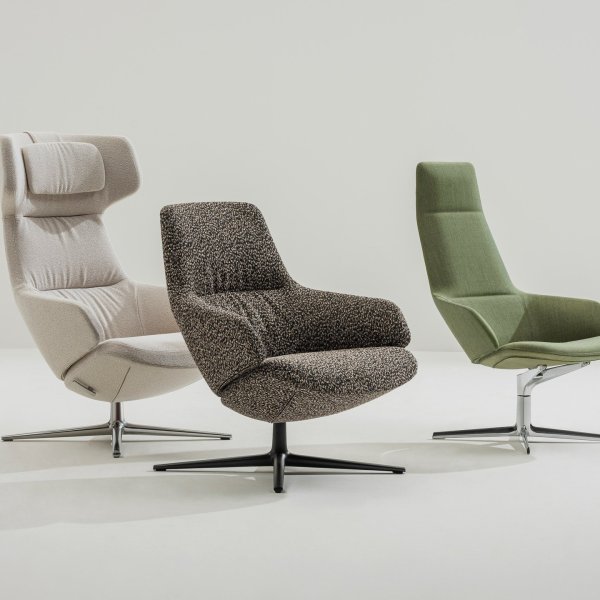
Aston
$ 6,953
The executive office chair is the one piece of furniture in the room that gets used by the person paying for it and judged by everyone else. Buy it as a comfort purchase and you miss half the job; buy it as a status object and it punishes your spine by three o’clock. Italian executive seating is built to answer both at once — the presence that reads from across a corner office, behind the executive desk, and the support that holds through a day of back-to-back calls and signatures.
What you find here is the chair of the person who decides: high-back and mid-back leather programs — Jera Chair by Las Mobili, drawn for the most requested executive desk on this site, is the reference — from producers who have upholstered for C-suites, law firm partners and founder-led companies for decades. The quality lives where you don’t look first — the density of the seat foam, the stitch that stays flat at year eight, the tilt that carries weight without feeling loose. These are working chairs dressed as authority, not thrones that fake it.
La Mercanti specifies and delivers Italian executive chairs across the United States, coordinated with the desk, the conference chairs and the guest seating so the whole office reads as one decision. Samples and material references on request.
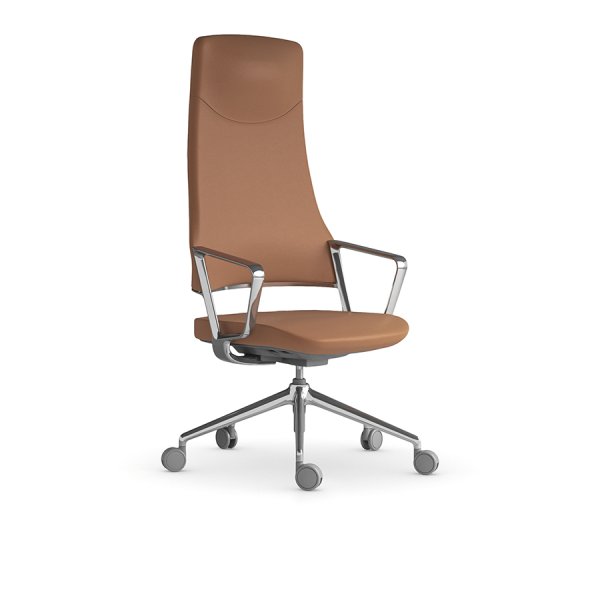
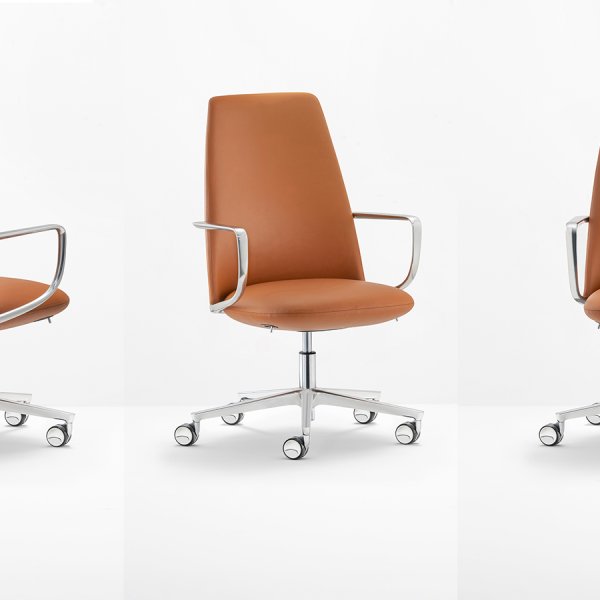
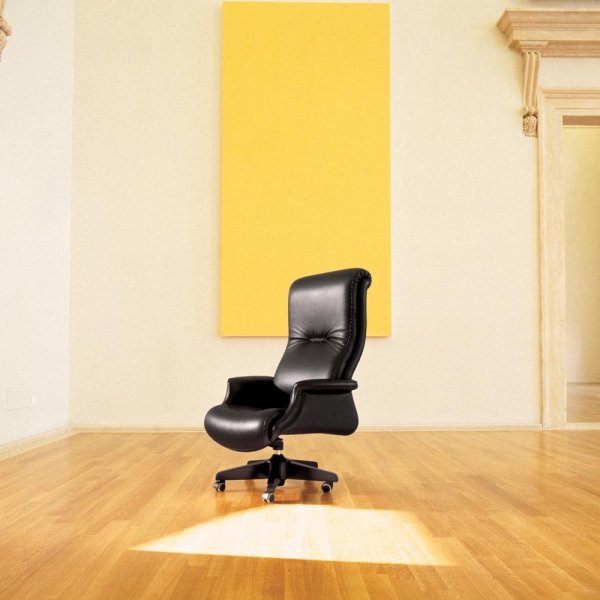
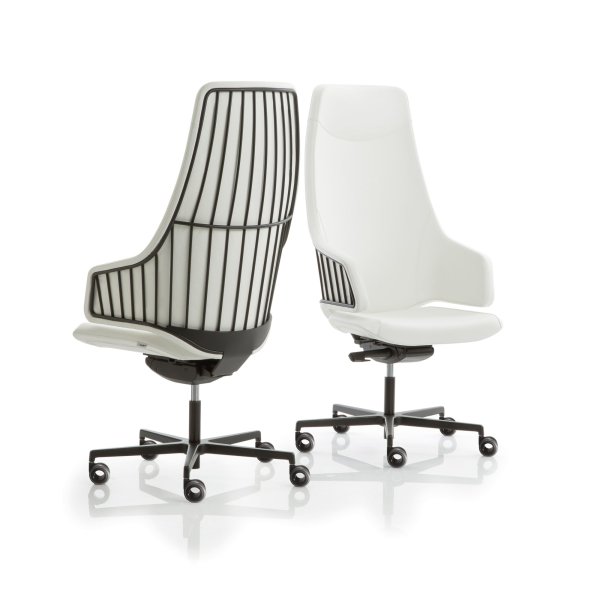
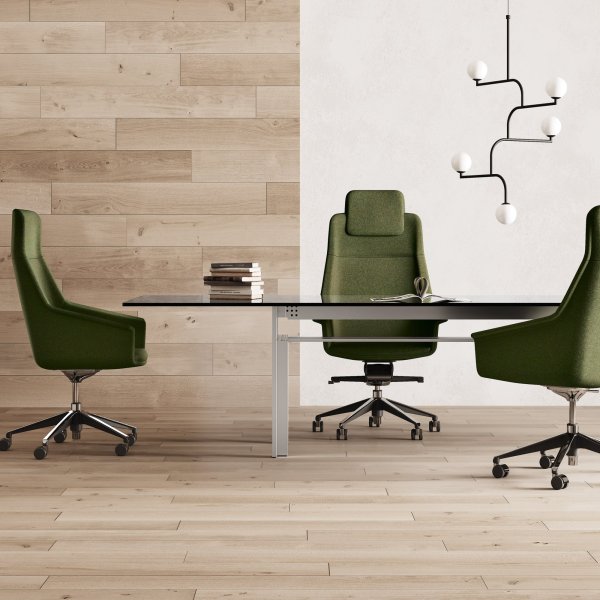
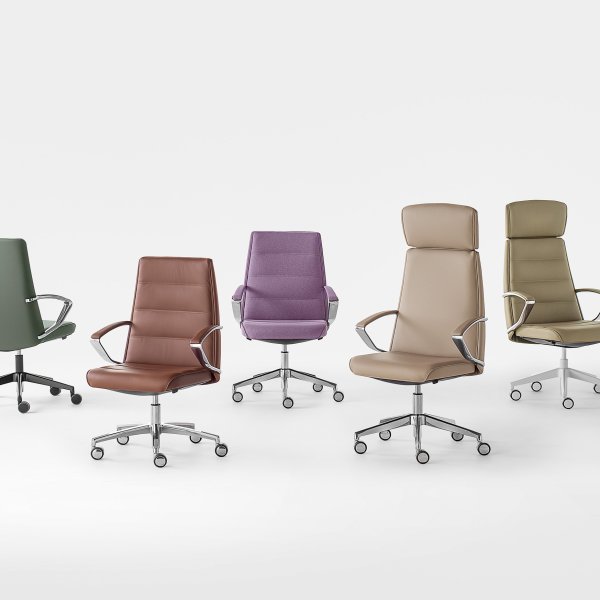
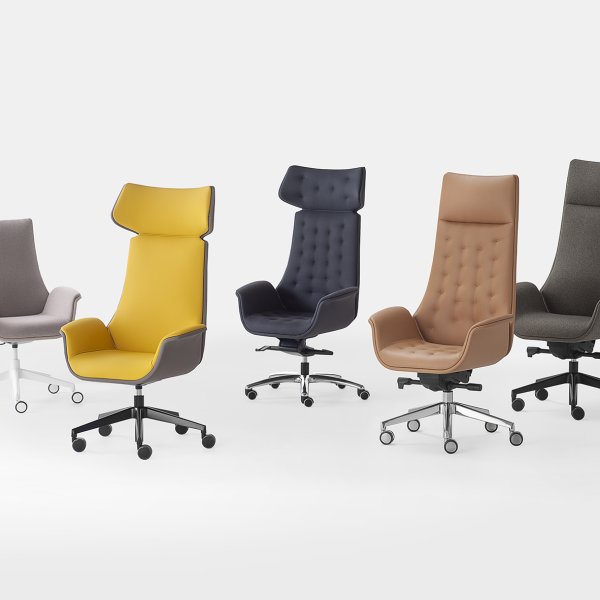
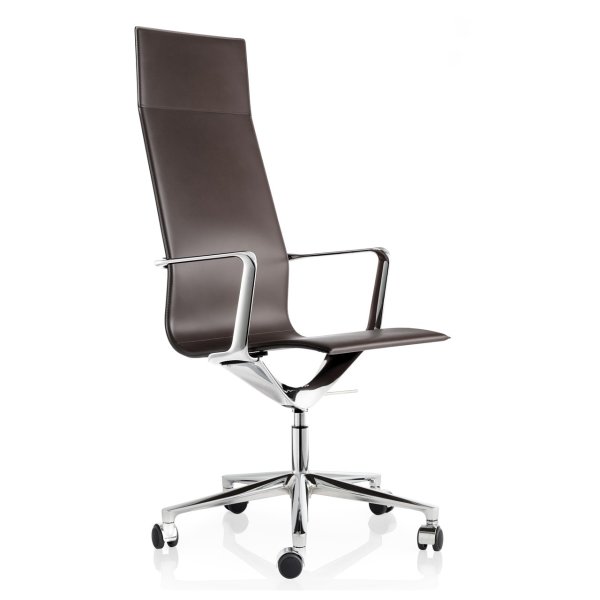
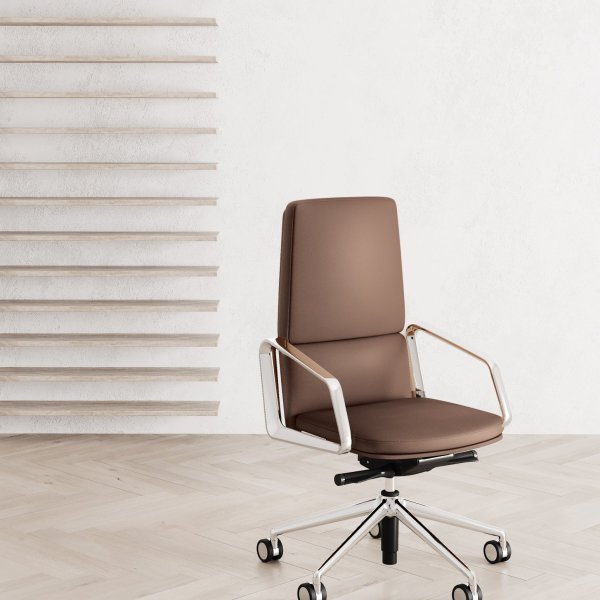
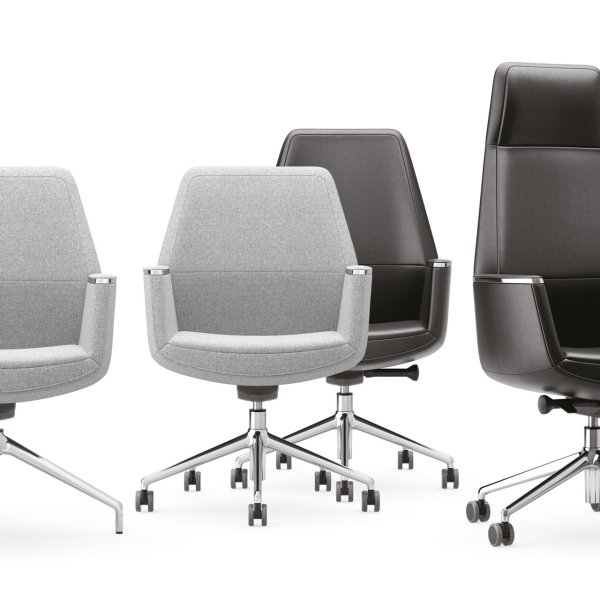
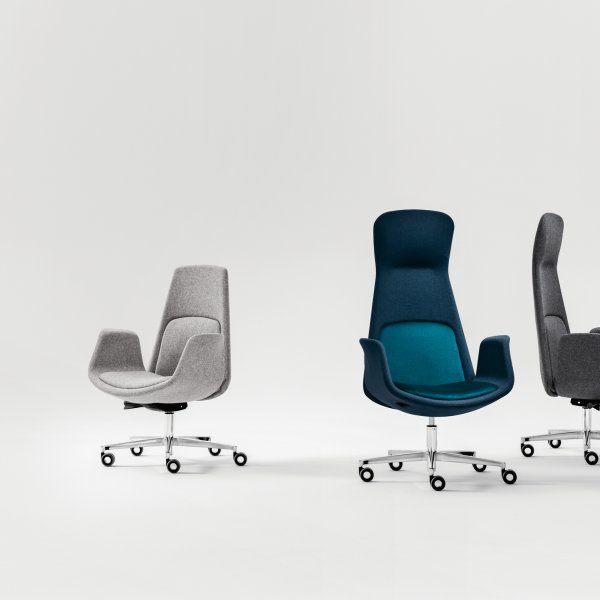
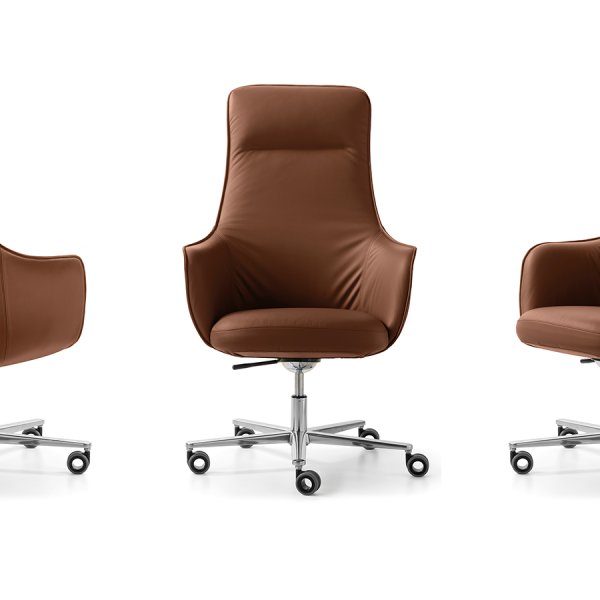
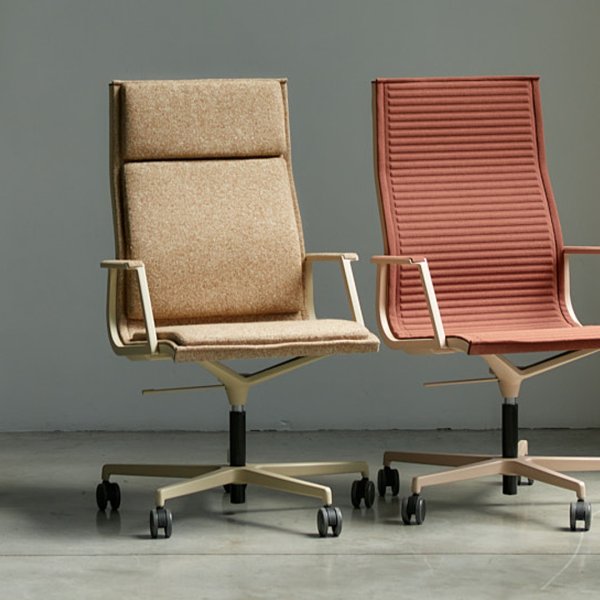
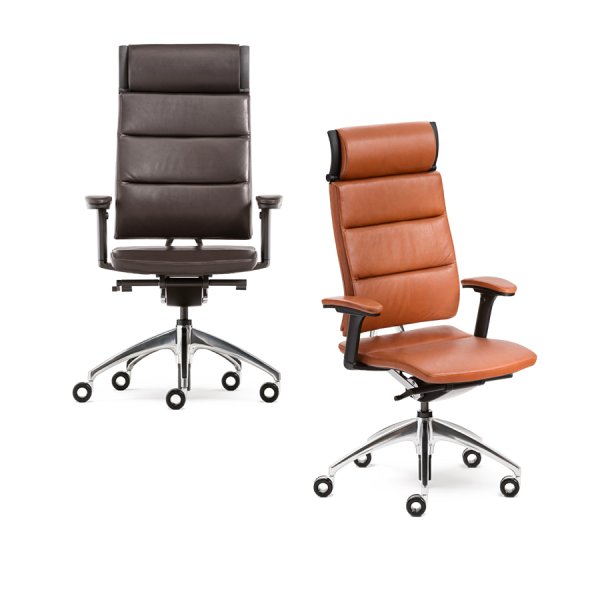
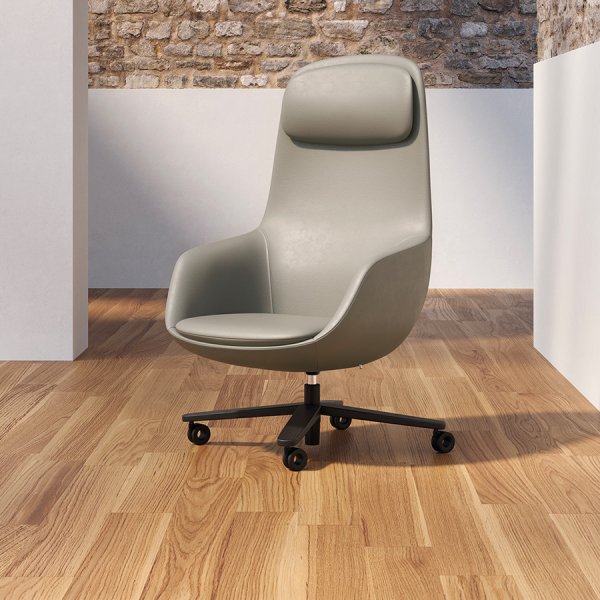
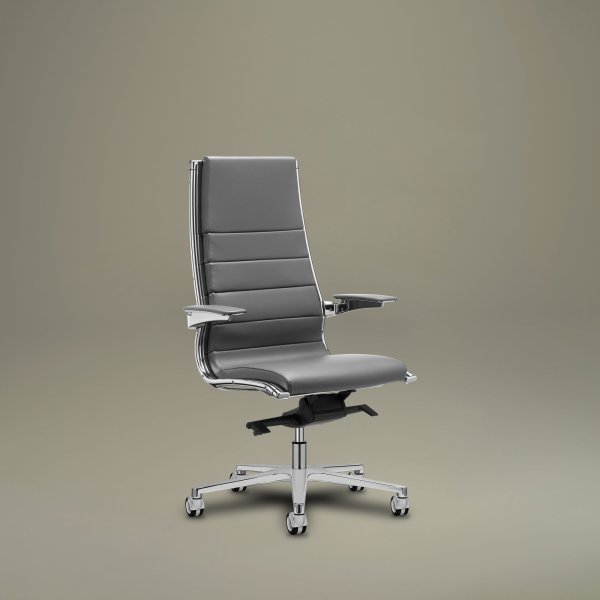
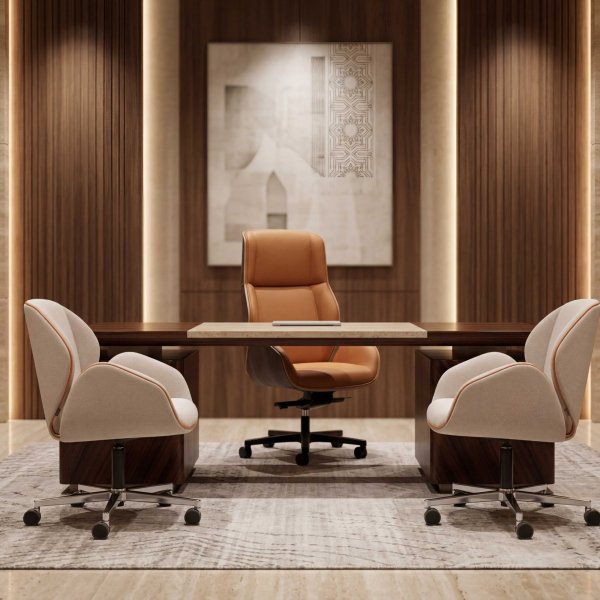
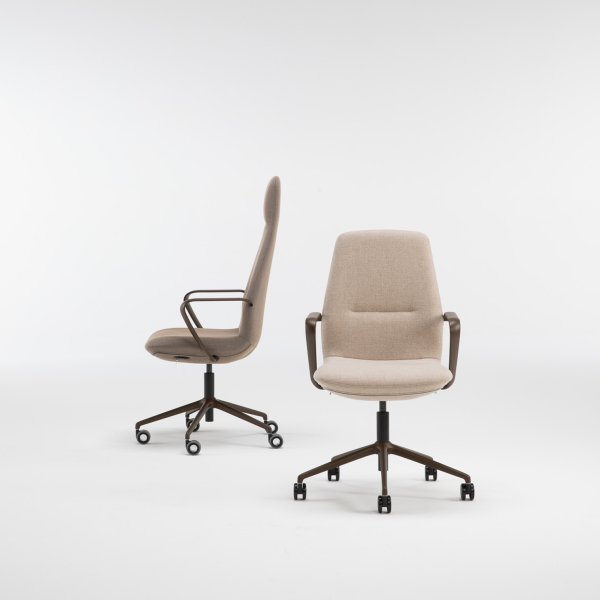
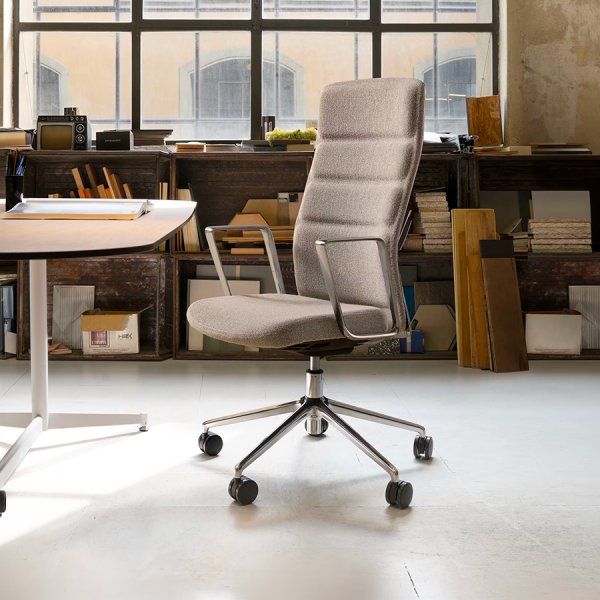
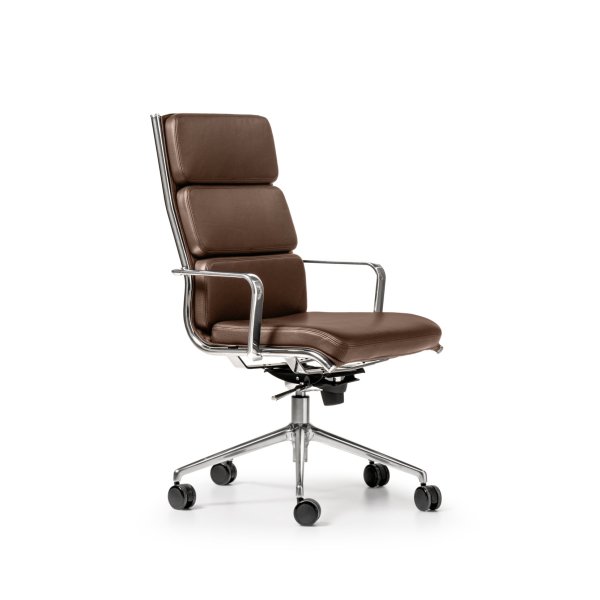
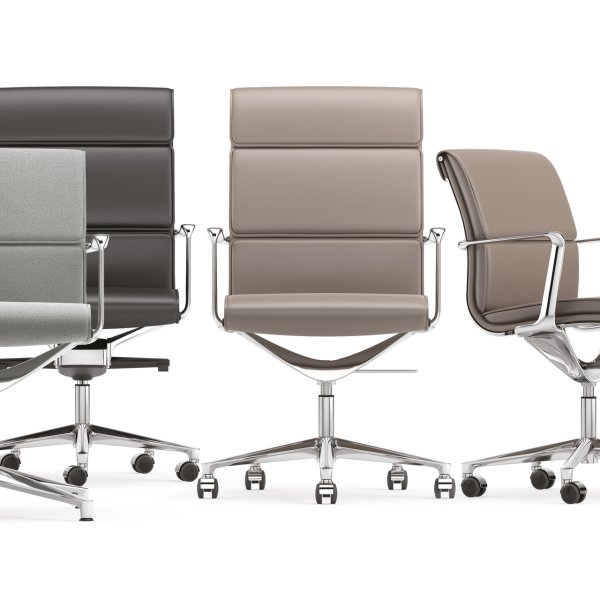
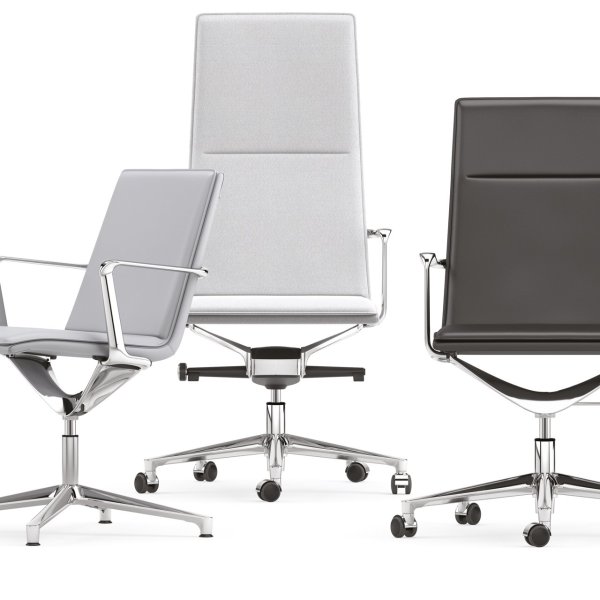
Because you’re paying for two things the task chair doesn’t carry: representation, and material grade that ages in public. A task chair is judged by the person in it; an executive chair is judged by everyone who walks in and sits across from it. That shifts the spend from mechanism to surface — full-grain leather, hand-finished frames, proportions calibrated to a room that doubles as a meeting space. The engineering underneath still has to be real, because a chair that looks like leadership and collapses into a slouch by mid-afternoon fails the actual job. The honest way to read the price: separate what you’re paying for the mechanism from what you’re paying for the material and the design. On a genuine executive program, most of the premium sits in the leather, the frame and the finish, and those are the parts a visitor registers. Pay for the representation without the engineering and you own a photo prop. Pay for the engineering without the representation and you’ve bought a task chair at an executive price.
Full-grain, without much argument, if the chair lives in a client-facing office. Full-grain keeps the hide’s natural surface, so it develops patina instead of wearing through; it’s the one that looks better used than new. Top-grain has been sanded and refinished for uniformity — cleaner out of the box, but it holds less character and tends to show contact wear at the arms and front edge over years of daily use. Bonded leather isn’t leather in the sense that matters here: it’s ground hide reconstituted on a backing, and in a chair sat in every day it cracks and peels, usually starting where the seat meets the back. For a corner office or a partner’s office, specify full-grain and accept that it will look lived-in; that’s the point of it. For a chair that’s mostly seen and rarely used, top-grain is defensible. Bonded belongs nowhere in an executive spec, regardless of how it photographs. Ask the supplier to name the leather grade in writing. The ones who lead with 'genuine leather' and won’t get more specific are telling you something.
It’s moved on, and the market hasn’t fully caught up. The tall winged high-back read as power in an era when the executive was mostly seated and rarely on camera. Today the same person is on video for a large share of the day, and an oversized back frames badly in a webcam — it swallows the shoulders and reads as a throne, which is not the signal most credible leaders want in 2026. The contemporary executive chair has come down a size: a mid-to-high back with a clean profile, quality leather, and a proportion that sits in the room rather than dominating it. Authority now reads through restraint and material, not scale. There’s still a place for the full high-back, a private office that never sees a camera, a traditional firm where continuity is the brand. But if the chair spends real time in frame, size it for the shoulders and the lens, not for the 1985 boardroom. The oversized executive throne is the fastest way to date an otherwise current office.
Related, never matched. When the executive chair and the guest chairs arrive as an obvious catalog set, the room reads as furnished from one page rather than designed — and at this level that’s a downgrade. The stronger approach is a shared language with a clear hierarchy: the same leather family or the same frame finish running through both, but the executive chair carrying more presence while the guest chairs sit deliberately lighter, lower, easier to rise from. The visitor should read the connection without being able to name it. A working rule for a US corner office: let the desk be the anchor and specify the chairs in relation to it, not to each other. The executive chair coordinates with the desk’s material; the guest chairs coordinate with the executive chair, one step down. Get the hierarchy right and the room looks composed. Match everything and it looks like a showroom vignette someone bought whole.
Most executive chairs get chosen from a photograph and a two-minute sit that tells you almost nothing. The chair spends its life doing four things: holding a person through long calls, framing them on camera, receiving a visitor's read from across the desk, and standing empty in a room that gets judged either way. Test it against those four, in that order, and you'll learn in ten minutes what a year of ownership would otherwise teach you the hard way.
In a showroom people perch on the front edge, rock the tilt, and stand up impressed. That’s not how the chair gets used. Sit all the way back, feet flat, and hold the position you’d be in on a forty-minute call — slightly reclined, forearms supported. Then stay there. A good executive chair disappears; you stop noticing it. A chair that’s all surface starts announcing itself at minute five: the seat edge presses behind the knee, the back pushes your shoulders forward, the leather that looked rich feels hot and flat.
Pay attention to the recline specifically. A representation chair with a stiff, decorative back that won’t move is a chair you’ll fight through every long meeting; the one you want lets you shift, lean and settle without thinking, then returns you upright without a struggle. If you can’t get a physical sample, that’s the single strongest reason to request one before committing a whole floor of leadership offices. The chair that photographs best and the chair that holds a person through a real day are not always the same object. Give the sample a week in the actual office if you can, rather than an afternoon in a conference room, because the seat that felt right at two on a Tuesday sometimes reads differently by Friday, and a week of real use surfaces the pressure point a short trial hides.
The executive chair is now a video-conferencing prop whether anyone planned it or not. Before you commit, photograph a person of average build seated in it, framed the way a webcam frames: head and shoulders, chair back rising behind. An oversized high-back swallows the shoulders and reads as a throne on screen, and a wing detail that looks refined in the room can turn into two dark shapes flanking the head. The proportion that works on camera is a back that stops near shoulder height and a profile clean enough that the person, not the furniture, holds the frame.
Check the leather in the office’s own lighting too. High-gloss finishes and very dark leathers can blow out or vanish under the LED lighting most US offices run. If the chair will spend hours in frame during pitches, board updates and client calls, it has earned a camera test as much as a sit test. A chair that makes your CEO look smaller on a screen is doing the exact opposite of its job, and no one notices until the recordings are already out there. One more check that costs nothing: sit in it wearing a jacket, the way an executive on a call actually dresses, because a chair sized for shirtsleeves can bind at the shoulders once a blazer is in the equation.
Every executive chair is seen more than it’s sat in. Walk to the visitor side of the desk, sit down, and look at the empty chair the way a client, a candidate or opposing counsel would. From that angle the details that matter are the ones at eye level and above: the stitch line across the back, the way the leather catches light, whether the frame reads as considered or generic. This is also where mismatches surface — a chair whose material fights the desk, or whose scale is wrong for the room, is obvious from the guest seat and invisible from the executive one.
Ask a colleague to sit in it while you look. A chair that makes an ordinary person look composed and in command is doing real work; one that makes them look perched or swallowed is a liability in a room where first impressions are the business. The occupant is the last person who can judge this, because they never see themselves in it. Trust the view from the guest chair over the feel from behind the desk when the two disagree. If several leaders are being outfitted at once, run this read from the guest chair in each office rather than approving one chair for the whole floor, since the same seat can look like authority in a large corner office and like bulk in a smaller partner’s room.
Once the chair passes the sit, the camera and the visitor’s read, and only then, get to the parts that decide whether it’s still worth owning in year eight. Ask, in writing, whether the chair is rated for daily commercial use, what the warranty covers specifically on the tilt mechanism and the gas lift, and how a repair is handled once the chair is installed in your building. For imported Italian seating, confirm the leather grade by name and ask whether US-standard casters and a cylinder are fitted for American floors and heights. Ask, too, how a failed mechanism is handled a year in: whether parts ship from Italy or from US stock, and whether the chair can be serviced on site or has to leave the building, because a week without the CEO’s chair is its own small problem.
None of this shows in the showroom; all of it shows the first time something needs service. La Mercanti supplies this documentation with the sample rather than after the order, which is the sequence you want — the specification questions answered before the decision, not discovered after it. A chair that clears all four passes is one you’ll keep through two office redesigns instead of replacing at the next, which is the only cost comparison that ends up mattering.