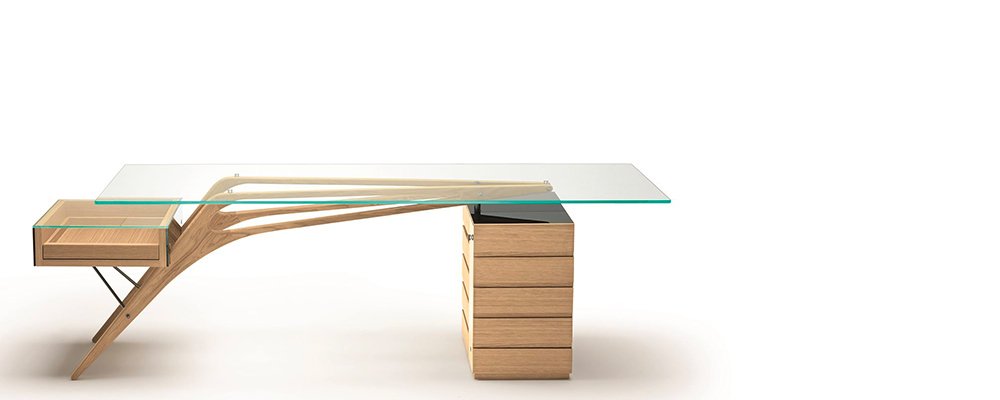
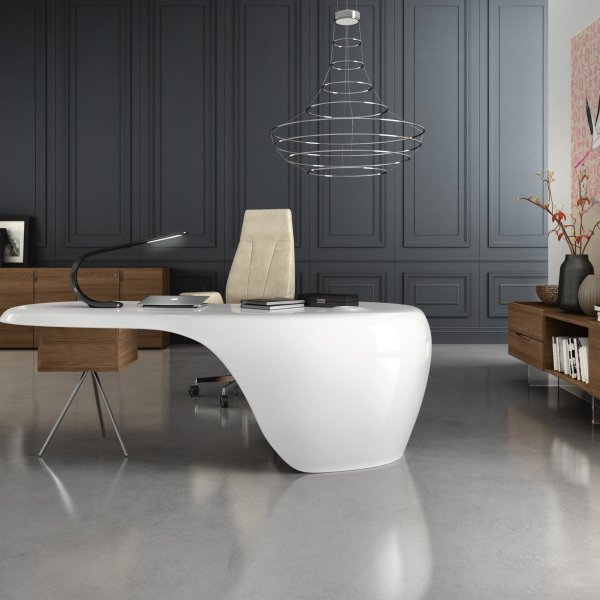
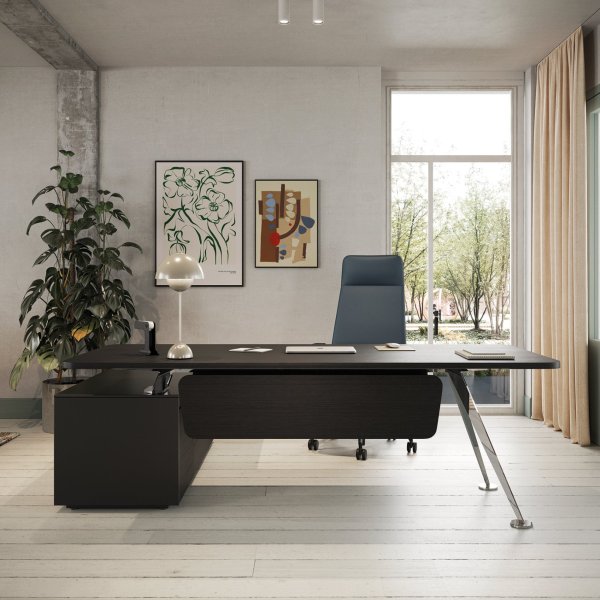
Executive desk Cavour CM by Zanotta in a corner office

A desk made under licence from a government: Cavour CM

Zanotta
Desk with integrated pedestal
Cavour CM An icon of Italian design Desk with integrated pedestal
$ 43,155

Tell us your requirements

Trade terms for professionals and design studios

Furniture rarely comes with a constitutional footnote. Cavour CM does: the intellectual property in Carlo Mollino's work is held by the Italian State, and Zanotta manufactures this desk under exclusive licence from the State Property Agency.

That arrangement exists because Mollino's estate passed into public hands, and it has a practical consequence for anyone buying. The design world is full of pieces described as inspired by, in the manner of, or after a famous architect. Here there is a single authorised producer and a licence behind it, which settles in one sentence a question that otherwise takes an appraiser: is this the real thing. For a corner office in which the furniture is part of how the company presents itself, that distinction is the whole point.

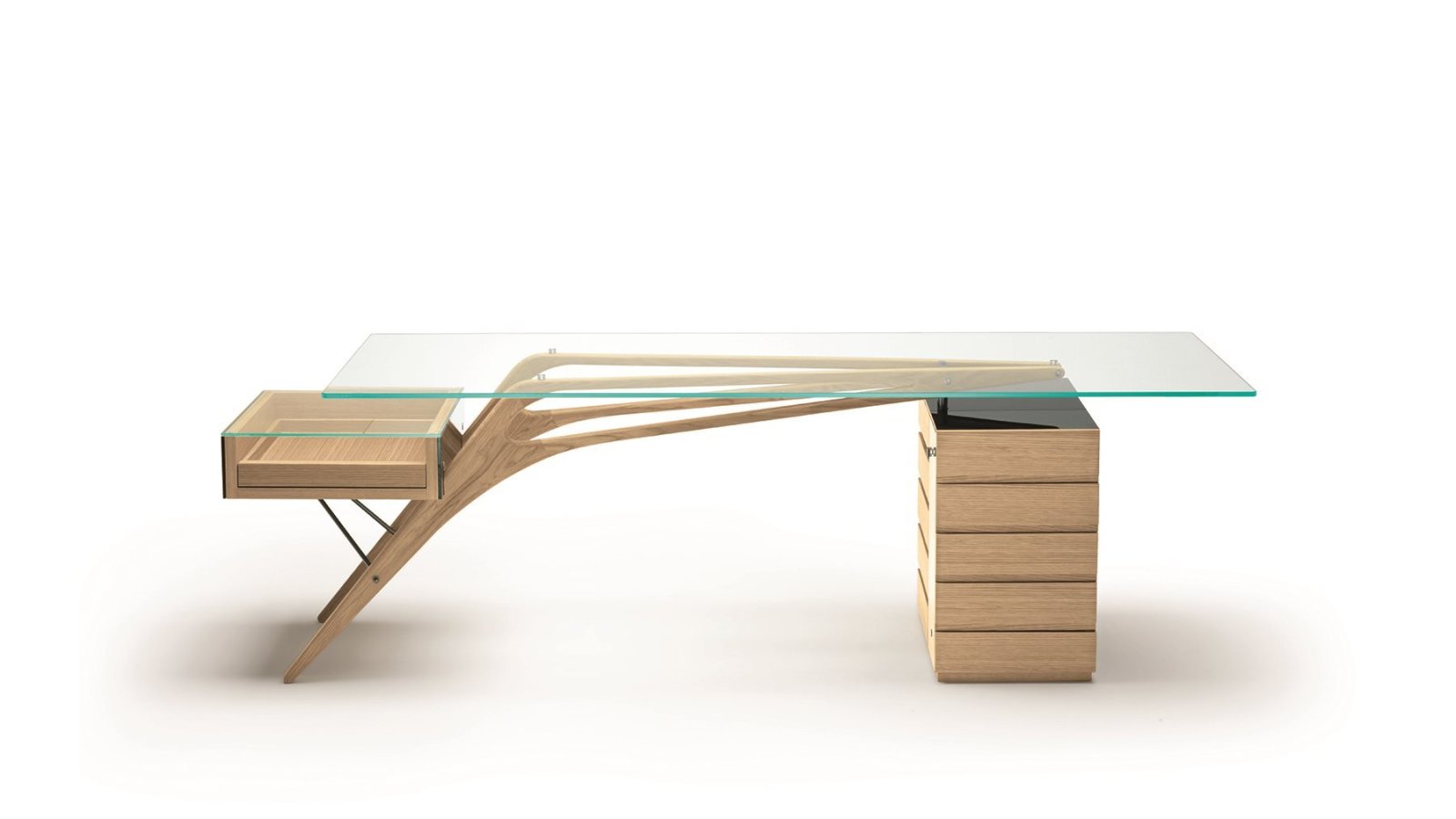
This luxury executive desk dates from 1949 and is still built to the original drawing: a plate-glass top, clear, extra-clear or smoky grey, over legs in solid oak or Canaletto walnut. La Mercanti manages specification, shipping and installation for clients across the United States.

Technical information based on data declared by the manufacturer.

Model: Cavour CM, code 2690, Zanotta — design Carlo Mollino, 1949

Intellectual property: all rights to the works of Carlo Mollino are held by the Italian State; manufactured under exclusive licence from the State Property Agency

Dimensions: top 86.6 in · overall 97.2 in including the projections of the frame · depth 35.4 in · height 29.5 in

Frame: legs in solid natural oak, black varnished oak or Canaletto walnut · wax-finished varnish

Drawer unit and extractable tray: veneered in the same species, wax-finished, both covered with extra-clear tempered plate glass, back-painted in black

Top: clear, extra-clear or smoky grey plate glass, the latter matching the black varnished oak frame

Executive kit (on request): black cowhide covering for the bottom of the tray and the first drawer · desk pad 31.5 × 19.7 in · solid wood penholder 13.8 × 5.9 in in the desk finish

La Mercanti USA Llc — your partner for Italian design and contract supply.
Los Angeles, CA, USA · +1 855 335 8079 · info@lamercanti.us
Supply, quotes, specifications and project support across the United States and North America.

Let us know which finishes you'd like to explore

$ 180

Credited in full toward your purchase

FAQ

How big is the desk?

Top 220 cm, overall 247 cm once the projecting frame is counted, 90 cm deep and 75 cm high. In American offices the depth is usually the binding figure rather than the length: at 90 cm it sits comfortably in a room where a visitor chair has to pass behind.

Which finishes can be specified?

Three timbers — natural oak, black varnished oak and Canaletto walnut, all wax-finished — and three glass options for the top: clear, extra-clear and smoky grey. The smoky grey is offered with the black oak frame, which is the darkest and most formal of the combinations available.

Is there a way to add leather?

Yes, through the Executive kit: black cowhide lines the bottom of the extractable tray and the first drawer, and the kit adds a matching desk pad of 80 × 50 cm plus a solid wood penholder in the same finish as the desk. It is a factory option, not an aftermarket accessory.

What is the tray for?

It is an open compartment that slides out from the side of the desk, sitting in the air rather than resting on a pedestal. In daily use it holds what would otherwise cover the glass — papers in progress, a notebook — which matters on a desk whose top is transparent and shows everything left on it.

How is the wood protected?

By glass. The drawer unit and the tray are covered with extra-clear tempered plate glass, back-painted black, so the horizontal surfaces that take the most wear are glass rather than veneer. The frame itself is solid timber with a wax finish and ages visibly, which on this design is intended.

How to choose the timber for an executive room

Three species, one decision that cannot be revisited later. Five steps to make it once and make it right.

Start from the floor, not the desk

The largest wooden surface in the room is usually underfoot. A desk that argues with the floor loses that argument every day.

Decide whether the desk should read light or heavy

Natural oak keeps the room open, black varnished oak anchors it, walnut warms it. This is a decision about the atmosphere of the room, not about quality.

Look at the samples vertically

Timber judged flat on a table reads differently from timber seen at eye level. Hold the sample where the structure will actually stand.

Check it against the daylight the room really gets

North-facing rooms flatten warm tones; south-facing rooms amplify them. Judge the sample at the hour the office is actually used.

Confirm the finish reference in writing

La Mercanti records the species and finish on the order, so a matching piece added later is the same specification rather than an approximation.

You May Also Like