
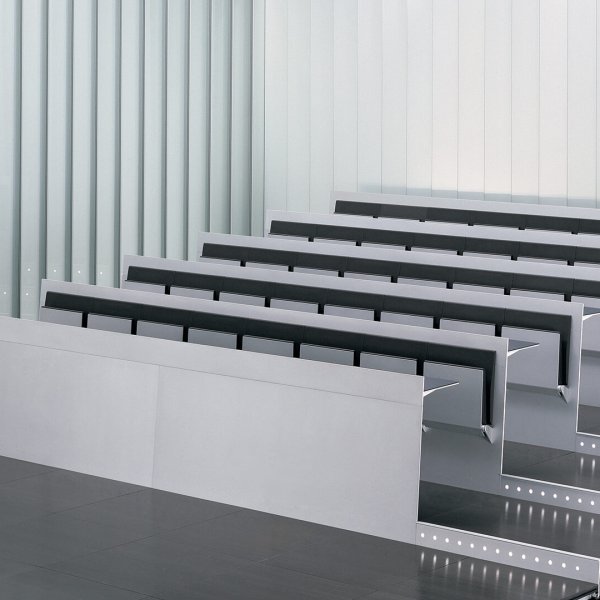
Blade System
$ 7,200
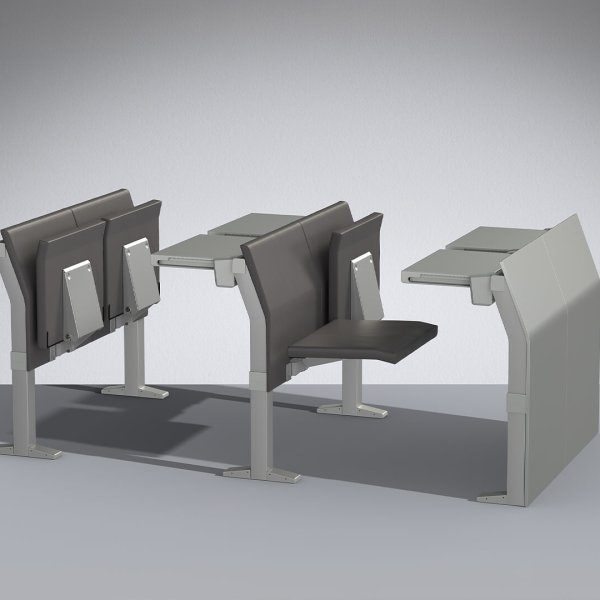
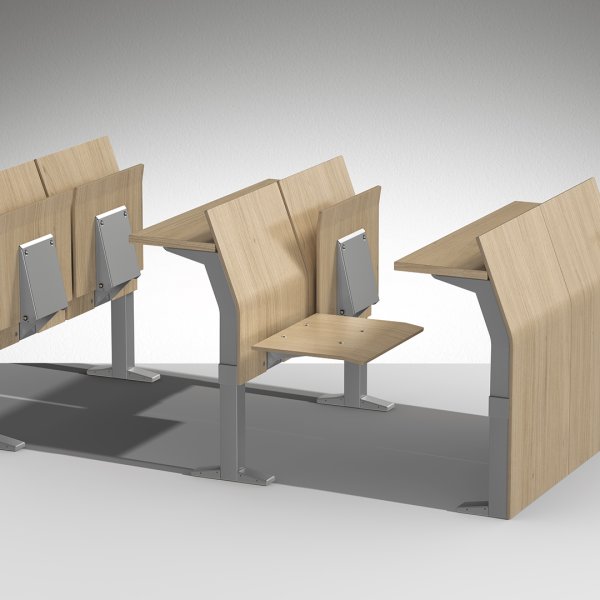
On a campus, classroom furniture is bought like equipment and judged like architecture: it shows up on every admissions tour, and it is the first thing facilities has to fix. Long-lived classroom furniture depends on details no rendering captures, such as the build of the tablet hinge, the anchoring of each beam, the edge that takes backpacks and the option of replacing one seat without pulling out the row. Those are the details a facilities director asks about after the third semester of heavy use.
This page gathers beam-mounted worksurfaces for flat, curved and tiered classrooms, seating with tablet arms, and furniture for computer labs and active learning rooms, including teaching systems by Lamm. For team rooms that change every semester, see our collaboration furniture.
Share your room plans and seat counts. We help campus planners, district facilities teams and A&D firms turn them into a bid-ready spec, then line up shipping and installers so rooms are finished between commencement and the first day of fall classes.
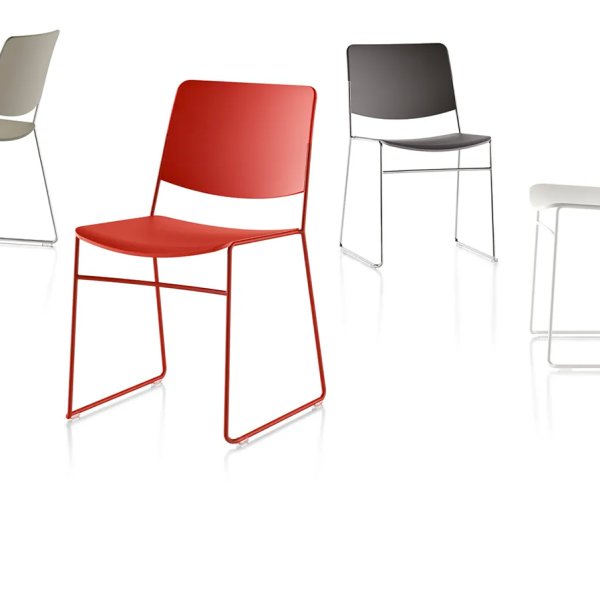
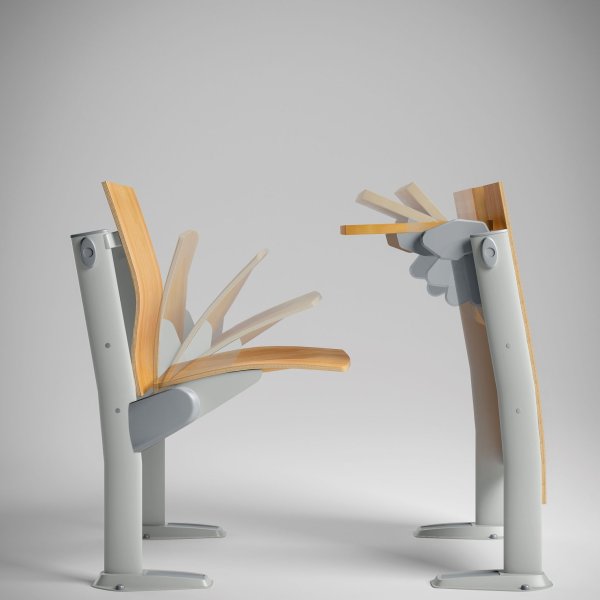
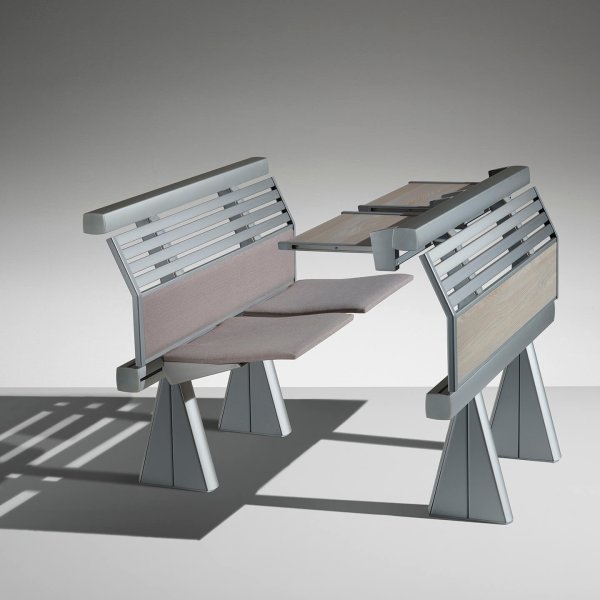
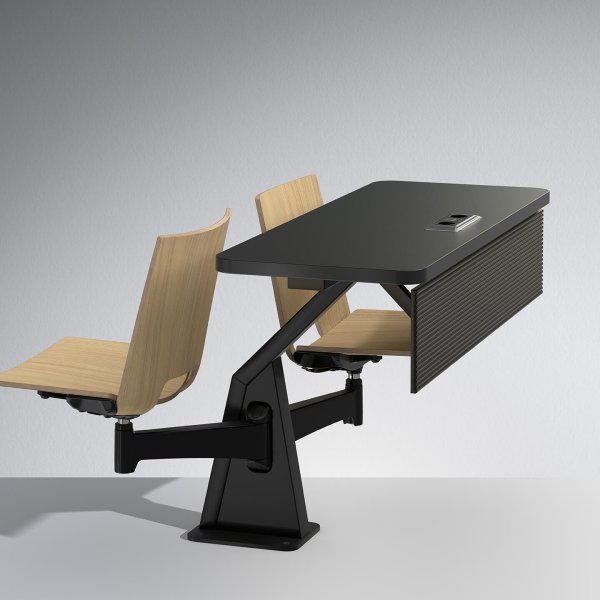
A full classroom puts many people and a lot of material into a small volume, so furniture emissions matter more than in an office. GREENGUARD Gold certification is the benchmark districts and campuses usually ask for, because its chemical emission limits are written with schools in mind. Ask for a certificate that covers the exact product and finish, not just the brand, and check that composite wood parts meet the formaldehyde limits in your spec.
Accessible work surfaces need knee clearance at least 27 inches high and a top between 28 and 34 inches above the floor, and they must sit on an accessible route, not only along the back wall. In a room with fixed beam desking, leave a bay without a fixed seat or set a height-adjustable table at the end of a row, facing the same way as everyone else. Plan these positions with the room layout: retrofitting them after installation costs more than designing them in.
Most bids reference the ANSI/BIFMA performance standards, with X6.1 written specifically for educational seating, plus emissions and, in California, TB 117-2013 for upholstered furniture. Asking for test reports instead of declarations keeps the comparison fair. Add warranty terms, the spare parts policy and lead time to the installed date, because those decide the total cost over the life of the room.
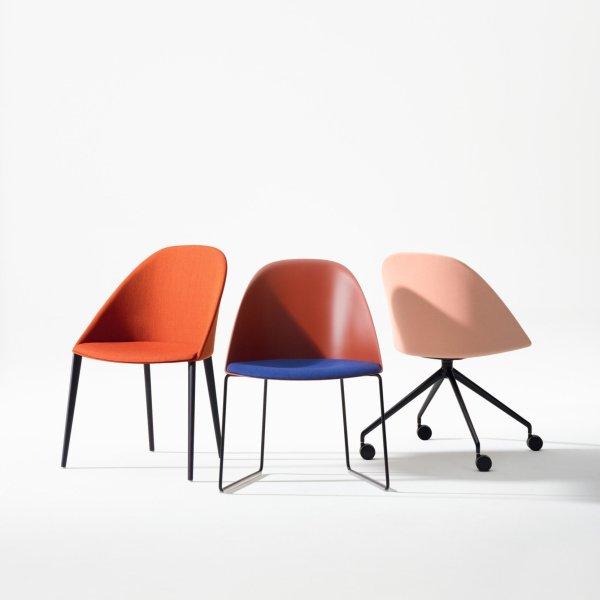
Computer labs need deeper work surfaces for monitors and keyboards, cable management that keeps power and data off the floor, and chairs on casters that roll without marking the finish. Science and maker rooms need tops that stand up to chemicals, heat and impact, plus stools at the right height for standing work at a bench. Treat each lab as its own spec with its own sign-off from the department: a standard classroom package rarely fits either one.
Four steps from seat count to service life, so the furniture spec fits the room, the bid and the facilities team that will maintain it.
Pull the floor plan and a section for each room: seats required, floor type (flat, curved or tiered), door swings, windows and the instructor wall. From there it becomes clear whether anchored beam systems or loose tables and chairs suit the space, and how many rows fit with accessible routes left open.
Ask faculty how students actually work in that room: paper, laptops or a mix. Their answer drives the depth of the worksurface and the call between a tablet arm and a continuous top. If students need to charge, put outlets under the top or on its leading edge, and check that extra modules can be retrofitted on the beam.
Write into the bid documents ANSI/BIFMA X6.1 for educational seating, GREENGUARD Gold for emissions, TB 117-2013 for upholstered pieces delivered in California, and ADA-compliant work surfaces in every room. Require test reports at submission, issued for the product being offered rather than the product family.
Before award, get the parts list in writing along with the number of years each item stays in stock: hinges, seat springs, glides, edge trim. Furniture your custodial staff can fix piece by piece stays in service; furniture that has to be swapped as a unit leaves rooms short of seats for weeks.