AL/23
$ 1,148
A high-end interior has a tell. It's not the furniture, not the flooring, not the lighting — those are easy to get right when budget isn't the constraint. The tell is the faucet. It's the object every visitor interacts with physically, daily. It's where a high-budget office renovation either holds up — with the designer ceramics around it — or quietly falls apart.
Made to outlast the design cycle
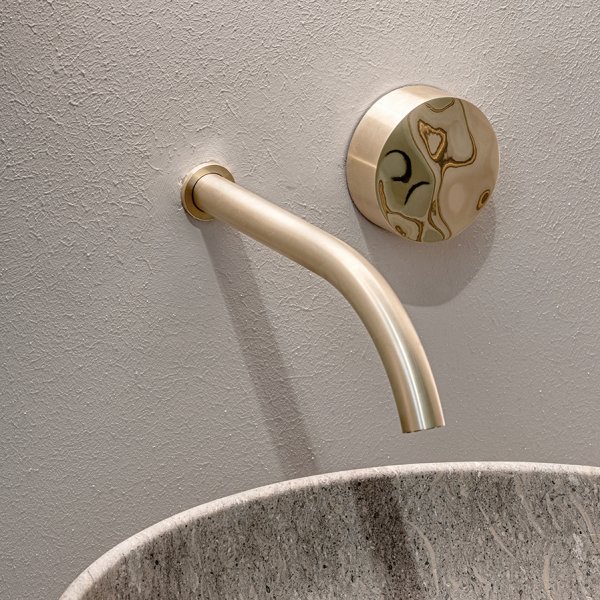
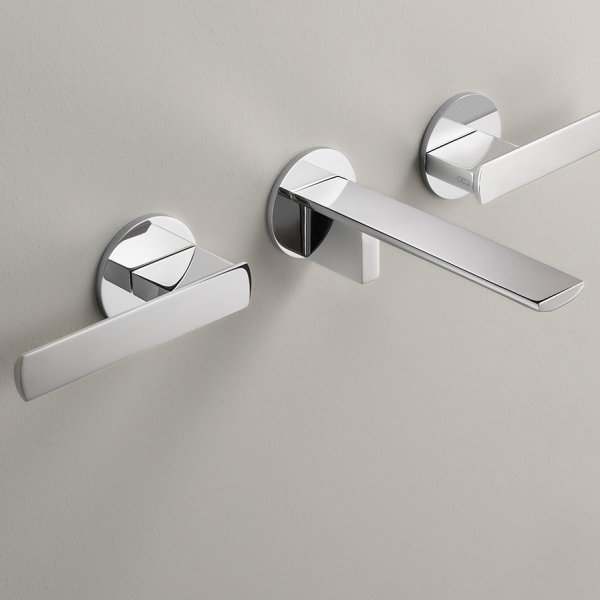
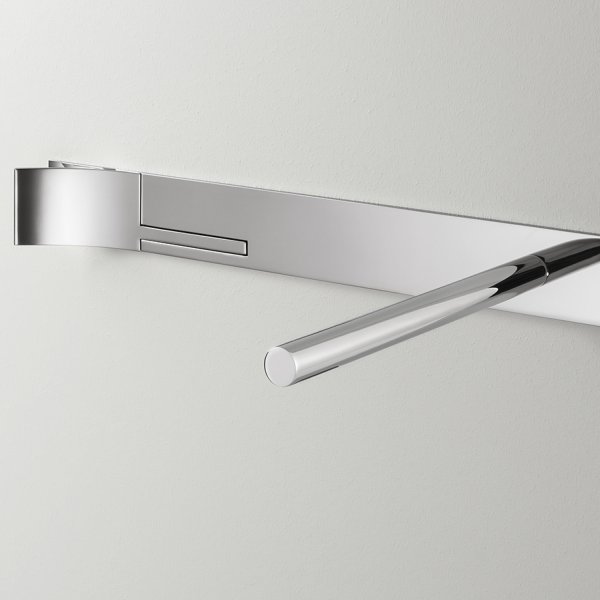
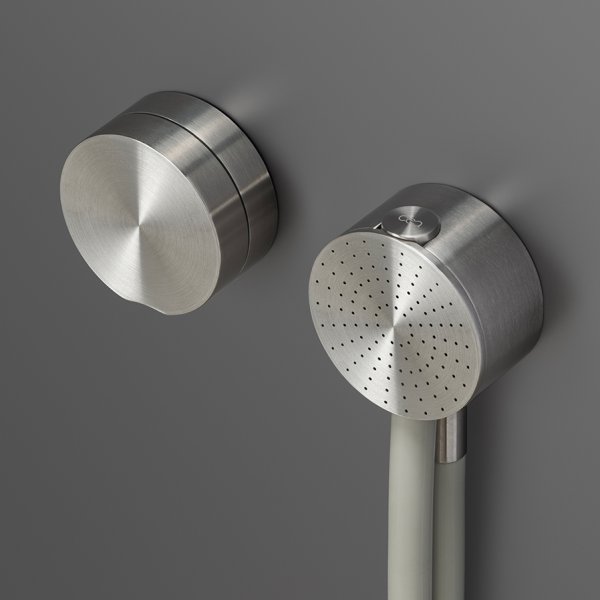
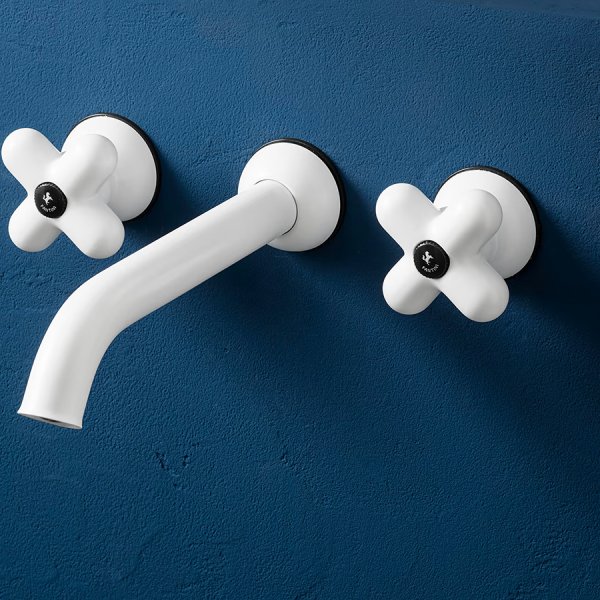
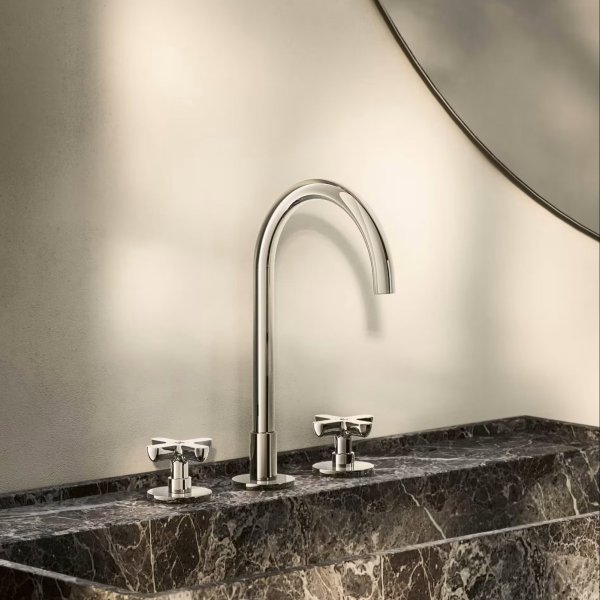
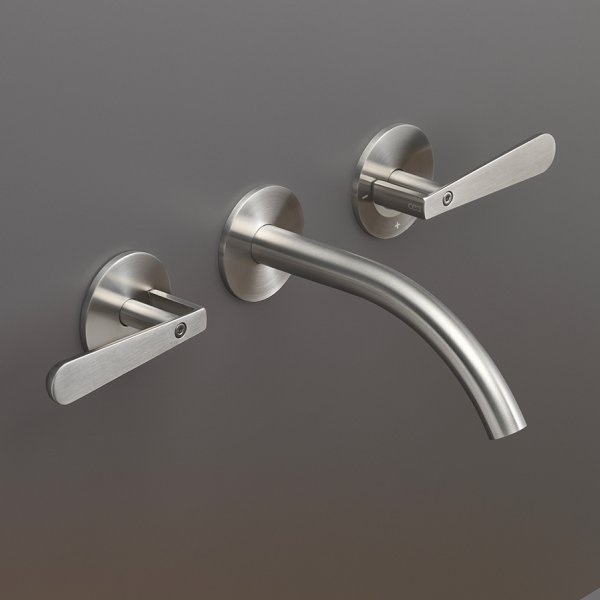
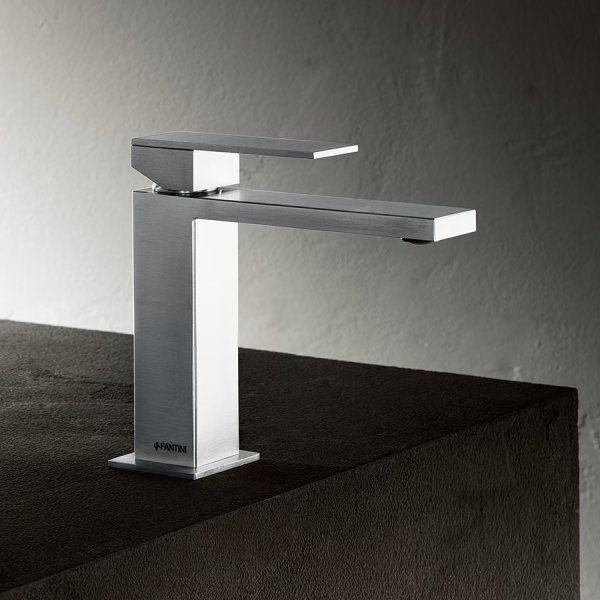
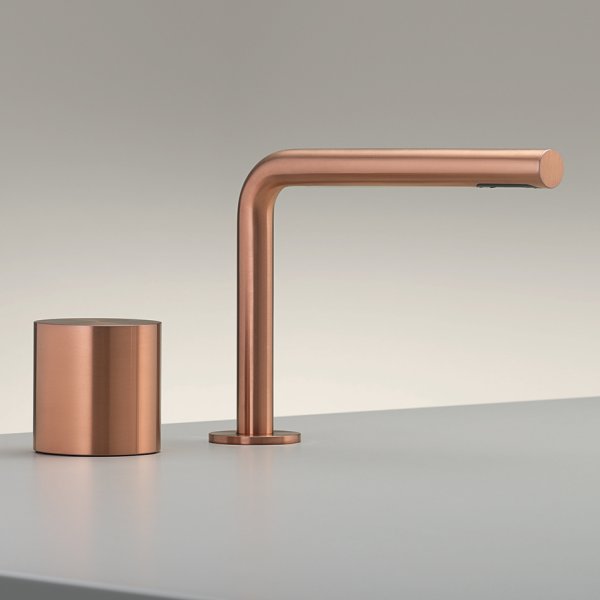
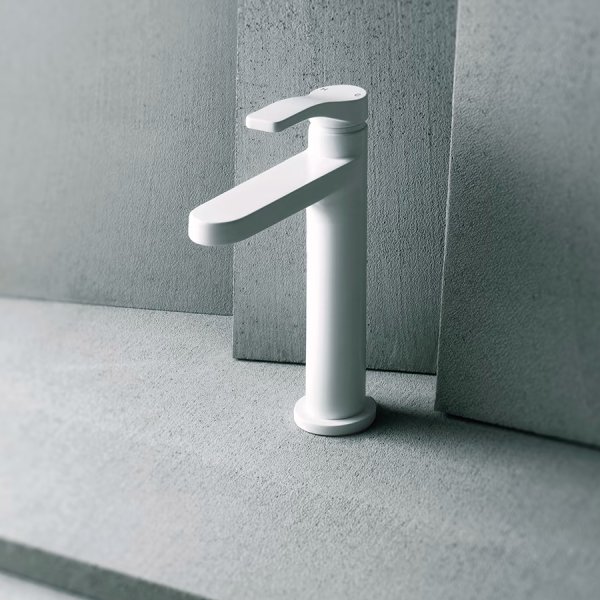
La Mercanti sources its bathroom faucets from Italy's most exacting makers — manufacturers who stopped treating the faucet as a plumbing component decades ago and started treating it as a precision object. The formal language runs the full spectrum: geometric forms reduced to a single line and a single plane; to more expressive work where ceramic details, crystal accents, and architectural proportions make the fitting a focal point. Both approaches are represented because the right answer depends on the room.
The material case
AISI 316L stainless steel — the marine-grade alloy used in surgical instruments and offshore infrastructure — cannot corrode, cannot degrade, and carries no surface coating to wear through. PVD finishing bonds a metallic compound at molecular depth into the substrate — not onto it — producing surface hardness that outlasts the finish cycle of most commercial interiors. These aren't luxury options. They're correct specifications for spaces built to perform over ten to fifteen years.
Beyond the restroom
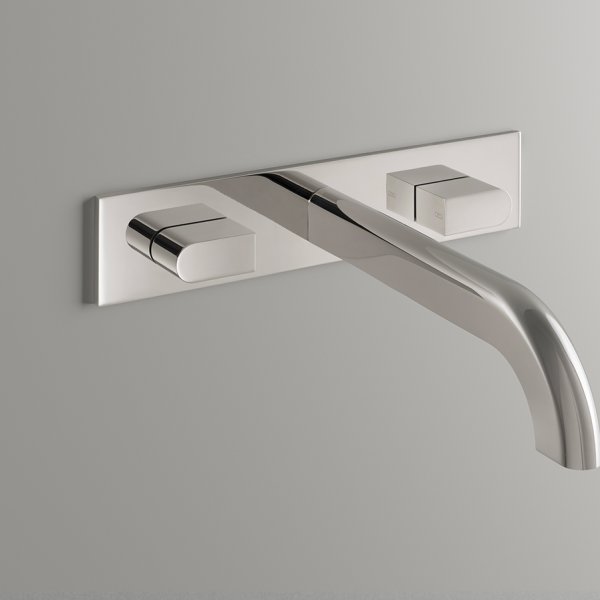
The selection extends to wall-mounted faucets for executive suites, mixer faucets for kitchenettes and break areas, shower systems for corporate wellness facilities, and outdoor-rated fittings for headquarters terraces and pools. Italian design at this level carries formal consistency across product families — one partner network covers the whole specification.
Direct relationships, not catalog access
La Mercanti has spent over two decades building direct relationships with these makers across a network spanning dozens of partner brands. What that means for your project: access to the full Italian catalog, specification knowledge that goes beyond the product sheet, and a partner who understands how these faucets perform in contract environments — not just in showrooms.
Three minutes is the point. In the rest of your office, your client is processing information — what you're saying, what's on the screen, what the room looks like. In the restroom, they're alone. The sensory environment is the only input. A faucet that opens with weight and precision registers differently than one that opens with a snap. It's not a conscious thought. It's a physical impression that becomes part of how they remember the meeting. The firms that invest in their restrooms aren't doing it for aesthetics. They're doing it because they've noticed what clients say — and what they don't say — on the way out.
Three lines. Body alloy by designation: write "CW617N dezincification-resistant brass" or "AISI 316L stainless steel" — not "brass body," which covers everything from quality alloy to pot metal. Cartridge cycle rating with reference: "minimum 500,000 operating cycles per ASME A112.18.1" — non-certified products can't declare this without false documentation. Finish method and hardness: "PVD deposited, minimum 1,800 HV Vickers surface hardness" — electroplated chrome runs 100–200 HV and isn't a technical equivalent. Three lines turns an aesthetic preference into a material specification. Value engineering can override opinions. It can't override numbers.
Run the replacement math, not the purchase price. A standard chrome-finish commercial faucet in a high-traffic restroom typically shows finish degradation within its first decade. Replacing it in a commercial building means product, a licensed plumber, water shutoff coordination and disruption — multiplied by every faucet in the building, and repeated at the next cycle. An AISI 316L or PVD-finished unit is built for decades of commercial use without finish degradation. Put the two columns on a page as cost per year of service life: the facilities manager who presents that table gets the budget approved. The one who presents unit cost doesn't.
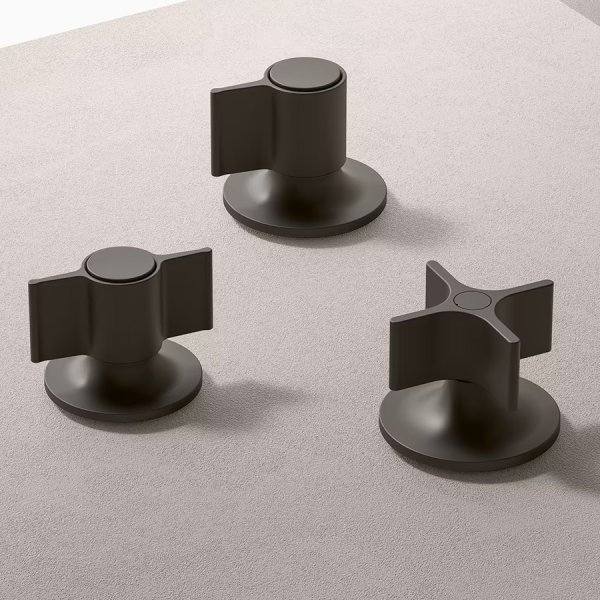
Chrome is the most forgiving to maintain but shows mechanical wear at high-contact points by year five. Brushed nickel hides water marks better — the right default for most commercial restrooms. Matte black PVD is genuinely harder than chrome, but it shows limescale in hard-water markets without post-use wiping. Specify matte black where the cleaning protocol supports it. Default to brushed nickel or AISI 316L where it doesn't.
There's a principle that the best commercial interior designers apply and almost nobody puts in writing: perceived quality in a built space is set by the surfaces people touch, not the surfaces people see. An office can have a $50,000 conference table and a $90 faucet. The conference table looks expensive. The faucet tells the truth. Here's how to use that insight to make better decisions, faster.
In any commercial fit-out, three categories of surface are physically contacted rather than visually processed: door hardware, seating surfaces, and plumbing fixtures. Map them across the project before you assign budget tiers to rooms. The question isn't "how much should this restroom cost?" It's "who touches what, and how often?" A partner-level washroom that one client uses twice a year carries different weight than a break room kitchenette faucet that 40 people use 5 times a day. Map first. Budget second.
Most projects arrive at faucet selection late — after the tile is specified, after the wall color is chosen, after the budget has been allocated residually. The design consequence: the faucet has to work around decisions made without it. Reverse the sequence. Choose the faucet family first. Italian brassware ranges are typically conceived with specific spatial contexts in mind — the proportions, the handle geometry, the spout arc are designed to read correctly in a room. When the faucet is the anchor, the room's finish palette aligns more easily, not less.
The goal isn't identical specifications everywhere. It's formal coherence. Most Italian contract faucet lines include three or four models at different price points — all sharing the same proportions, the same finish options, the same lever logic. Partner washroom gets the flagship model. Break room kitchenette gets the simplified version from the same family. The cost difference between tiers is typically 25–35%. The design coherence is preserved entirely. A visitor who moves through the space reads it as considered — not as a building where someone ran out of budget on the fourth floor.
When the budget conversation comes up — and it will — don't defend the Italian faucet against the cheaper one on unit price. Reframe: cost per year of service life. A unit built for decades of documented surface life, against one replaced within ten years with commercial plumbing labor on top, changes the arithmetic on every restroom in the building. Put those two columns on a page. The conversation changes immediately.