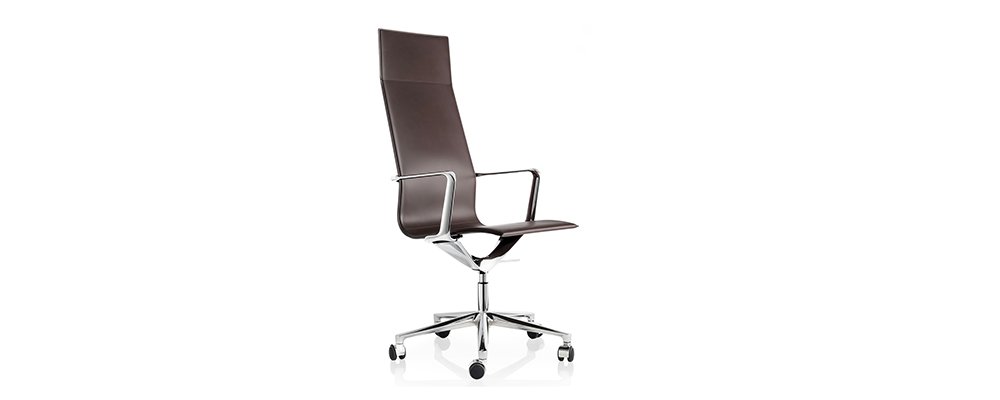
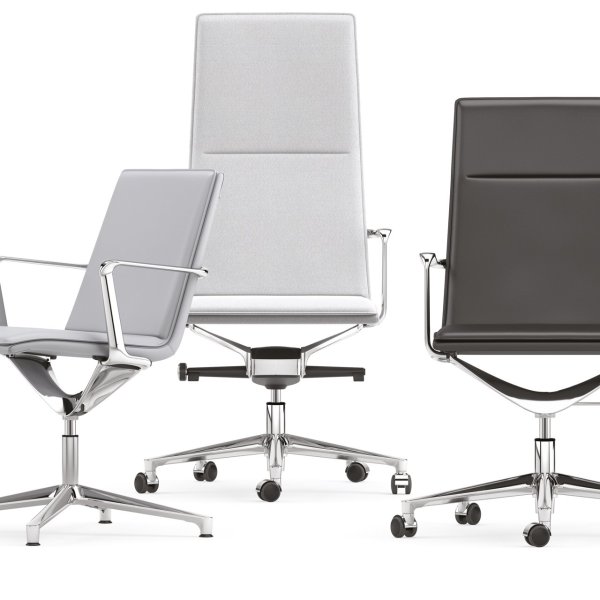
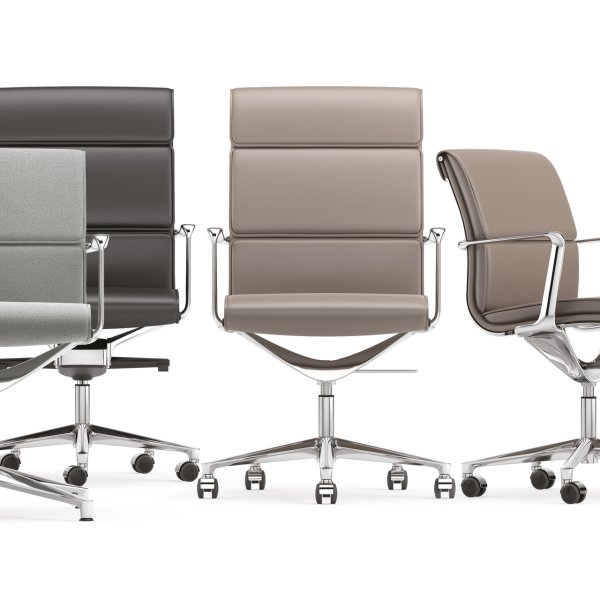
Kuna Chair by ICF Office in a corner office

Eight tests under ANSI-BIFMA X5.1, and the Kuna Chair they ran them on

ICF Office
Executive chair
Kuna Chair 713 Most chosen configuration Executive chair
$ 6,926

Let's discuss your project

Trade terms for professionals and design studios

On an American specification, an imported chair is usually asked one question first: does it hold up under ANSI-BIFMA X5.1. For Kuna Chair, ICF's executive chair, the answer comes with a document rather than a claim — a CATAS test report covering eight separate tests, run on the sample named KUNA MID BACK 708.

The list is worth reading, because it says where a chair is actually loaded: stability; arm strength under vertical force; arm strength under horizontal force; arm fatigue; back fatigue with a non-tilting seat; back strength; seat impact; seat fatigue. Four of the eight are about the arms and the back — the parts a person pushes against every time they stand up.

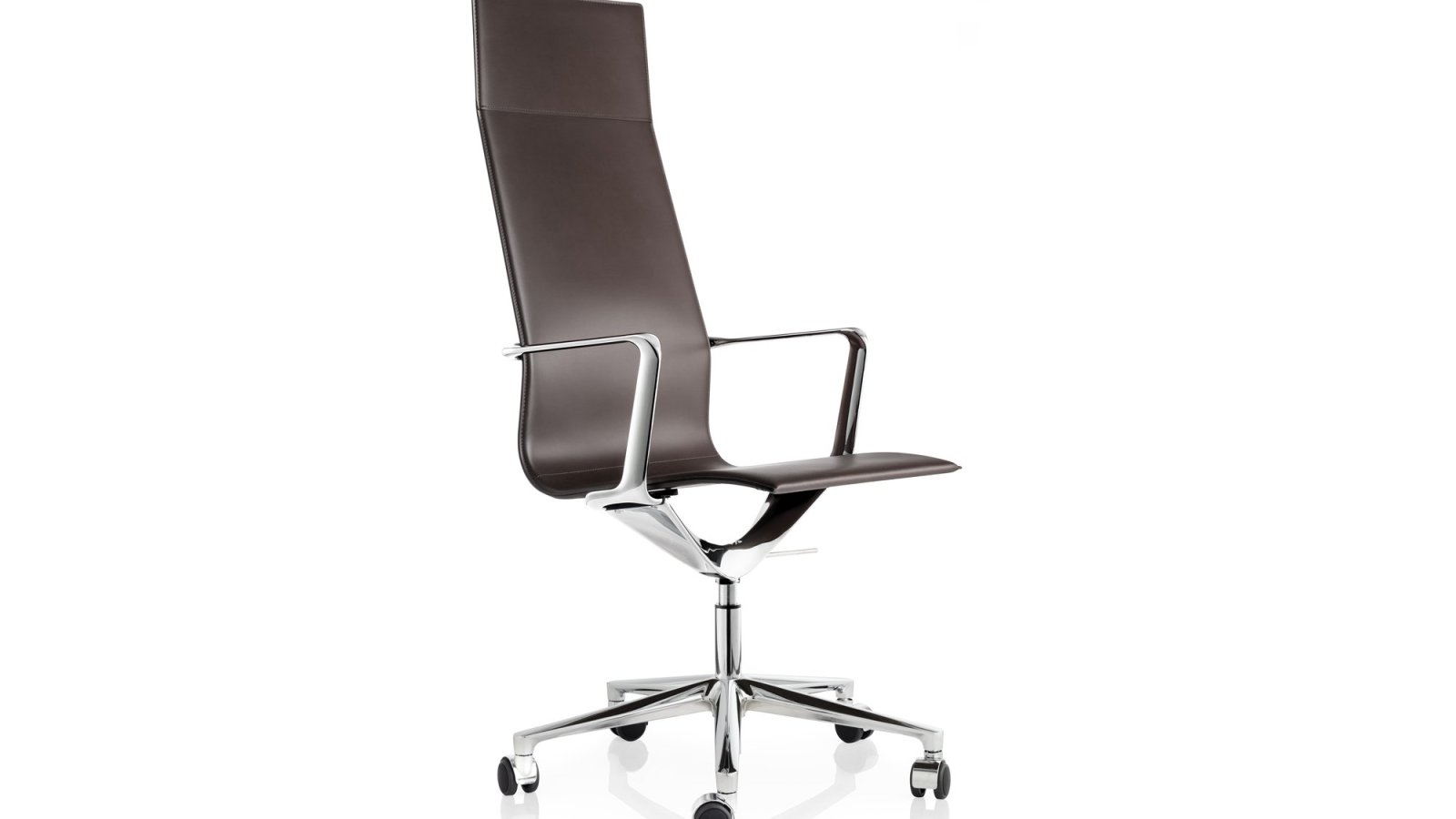
The rest of the chair is European in origin and plain in construction: a leather panel wrapped around the padded structure and left suspended, exposed die-cast aluminum carrying the load, four leather colors, matched to the executive desk it sits behind. The same collection is also declared to EN 16139:2013 level 1. La Mercanti specifies Kuna Chair for US projects with samples in hand and the finish schedule agreed before anything ships.

Technical information based on data declared by the manufacturer.

Collection: Kuna Chair
Manufacturer: ICF Office — ICF S.p.A., Vignate (Milan), Italy
Frame: steel tubular sections forming a rigid construction that holds its shape under considerable stress; exposed load-bearing elements in die-cast aluminum, finish 47 polished or 55 chrome; three back heights
Back and seat: leather panel wrapped around the padded load-bearing structure over variable-density polyurethane foam sheets; the panel remains suspended, distributing body weight evenly
Armrests: closed form in die-cast aluminum, finish matched to the frame; optional leather covering; can be omitted without compromising the integrity of the chair
Leather: category S full-grain cowhide, 0.11–0.12 in thick, 100% vegetable re-tanned; four colours: S01 black, S02 white, S03 dark brown, S05 Bulgarian red
Models: low back KUNA.708 (fixed height with auto-return mechanism, four-star base on glides), .709 (height-adjustable, five-star base on castors) and .717T (with tilt mechanism); medium back .715, .718 and .719T; with headrest .710, .713 and .714T; hide-covered armrests on request on every model
Dimensions: width 23.6 in and depth 18.9 in across all nine models; overall height from 32.7 to 52.4 in depending on model and back height; seat height 18.9 in on fixed-height models, 16.9-21.3 in on adjustable models, 17.3-22 in on tilt models
Height adjustment: pneumatic unit with lever, maximum travel 4.7 in; gas lift compliant with EN 16955:2017
Auto-return mechanism: not height-adjustable; the swivel seat turns freely and returns automatically to the front-facing position; standard on four-star base models
Tilt mechanism: seat pivot point set well forward of the gas column axis to reduce pressure on the lower limbs while tilting; up to 13 degrees; side knob adjusts balance spring tension to the user's weight and sitting style; lever controls combine seat height, locking and unlocking the tilt in four positions, and the safety lock
Base: four or five-star in die-cast aluminum, chrome or polished to match the frame; with castors or glides
Castors and glides: castors in black plastic, 2 in diameter, soft central element for use on any floor, safety brake compliant with EN 12529:2001, chromed zamak top cover; hard-tread castors available on request; glides in black nylon, 1.5 in diameter, with a soft rubber central element
Weight and materials: approx. 27 lb (technical sheet), 31–44 lb depending on model (price list); aluminium 48 per cent, metal 28 per cent, miscellaneous 24 per cent; approx. 77 per cent recyclable when the components are fully and correctly separated; every component can be dismantled for repair, reuse and recycling; formaldehyde-free and free of hexavalent chromium; designed according to eco-design guidelines. Data refer to model KUNA.708 and may vary by model, structural materials and finishes
Testing: ANSI-BIFMA X5.1, CATAS test report on the sample KUNA MID BACK 708 covering stability, arm strength under vertical force, arm strength under horizontal force, arm fatigue, back fatigue with non-tilting seat, back strength, seat impact and seat fatigue; EN 16139:2013 level 1, declaration of conformity no. 11108 of 13 January 2014 on KUNA 715 following tests to EN 16139, EN 1728 and EN 1335
Care: leather is a natural product and the wrinkles and scars on the grain attest to its origin and quality rather than being defects; avoid direct light so the leather does not dry out or harden. Aluminum: soft cloth with water and neutral soap, never solvents, thinners, alcohol, abrasive or chemical cleaners or polishing sprays; chrome aluminum keeps its brightness over time, polished aluminum undergoes a natural oxidation process. Only trained personnel may replace or repair the gas lift
Spare parts and accessories: set of five castors with chrome cap, set of four or five black glides

La Mercanti USA Llc — your partner for Italian design and contract supply.
Los Angeles, CA, USA · +1 855 335 8079 · info@lamercanti.us
Supply, quotes, specifications and project support across the United States and North America.

Let us know which finishes you'd like to explore

$ 180

Credited in full toward your purchase

FAQ

Which model was tested to ANSI-BIFMA X5.1?
The sample named KUNA MID BACK 708 in the CATAS test report. That distinction belongs in the submittal: a report covers the sample it was run on, and the testing body does not verify the name the client gives it.
What do the eight tests actually cover?
Stability, arm strength under vertical force, arm strength under horizontal force, arm fatigue, back fatigue with a non-tilting seat, back strength, seat impact and seat fatigue. Half of them address the arms and the back, which is where an executive chair takes the load when someone stands up.
Is there a European declaration as well?
Yes: EN 16139:2013 level 1, declaration of conformity number 11108 dated 13 January 2014 on KUNA 715, following tests to EN 16139, EN 1728 and EN 1335. Two families of requirements, two documents.
What is not in either document?
Load ratings, warranty terms and lead times are not declared by the manufacturer, so nobody should quote them from a datasheet. Delivery is confirmed in writing at order confirmation.
Where does the chair itself differ from what the report measures?
The report measures resistance; the drawing is about construction. Here that means a leather panel wrapped around the padded structure and left suspended, and load-bearing elements in die-cast aluminum left exposed rather than covered.

Assembling the submittal for an imported executive chair

Five steps that keep a specification from stalling.

Name the tested sample, not just the collection
KUNA MID BACK 708 in the ANSI-BIFMA report, KUNA 715 in the European declaration. Reviewers check the sample name before anything else.
List the eight tests rather than the standard alone
A line naming stability, arms, back and seat answers the reviewer's real question and saves a round of correspondence.
Keep the two standards in separate lines
ANSI-BIFMA X5.1 and EN 16139:2013 level 1 are different families. Merged into one sentence, both get weaker.
Say plainly what is not declared
Load ratings, warranty and lead times. Writing that down beats improvising a number under deadline.
Put the model code in the purchase order
The code carries the mechanism and the base; the collection name does not. It is what makes a second phase match the first.

You May Also Like