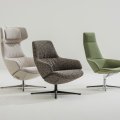
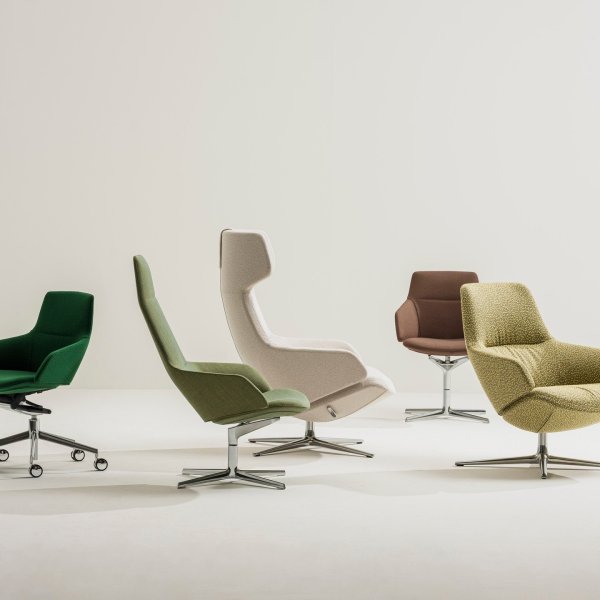
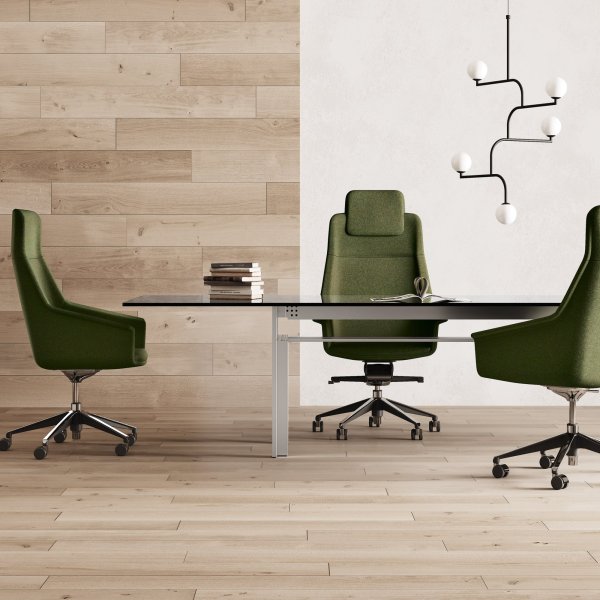
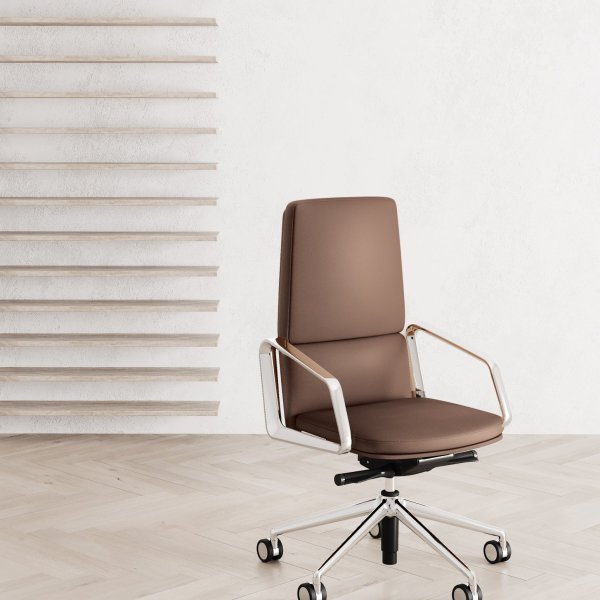
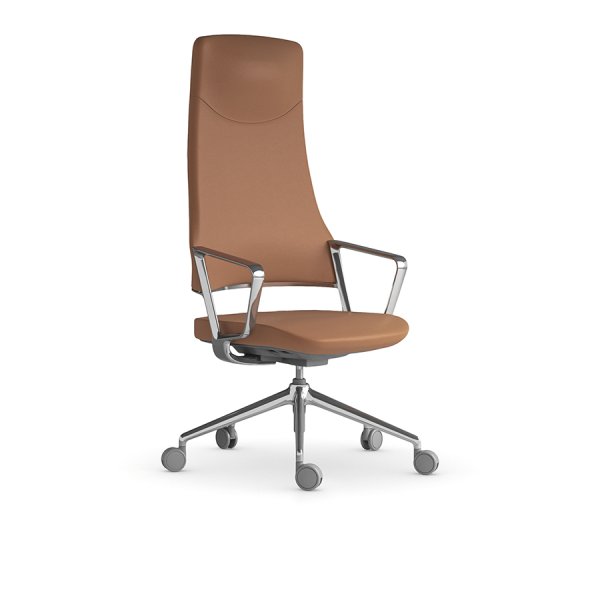
Aston executive armchair by Arper on a US office floor

One chair cleared for the boardroom, the bank branch and the cafeteria: Aston by Arper

Arper

Jean-Marie Massaud

Executive chair
Aston High Back Executive chair
$ 6,629

Let's discuss your project

Trade terms for professionals and design studios

Visitor chair
Aston Medium Back Visitor chair
$ 8,271

Let's discuss your project

Trade terms for professionals and design studios

Meeting room chair
Aston Low Back Meeting room chair
$ 8,039

What did you have in mind?

Trade terms for professionals and design studios

A specification usually falls apart at the room list. The boardroom chair is not rated for the cafeteria, the cafeteria chair looks wrong in the lobby, and a single floor ends up carrying four product codes. Arper closes that gap in one line: Aston is declared to EN 16139 at level L1 — general use — and the standard names the rooms outright: office buildings, showrooms, public halls, restaurants, canteens, banks and bars.

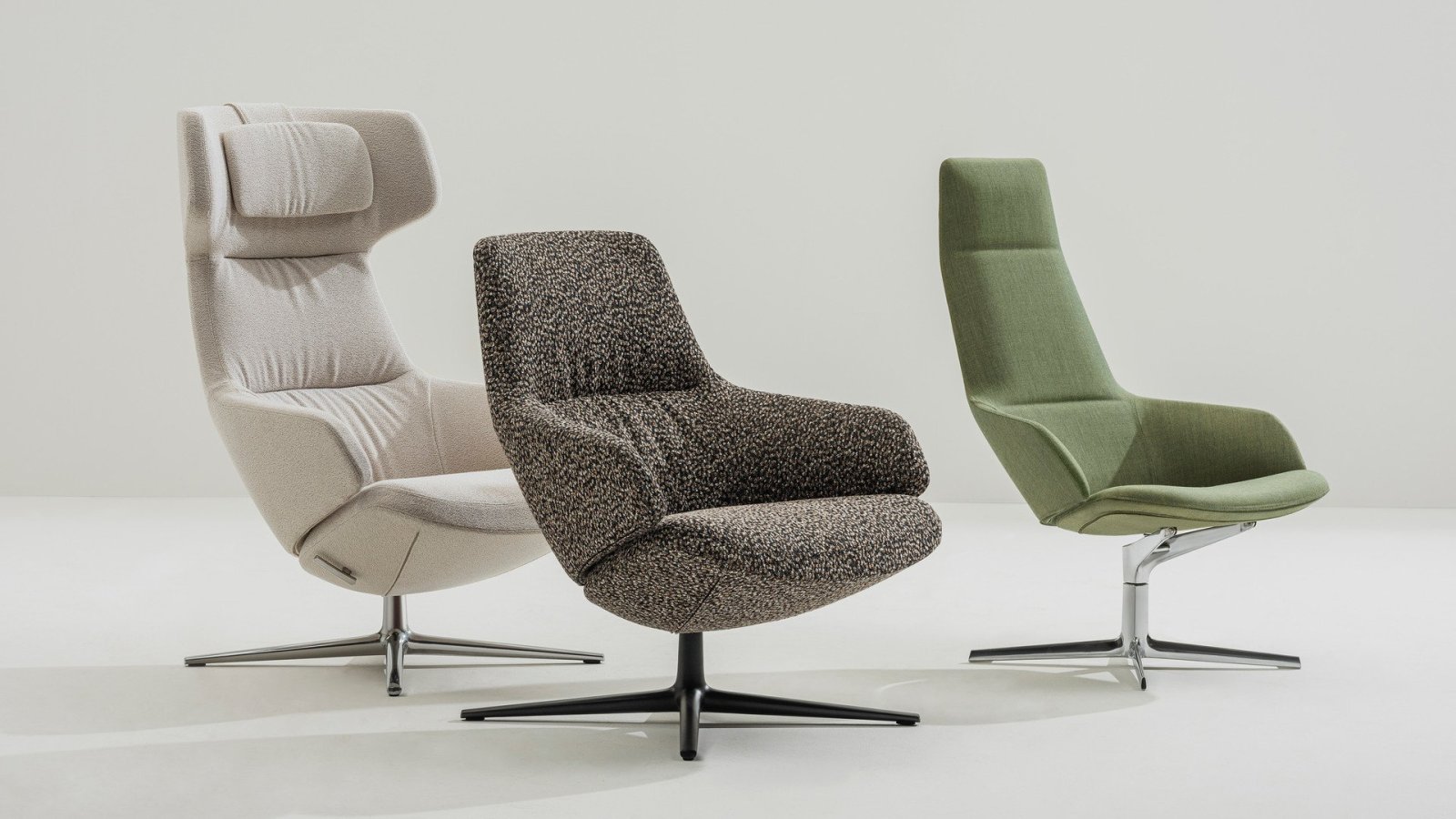
For a portfolio that means one chair, one approval, one set of finishes to maintain. Three back heights carry the difference in role: high at the head of the table, medium at a desk as an executive chair, low where people wait. The base is aluminum — a four-star swivel, optionally with a seat return mechanism, or a five-star on self-braking castors with gas height adjustment and a synchro mechanism for a full working day.

The shell is polyurethane, upholstered in fabric, coated fabric, leather or a material you supply, so a corporate textile standard survives the rollout. Jean-Marie Massaud designed it in 2006 and it remains in production, which is what makes a phased build-out possible years later. La Mercanti specifies Aston for US floors with the finish schedule and samples settled before the order goes in.

Technical information based on data declared by the manufacturer.

Collection: Aston
Manufacturer: Arper (Monastier di Treviso, Italy)
Design: Jean-Marie Massaud, 2006
Type: executive and meeting armchair, also for residential, hospitality and public spaces
Back heights: low, medium and high
Bases: four-star aluminum swivel, optionally with seat return mechanism; five-star aluminum on self-braking castors with gas height adjustment and synchro mechanism
Shell: polyurethane, upholstered in fabric, coated fabric, leather or customer's own material
Finishes: shell support and tilt spring available in the same finish as the base
Intended use: EN 16139, level L1 (general use): office buildings, showrooms, public halls, restaurants, canteens, banks, bars
Awards: Interior Innovation Award 2011; Delta Awards SP 2022
Care: fabric vacuumed weekly on low suction; coated fabric cleaned with tepid water and neutral soap; leather dusted with a soft dry cloth and kept out of direct sunlight; metal cleaned with non-abrasive, acid-free products
End of life: components to be separated by material type for recycling
Safety: periodic check of fastener tightness; work on the gas column by authorized personnel only

La Mercanti USA Llc — your partner for Italian design and contract supply.
Los Angeles, CA, USA · +1 855 335 8079 · info@lamercanti.us
Supply, quotes, specifications and project support across the United States and North America.

FAQ

Which rooms is Aston actually cleared for?
Arper declares it to EN 16139 at level L1, the general-use band, and the standard lists the applications explicitly: office buildings, showrooms, public halls, restaurants, canteens, banks and bars. That is a manufacturer's intended-use statement you can attach to a submittal.
Does one chair across every zone actually save anything?
It saves the parts of a project nobody budgets for: one approval instead of four, one finish schedule to maintain, one set of attic stock. The three back heights keep the rooms visually distinct, so the saving does not show up as sameness.
Can we run our corporate textile on it?
Yes. Arper lists the customer's own material alongside fabric, coated fabric and leather. For a multi-site rollout that means the brand textile standard holds from headquarters to the branch offices, with yardage confirmed through La Mercanti before the order.
What is the difference between the two bases in practice?
The four-star swivel keeps a conference table reading as a straight line, and the seat return version puts each seat back after the room clears. The five-star on self-braking castors, with gas lift and synchro, is the one specified where someone sits all day.
Will the same model still be available for phase two?
It has been in production since 2006, which is the reason it works for phased build-outs. Ask for a sample with each phase all the same: the model holds, but upholstery batches move over time and a sample is what keeps one room from reading in two tones.

Writing one seating spec for a whole portfolio

Five steps that take Aston from the boardroom to the branch office without a second product code.

Open with the intended-use level
EN 16139 level L1 names the rooms: offices, showrooms, public halls, banks, restaurants. Match that list against your own program before anything else and most of the specification writes itself.
Assign back heights by role, not by rank
High at the head of the table, medium at the desk, low in waiting. Rank follows the room; the chair stays the same product code.
Split the bases by dwell time
Four-star swivel where people sit for an hour, five-star on castors with gas lift and synchro where they sit all day. Castors at a conference table are what breaks the line.
Lock the textile standard once
Fabric, coated fabric, leather or your own material. Fixed at the start, it carries through every phase and every site without reopening the discussion.
Order a sample with every phase
The model has been in production since 2006, so the reference holds. Upholstery batches still move, and a sample per phase is the cheapest insurance against two tones in one room.

You May Also Like