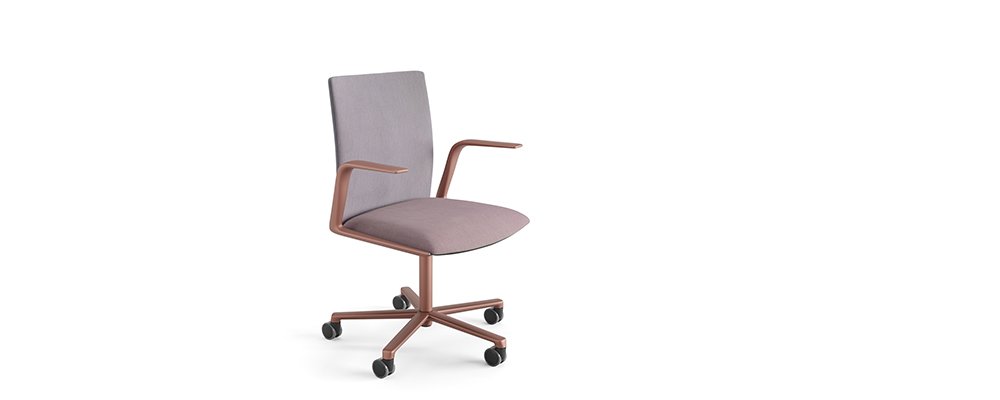
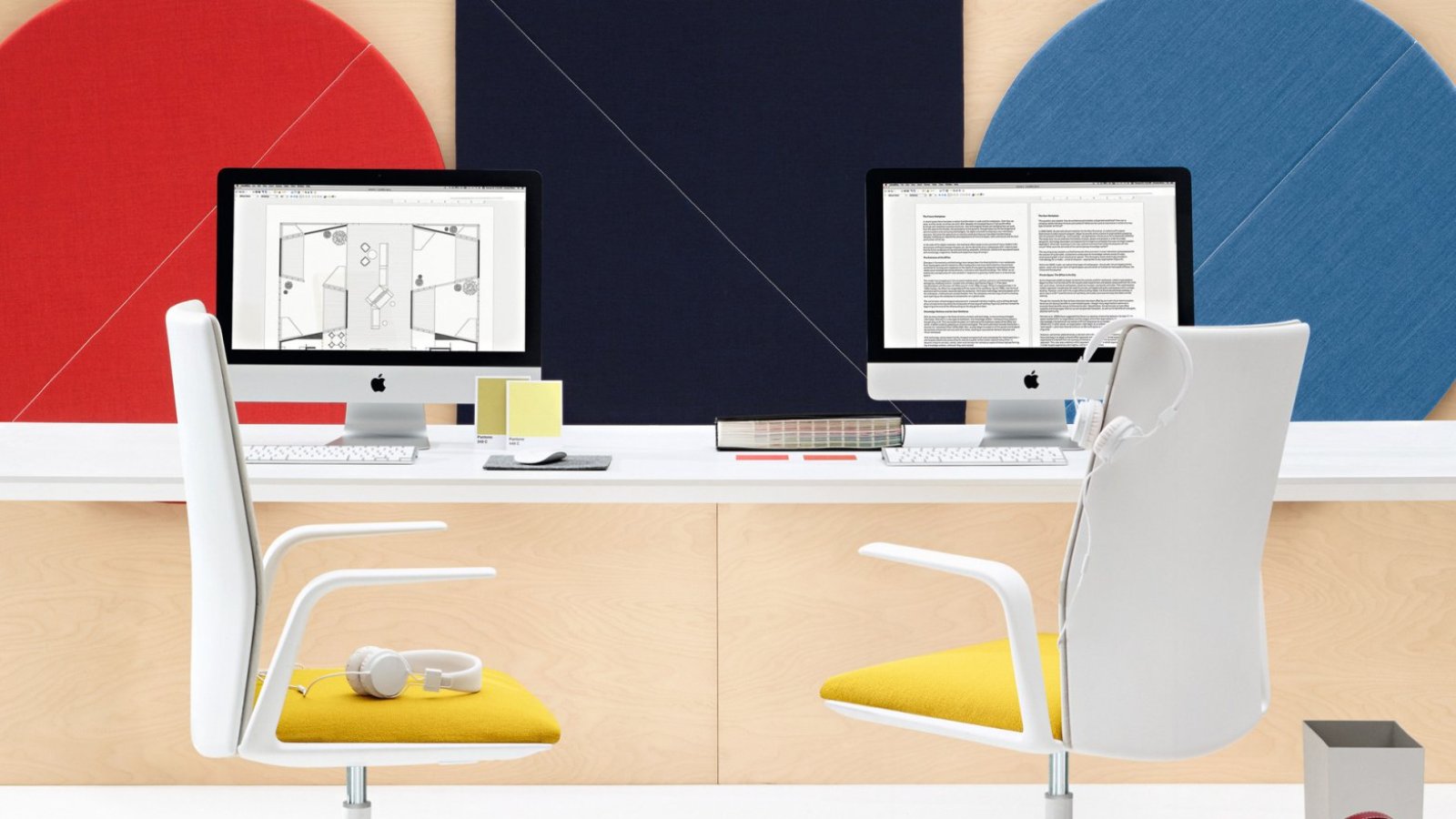
Kinesit task chair by Arper in a US office

Fifteen millimetres: what keeps you in the Kinesit chair

Arper

Lievore Altherr Molina

Task chair
Kinesit 4863 Task chair
$ 5,516

Let's discuss your project

Trade terms for professionals and design studios

Lean back in an ordinary task chair and your hips slide forward. It happens slowly, nobody notices, and by mid-afternoon the lower back has left the backrest altogether. Kinesit answers that with a number: as the backrest tilts, the seat rises 15 mm in a synchronised movement. The angle between body and backrest opens under control, and the pelvis stays where the chair can still support it.

The recline runs through 18 degrees and locks every 3, worked from controls hidden under the seat. The lumbar support is built inside a deliberately thin backrest on the low and medium versions, the covering can be stretch mesh or full upholstery in fabric or leather, and the chair comes in three backrest heights on trestle, four-way or five-way bases, for the workstation as much as for meeting seating. Designed by Lievore Altherr Molina in 2014 and handled in the US by La Mercanti, from samples to the installed floor.

Technical information based on data declared by the manufacturer.

Collection: Kinesit
Manufacturer: Arper
Design: Lievore Altherr Molina, 2014
Synchronised movement: the seat rises 0.59 in as the backrest reclines
Recline: 18° continuous, lockable every 3°
Mechanism: weight-response synchronised mechanism integrated in the seat, controls hidden underneath
Lumbar support: height adjustable, built inside the thin backrest — low and medium versions
Seat and backrest: both adjustable, so the shell conforms to the body
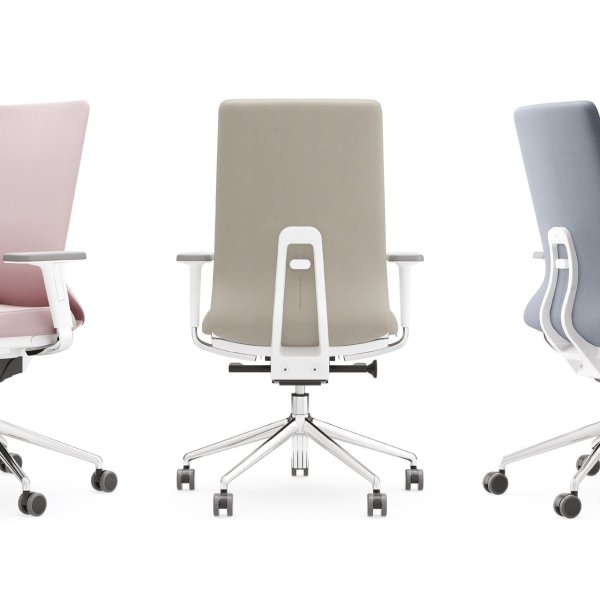
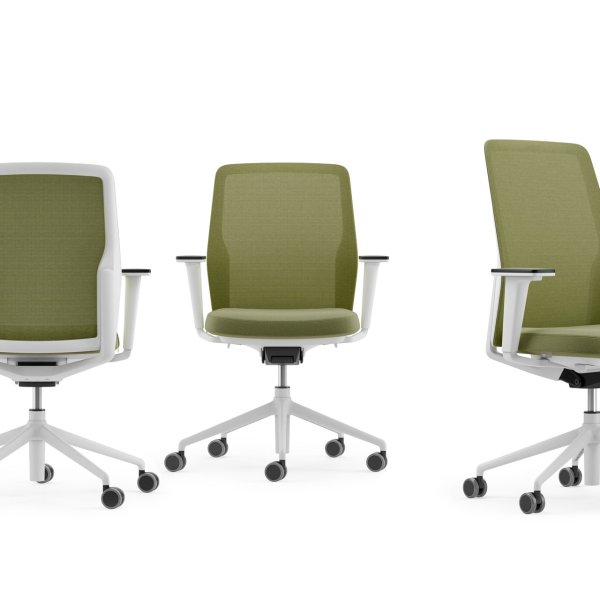
Coverings: stretch mesh, fabric, leather, faux leather; front face or entirely upholstered
Backrest heights: three
Armrests: fixed, 2D adjustable, or none
Bases: trestle, four-way, five-way with gas lift
Castors: type H for carpet, type W for hard floors
Declared settings: workstation, meeting room, boardroom, executive office, hotel, home office
Certification: ErgoCert, referencing UNI EN 1335 for office furniture

La Mercanti USA Llc — your partner for Italian design and contract supply.
Los Angeles, CA, USA · +1 855 335 8079 · info@lamercanti.us
Supply, quotes, specifications and project support across the United States and North America.

Let us know which finishes you'd like to explore

$ 180

Credited in full toward your purchase

FAQ

What does the 15 mm rise actually do?
It keeps the pelvis in contact with the seat while the backrest opens. Without a synchronised movement the hips creep forward as you recline, the lower back loses the backrest, and the chair stops supporting you exactly when you start relaxing into it.
Do I have to set a tension first?
No. The mechanism responds to the weight and pressure of whoever leans back, so a shared workstation does not need re-tensioning between users. The only deliberate action is locking the recline where you want it.
How many positions can I lock?
The movement runs through 18 degrees with a lock every 3, so a position found once is found again the next morning rather than hunted for daily.
Which version has the lumbar support?
The low and medium backrests. The high-back Executive is built differently: fully upholstered on an internal steel frame, with cold-foamed polyurethane padding.
Will it still feel right in a year?
That depends less on the chair than on whether anyone re-checks the setting. The recline lock and the height command are under the seat, so the adjustment takes seconds once someone knows they are there.

How to set up a task chair so it still works at 4 pm

Five steps most people skip on day one and pay for later.

Set seat height before anything else
Forearms level with the work surface, feet flat on the floor.
Sit all the way back
A lumbar support cannot reach someone perched on the front edge.
Recline, then lock
Find the angle, then use the 3-degree lock so it stays found.
Raise the lumbar to your own curve
It should meet the small of the back, not push mid-spine.
Re-check after a week
The setting that felt right on day one rarely survives real work.

You May Also Like