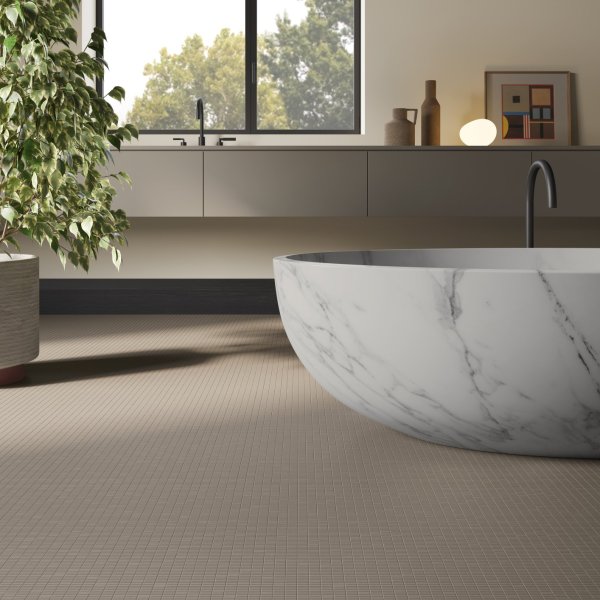
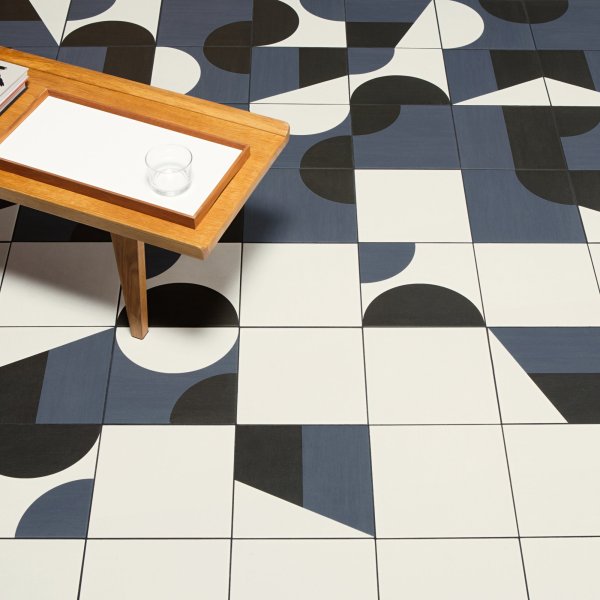
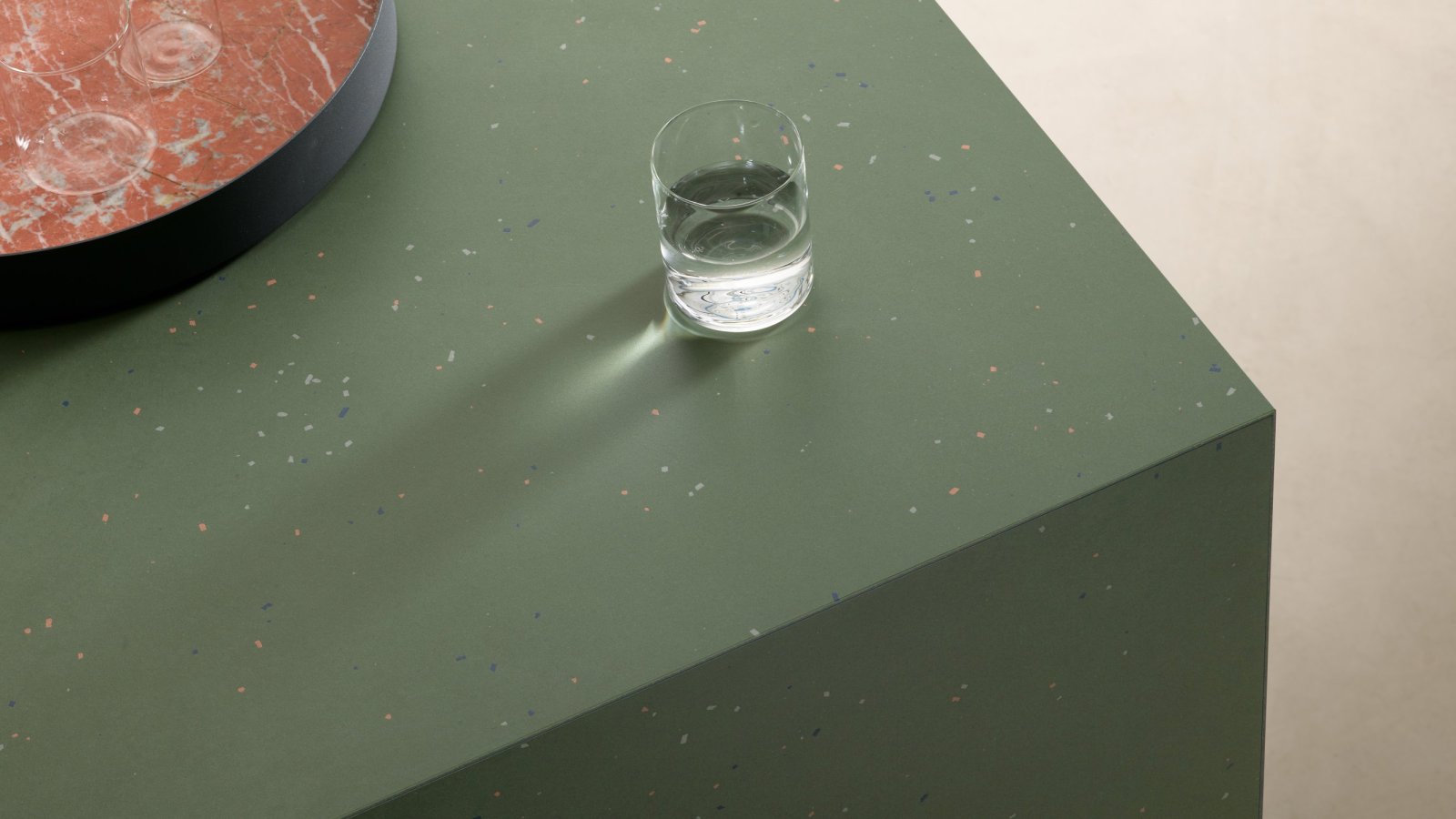
Terrazzo look Primavera porcelain tile by Mutina with real ceramic chips

Primavera by Mutina: the terrazzo look without the terrazzo job

Mutina

Barber Osgerby

Green
Green Available now
$ 2,934

What did you have in mind?

Trade terms for professionals and design studios

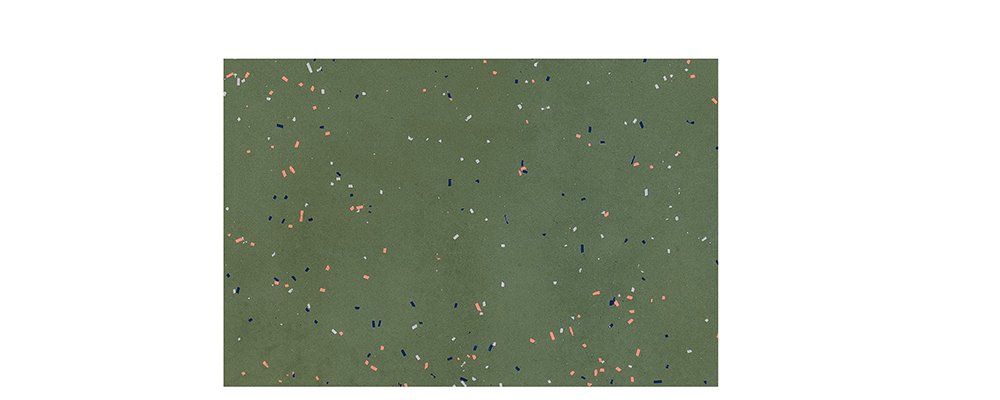
Real terrazzo is a construction project: pour, cure, grind, polish, seal — and a schedule that owns your space for weeks. Primavera delivers the look by the box instead. Barber and Osgerby scatter genuine ceramic chips across an unglazed porcelain stoneware slab — no digital printing anywhere — and the press does the rest, so every tile lands unique, like the real thing, without a wet trade in sight. It installs like tile, on regular thin-set, over existing floors if the schedule demands it.

The data sheet works as hard as the look: 6 mm thin, stain class 5, DCOF 0.51, heavy-use Robinson rating, frost-proof for patios and even ventilated facades. Five colors — Bianco, Grigio, Nero, Verde, Blu — in 47×47 and 24×24 inch formats, with 14% recycled content documented for LEED 4.1. La Mercanti ships it to U.S. projects where a lobby, break area or executive washroom needs terrazzo presence on a tile timeline.

Technical information based on data declared by the manufacturer.

Collection: Primavera
Producer: Mutina
Design: Edward Barber & Jay Osgerby, 2018 — German Design Award 2020, Archiproducts Design Award 2019 (Primavera Grigio); registered design, 2019
Material: unglazed porcelain stoneware (UNI EN 14411 App G, BIa UGL group), 0.24 in thick
Sizes: 47.2×47.2 in / 47×47 in (work size 46.9 in) — 23.6×23.6 in / 24×24 in (23.4 in)
Colors: Bianco, Grigio, Nero, Verde, Blu — real ceramic chips pressed into the surface (Continua Plus technology, no digital printing), soluble-salt shaded grounds, V3 variation
Use: floors and walls, indoor and outdoor, ventilated facades (with safety fibre), high-traffic areas (Robinson test: heavy use)
Declared values: water absorption <0.5% — deep abrasion compliant — frost and thermal shock resistant — acids and bases class A, pools included — stain class 5 — DCOF 0.51, slip R9 (DIN 51130), DIN 51097 class B
Sustainability: 14% recycled content (LEED 4.1); ISO 14000 and ISO 9001 systems; VOC, HPD, EPD, SDS on request
Installation: 0.08 in joint; C2S2-class adhesives for the large format and over radiant heating; quick-setting adhesives over existing floors; neutral cleaner only, no acids or waxes

La Mercanti USA Llc — your partner for Italian design and contract supply.
Los Angeles, CA, USA · +1 855 335 8079 · info@lamercanti.us
Supply, quotes, specifications and project support across the United States and North America.

Let us know which finishes you'd like to explore

$ 180

Credited in full toward your purchase

FAQ

How is Primavera different from poured terrazzo?
It skips the jobsite chemistry. Traditional terrazzo means pouring, curing, grinding and sealing on site; Primavera arrives as finished 6 mm porcelain with real ceramic chips already pressed into the surface. You get the one-of-a-kind terrazzo character with standard tile installation, timeline and maintenance.
Are the chips printed on, like most terrazzo-look tile?
No — and that is the whole point. Mutina's data sheet states it twice: no digital printing. The chips are physical ceramic fragments thrown at random and dry-pressed into the body, and the shaded background comes from soluble salts. You can see and feel the difference at the first sample.
What performance numbers can I put in a spec?
Stain resistance class 5, water absorption below 0.5 percent, DCOF 0.51 above the commercial threshold, DIN 51097 class B for wet barefoot zones, frost resistance for exteriors, Robinson rating for heavy use, and 14 percent recycled content documented under LEED 4.1, with VOC, HPD and EPD files on request.
Can we install it over the existing floor on a fast-track job?
Yes: Mutina's laying guidance covers installation over existing floors and old ceramic with quick-setting adhesives. At 6 mm the build-up is minimal, so thresholds, doors and transitions usually survive untouched — a renovation can move floor by floor while the office keeps working.
Does every tile really look different?
Every slab is unique by production, not by claim: the chips fall randomly before pressing, so the pattern never repeats, with a moderate V3 shade variation across the batch. Lay three boxes side by side and no cluster of chips will ever line up — which is exactly how real terrazzo behaves.

How to get terrazzo presence on a tile schedule

For U.S. design and facility teams: a practical sequence for specifying Primavera in lobbies, break areas and washrooms without a wet trade.

Price the schedule, not just the surface
Compare Primavera against poured terrazzo on total timeline: no curing or grinding phases means the space returns to service as soon as the grout sets.
Anchor the lobby first
Use the 47×47 format where first impressions are made; the random field reads as bespoke terrazzo the moment visitors walk in.
Carry one color through
Keep a single color from lobby to elevator landings for continuity, then switch to 24×24 in restrooms without changing the visual language.
Check the wet-zone numbers
DCOF 0.51 and DIN class B cover showers and washrooms; for exterior ramps specify a higher-grip surface and note it in the schedule.
Collect the documentation
Request the LEED 4.1 recycled-content line, VOC and HPD files with the order so the sustainability chapter closes itself at submittal time.

You May Also Like