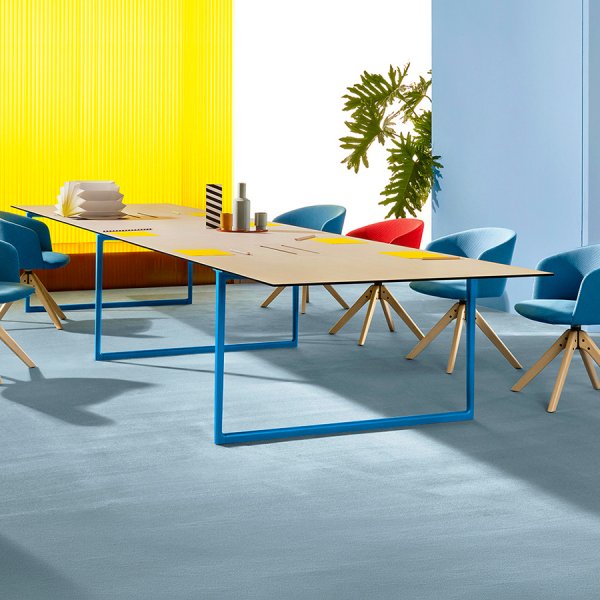
Trilo conference table by Bralco in a US boardroom

Trilo by Bralco, the conference table where sockets vanish into veneer

Bralco
Conference table only
Trilo The piece that makes the room Conference table only
$ 17,269

Already have something in mind?

Trade terms for professionals and design studios

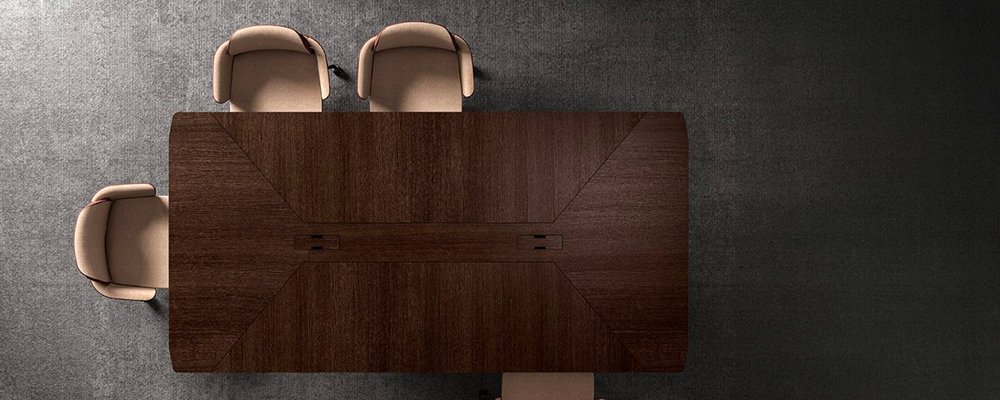
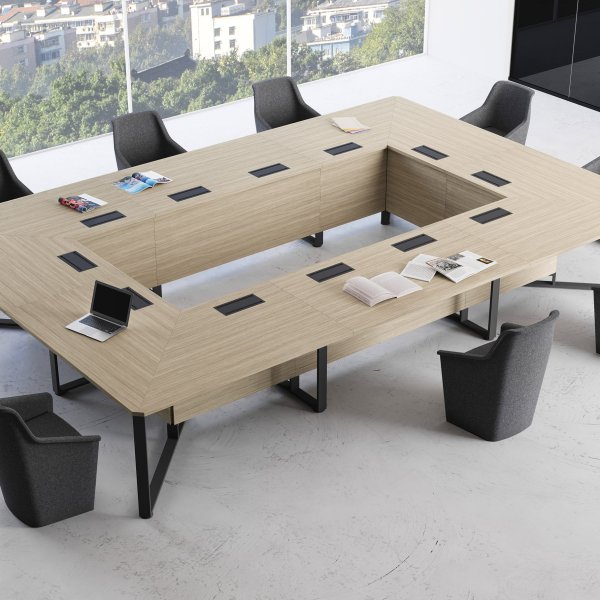
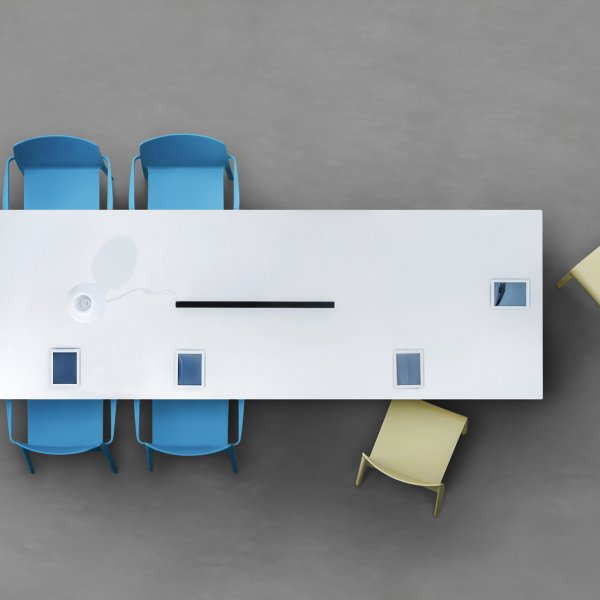
Every American conference room has the same tell: a plastic power hatch in the middle of a beautiful table. Bralco's Trilo refuses it. The socket boxes sink flush into the top, and their flaps are finished in the same wood veneer, in the same color, as the surface itself — closed, the table is unbroken timber; open from either side, it feeds every laptop on the agenda, with a slot passing cables down through openings hidden inside the legs.

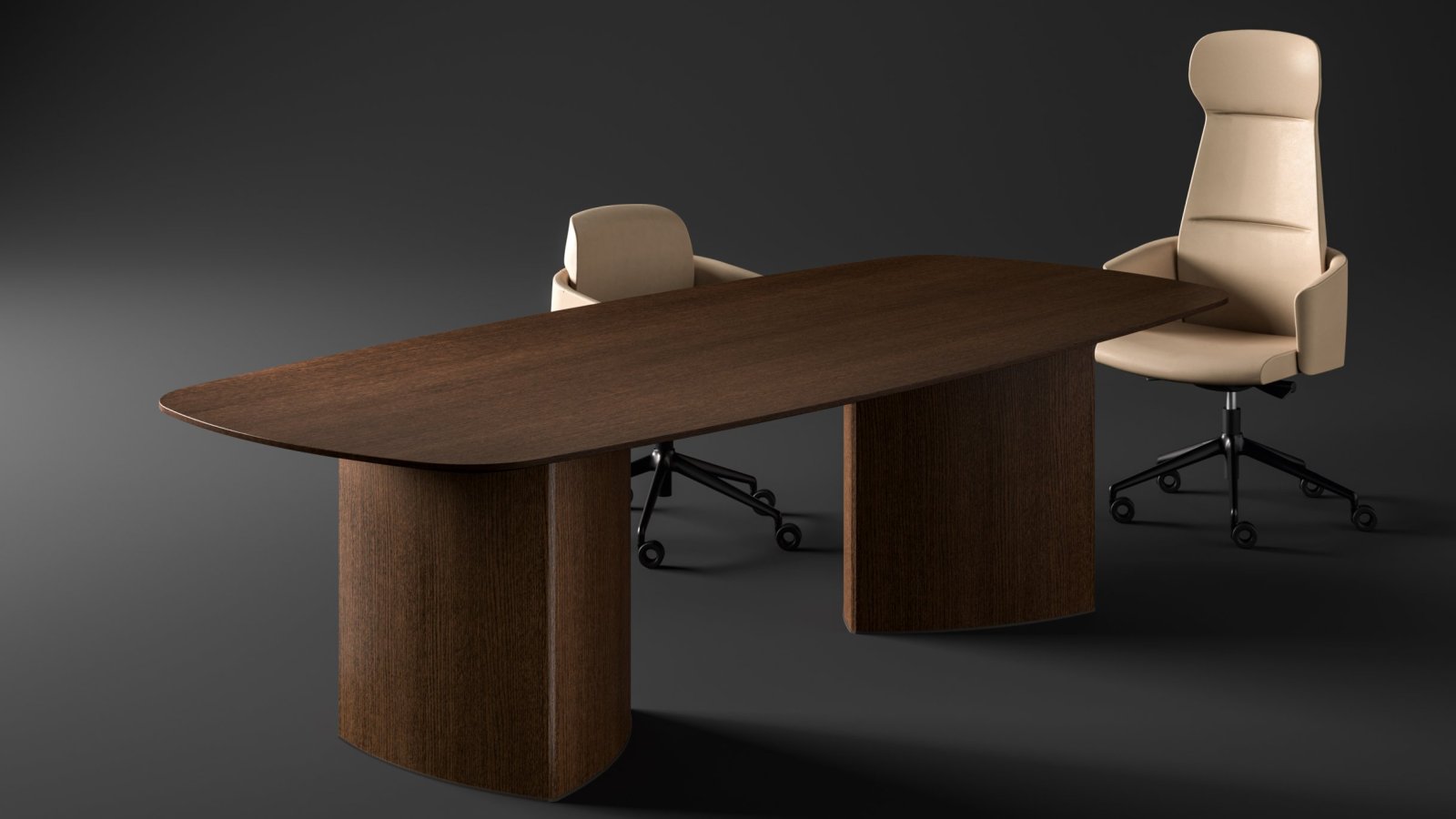
The rest of the table earns the discretion. Tops are 30 mm cores veneered on both faces, edged in solid wood, tapered and chamfered at the perimeter; the sculptural columns are mould-shaped plywood, oak-veneered to match. Finishes range across seven oaks, Ecomalta and leather inserts with visible stitching; formats run from 140 cm to boardroom lengths of 360-440 cm seating 12/14, plus ø 120 and ø 160 rounds. Design by Gianantonio Perin and Monica Fernandes. Through La Mercanti, Trilo arrives in U.S. projects wired for the meeting and dressed for the room.

Technical information based on data declared by the manufacturer.

Collection: Trilo
Manufacturer: Bralco
Design: Gianantonio Perin and Monica Fernandes
Type: conference and executive tables in wood
Tops: 30 mm MDF veneered 0.6 mm on both sides; solid wood edge rounded to 2 mm radius; tapered, chamfered perimeter; marquetry tops with opposing grain available
Finish process: water-based stain with clear acrylic topcoat, or open-pore lacquer
Structure: mould-shaped plywood columns, oak veneered and edged; 6 mm joining plates lacquered on both faces; internal cable routing through the legs
Power: concealed socket boxes with flap opening from both sides, veneer-matched to the top
Sizes (h 75): w 140 · 160 · 179.4 · 240-280 (8/10 seats) · 280 · 282×171 · 360-440 (12/14 seats); round ø 120 and ø 160
Wood finishes: natural, grey, dark grey, tobacco, Carbon, black lacquered and white lacquered oak
Other finishes: Ecomalta H1/H2/H3 on tops and legs; leather or eco-leather insert with stitching detail; shadow grey metal
Recyclability: wood 100%, metal 100%, plastic 99.5%

La Mercanti USA Llc — your partner for Italian design and contract supply.
Los Angeles, CA, USA · +1 855 335 8079 · info@lamercanti.us
Supply, quotes, specifications and project support across the United States and North America.

Let us know which finishes you'd like to explore

$ 180

Credited in full toward your purchase

FAQ

How many people do the largest Trilo formats really seat?
Bralco declares 12/14 seats for the 360-440 cm tables, with a depth of 171.6 cm, and 8/10 for the 240-280 cm formats, all at 75 cm height. The abacus also includes compact tables from 140 cm and rounds at ø 120 and ø 160, so one line covers huddle to board.
What makes the Trilo top different from a standard veneered panel?
Three details declared in the technical sheet: veneer on both faces of the 30 mm core for a balanced, stable panel; a solid wood perimeter edge rounded to a 2 mm radius; and, on selected compositions, marquetry — veneer precision-cut and inlaid with the grain running in opposite directions.
Can the finish handle daily conference use?
The surface is stained with water-based tint and sealed with a clear acrylic coat, or open-pore lacquered. Maintenance is deliberately ordinary: a soft, barely damp cloth along the grain, no abrasives, no acetone or ammonia, no waxes — and the manufacturer advises keeping direct sun off the veneer.
Which finish reads best for a client-facing boardroom?
That is a register choice: the seven oak tones run from natural to Carbon and black lacquered; Ecomalta gives a mineral, contemporary surface on both top and legs; the leather insert with visible stitching adds a tailored accent. La Mercanti confirms finishes on physical samples before the order.
Is the table a responsible purchase at end of life?
The declared figures are unusually clean: 100% of the wood and 100% of the metal are recyclable, and 99.5% of the plastic. The table leaves the building as sorted materials — a line item facilities can defend.

Killing cable spaghetti in the conference room

Five steps to a boardroom where the technology works and the table never shows it.

Map the seats, then the sockets
Lay the seating plan first and place the concealed boxes where laptops actually open; symmetry serves the eye, placement serves the meeting.
Feed the table from below
Route power up through the legs' internal openings so no floor cable crosses a walking path — the run from floor box to tabletop stays inside the furniture.
Keep the flaps in the family
Specify the socket flaps in the same veneer as the top; a closed table should look like furniture, not like equipment.
Choose the format for the real agenda
A 280 that seats ten comfortably beats a 440 half-empty; reserve the big format for boards that genuinely convene twelve.
Rehearse before the first meeting
Open every flap, connect every seat, close the table: the test of concealed power is how fast the room returns to plain wood.

You May Also Like