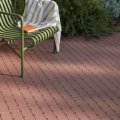
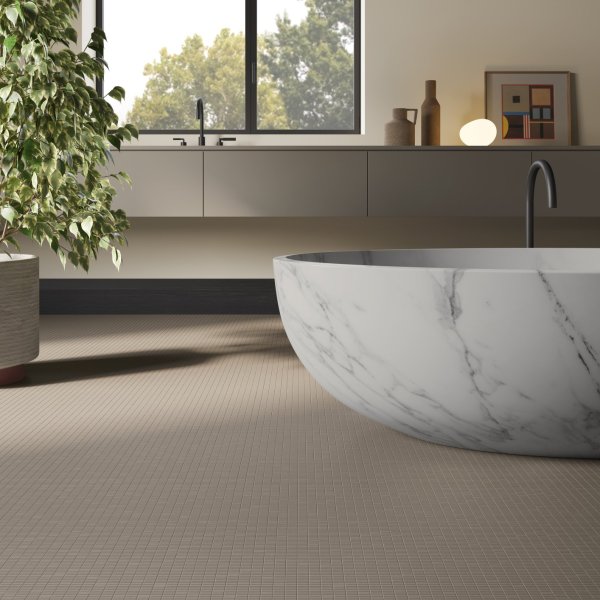
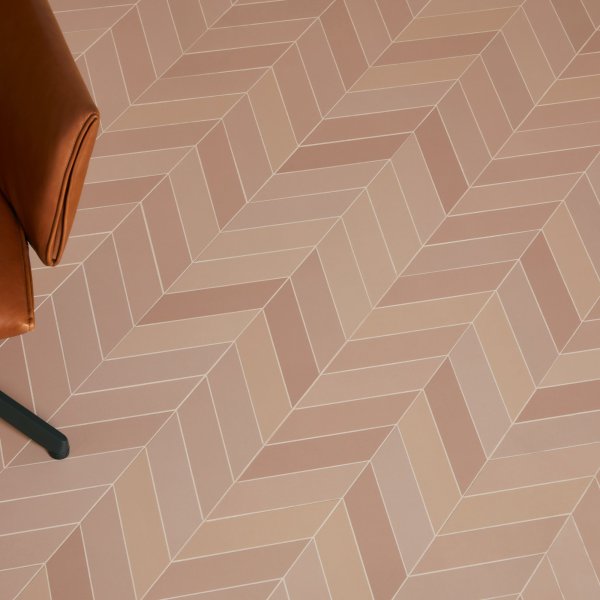
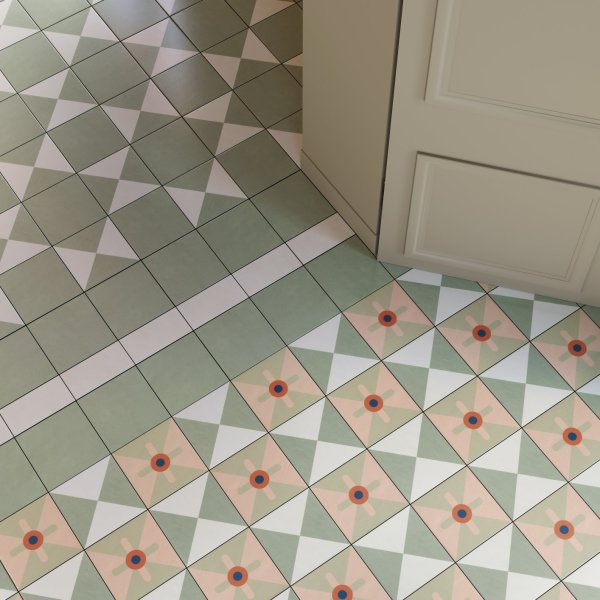
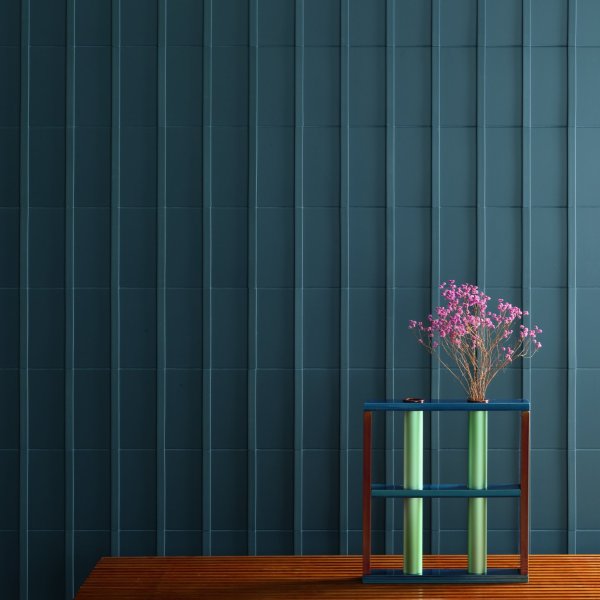
Osso & Bottone porcelain surface by Mutina

Osso & Bottone: Mutina porcelain, one spec from Miami to Chicago

Mutina

Ronan & Erwan Bouroullec

L Red
L Red Available now
$ 1,049

Already have something in mind?

Trade terms for professionals and design studios

American hospitality lives outdoors — and its floors have to survive everything from salt air to freeze-thaw. Osso & Bottone was born for exactly that range: the first Mutina collection designed explicitly for exterior spaces, with declared frost resistance, 0.15% water absorption and DCOF 0.66, so the same tile can serve a Florida patio in August and a Great Lakes rooftop in January.

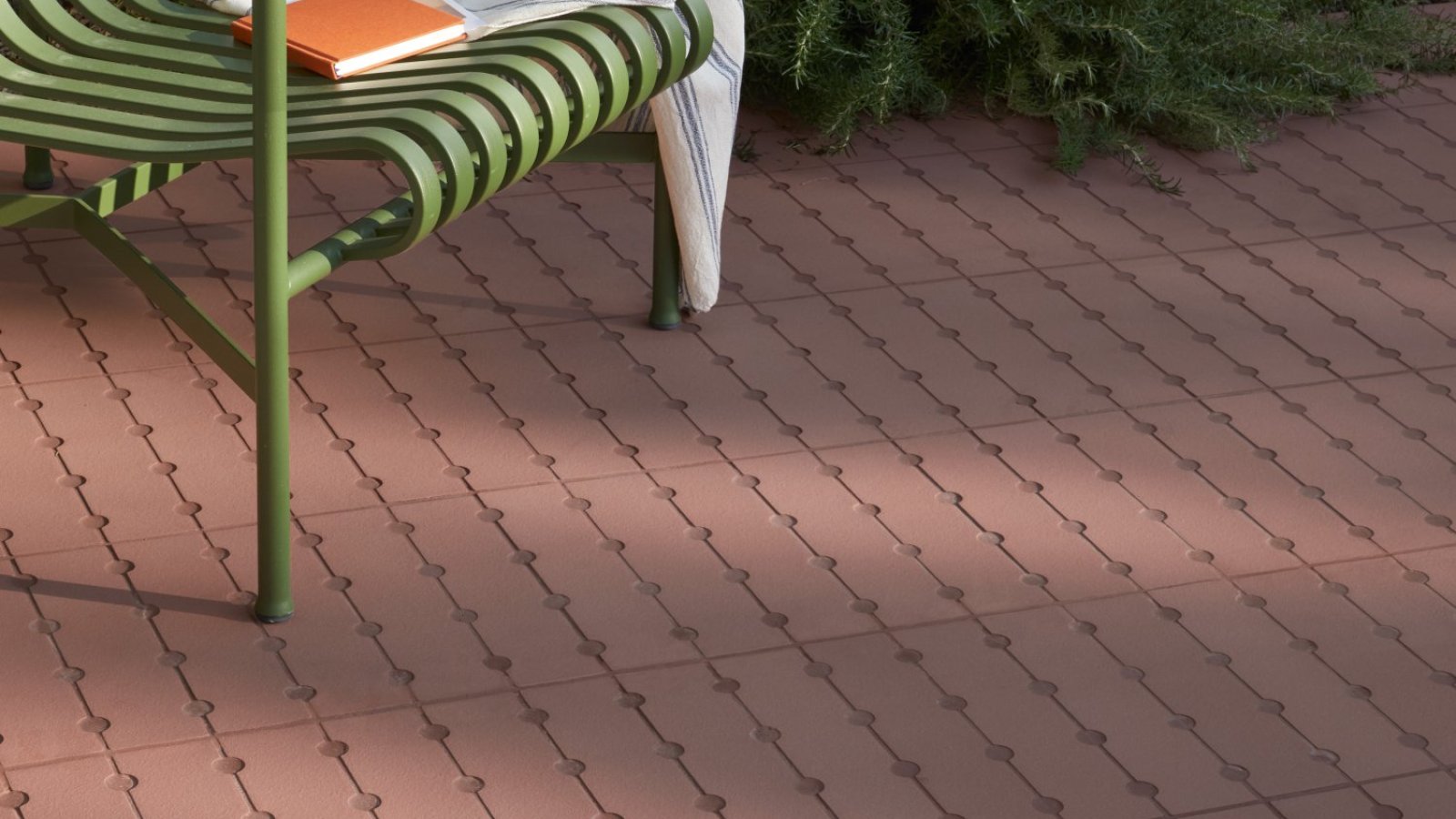
Ronan Bouroullec (2024) sculpted four unglazed porcelain modules — Osso L 3×9 in, Osso S and Bottone S 1.2×10.8 in, Bottone L 3×12.5 in — whose edge cuts turn the grout line into the drawing: Osso tapers like a bone, Bottone closes into perfect circles across the mandatory 4 mm joint. The five colors — Sabbia, Grigio, Rosso, Blu, Verde — are mixed earths running through the full 10 mm body, not surface glazes, with stain class 5 for espresso, sunscreen and everything a busy patio can spill.

Run it from the dining room to the deck, from reception to the entry court, or use it strictly inside for the graphics. Technical sheet and certificates can be downloaded from this page.

Technical information based on data declared by the manufacturer.

Collection: Osso & Bottone
Producer: Mutina
Design: Ronan Bouroullec, 2024 — registered design no. 015057019-0001/0016 (04/10/2024)
Material: unglazed porcelain stoneware, full-body coloured mixture — UNI EN 14411 App G (BIa) UGL
Thickness: 10 mm (0.4 in)
Sizes: Osso L 3×9 in · Osso S 1.2×10.8 in · Bottone L 3×12.5 in · Bottone S 1.2×10.8 in
Colors: 5 — Sabbia, Grigio, Rosso, Blu, Verde (mixed coloured earths, V3 variation)
Use: floor and wall — indoor and outdoor
Declared values: water absorption 0.15% (ISO 10545/3) — stain class 5 — chemicals class A — frost-proof — DCOF 0.66 — R11 (DIN 51130) — barefoot class C (DIN 51097) — Pendulum 55 dry / 45 wet (EN 16165-C) — P4 (AS/NZS)
Installation: 0.16 in joint, mandatory for Bottone S and L — cement grout (indoor/outdoor) or epoxy grout (indoor only) — blend from several boxes
Documentation: VOC declaration, HPD, EPD, SVHC and Declaration of Contents on request

La Mercanti USA Llc — your partner for Italian design and contract supply.
Los Angeles, CA, USA · +1 855 335 8079 · info@lamercanti.us
Supply, quotes, specifications and project support across the United States and North America.

Let us know which finishes you'd like to explore

$ 180

Credited in full toward your purchase

FAQ

Can one order really cover a patio and the dining room behind it?
That is the premise of the collection: Mutina's first line born for exteriors, finished carefully enough for interiors. Same color, same 10 mm thickness, same declared values inside and out — the threshold simply disappears from the floor plan.
How does it handle freeze-thaw climates?
The declared data covers it: 0.15% water absorption — far below the 0.5% ceiling for porcelain — plus tested resistance to frost and thermal shock. That is what allows the same specification in Phoenix heat and Chicago winters.
What makes the pattern appear in the grout lines?
The edges are sculpted: Osso pieces taper at the center like bones, while Bottone pieces carry semicircular cuts that close into full circles when two modules meet across the 4 mm joint — which Mutina declares mandatory for Bottone S and L.
Is unglazed porcelain hard to keep clean in hospitality use?
Routine cleaning is a porcelain-specific detergent diluted in water. Declared stain resistance is class 5 — the top rating — and chemical resistance class A, so wine service and daily sanitizing both stay uneventful.
How should we evaluate the five colors before committing?
On physical samples, outdoors if the project is outdoors: the shades are mixed earths with V3 variation, so they shift subtly piece to piece. Samples can be ordered, and their cost is fully credited when the order is confirmed.

One floor, four seasons: planning Osso & Bottone coast to coast

Five steps to specify Mutina's outdoor-born porcelain across climate zones, from the datasheet to the grout color.

Map the exposures first
List every condition the floor will meet — pool splash, de-icing salt, August sun — and check each against the declared values: frost-proof, 0.15% absorption, class A chemicals, DCOF 0.66.
Give each zone one shape
Bottone's circles read as graphic energy for bars and patios; Osso's tapered field stays calm for dining and lobbies. Mixing both in one view dilutes both.
Lock the 4 mm joint
Write it into the spec — mandatory on Bottone S and L — and pair it with the right grout: cementitious for exterior work, epoxy only indoors.
Decide what the grout says
Tone-on-tone hides the geometry until you look; contrast turns the floor into signage-free branding. Judge it on a mockup panel in real daylight.
Order by shape, blend by box
Each of the four formats has different pieces per square foot of coverage, so quantify per shape — then blend from several boxes during installation to distribute the V3 shading.

You May Also Like