
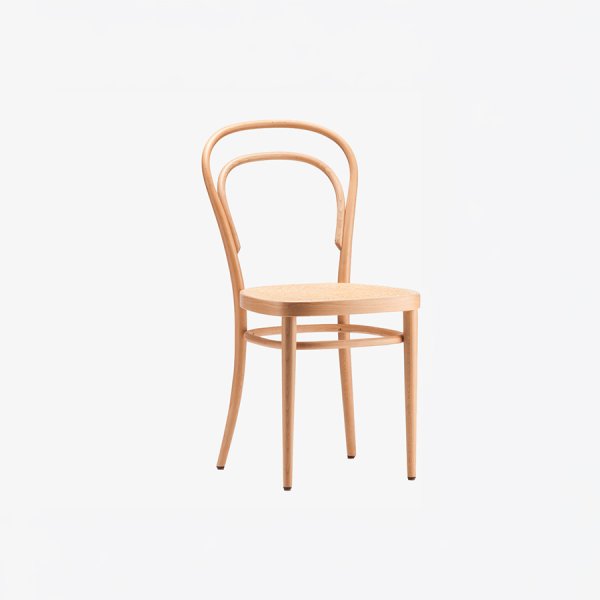
Bentwood chair
$ 2,205
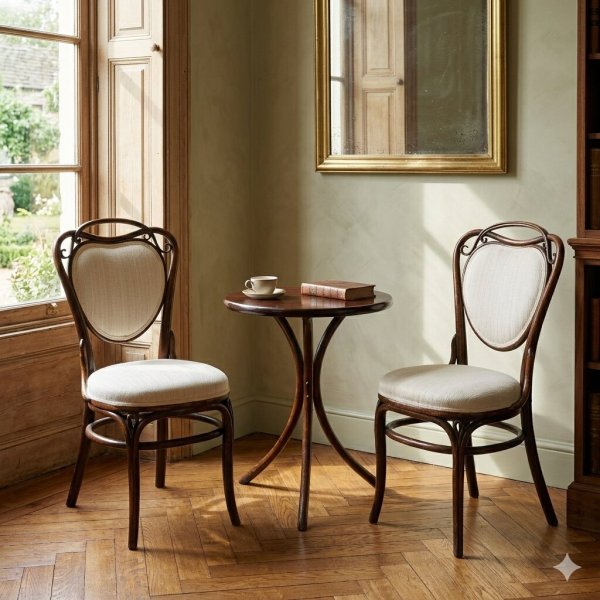

Since the 1930s, Thonet chairs have been what the company calls a silent star of international cinema: they furnish the scenes where characters meet and the story takes a turn, in films by self-avowed Thonet collectors like director Billy Wilder and well beyond them. The casting makes sense. The brand found its first success in the Vienna coffee house, a place to meet and to be seen, and from 1850 the No. 4 chairs at Café Daum on the Kohlmarkt made Thonet famous across the city. A film set asks a chair for exactly that kind of public role.
Off screen, the work happens at Frankenberg, Germany, where Thonet has built furniture since 1889 and where production runs strictly to order, with frame and upholstery picked from what the company describes as an almost limitless range of materials. Every piece goes through an individual quality check before it ships, and the founder's family, now in its fifth and sixth generations, remains a shareholder. La Mercanti brings that story to American projects as a design consultant, helping restaurants, lobbies and private offices decide which Thonet family belongs in which room.
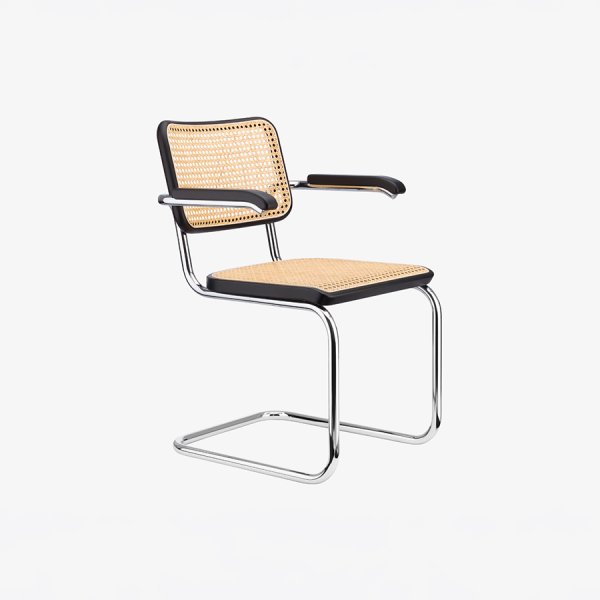
Thonet produces only to order in Frankenberg, so frame and upholstery are chosen piece by piece from a range the company calls almost limitless: bentwood, Vienna cane, bentply, a variety of surfaces, leather, fabrics, weave and mesh, plus outdoor versions. For a designer, the practical consequence is that the same model can be dressed for a busy restaurant floor or a quiet study, with a care routine to match each material.
Bending solid beech allowed Michael Thonet, for the first time, to make a chair in an almost industrial way. The No. 14, today the 214, was built from a few components made with a division of labor and combined as needed, then shipped disassembled to save space. That is why Thonet describes itself as a pioneer of high-quality series production, and why the chair could be found nearly worldwide long before globalization.
Thonet offers a free authenticity check for furniture you have inherited or bought. These five steps prepare the photos and details its experts in Frankenberg need to date a piece and name the model.
Thonet identifies its furniture by stamps and product labels, such as paper labels or stamped marks. They usually sit on the seat frame or underneath the piece, so turn the chair over in good light and look carefully before taking a single picture.
The experts need high-quality images, up to 4 MB each and not zipped, showing the marks clearly. Photograph the piece as it stands today, without editing or retouching anything, because the current condition is exactly what they need to see.
Alongside the close-ups of stamps and labels, we suggest including full views from the front, the side and the back. A clear overall shape helps place the model among the many bentwood and tubular steel designs that appeared in Thonet catalogs.
Requests go by email to the authentication service at Thonet GmbH in Frankenberg, Germany. The team can tell you which model the piece is, when it was made and in which Thonet catalog it was originally shown.
The verdict is given to the best of Thonet's knowledge of its own history, without liability, and the free service can take some time because demand is high. We recommend waiting for it before buying, restoring or reselling a piece.