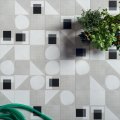
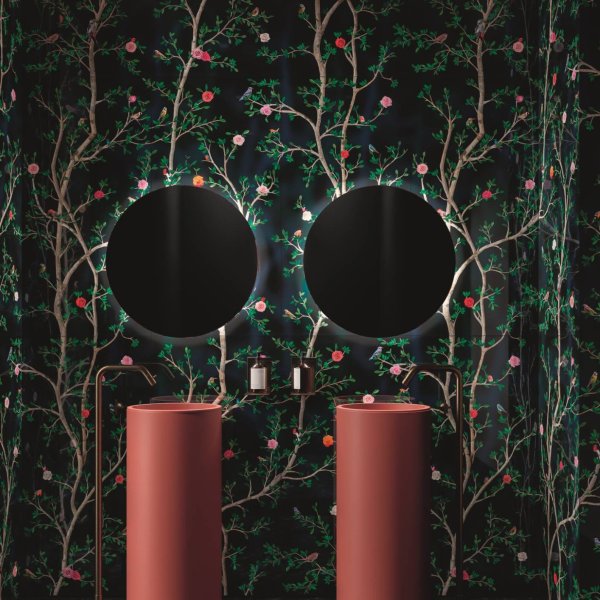
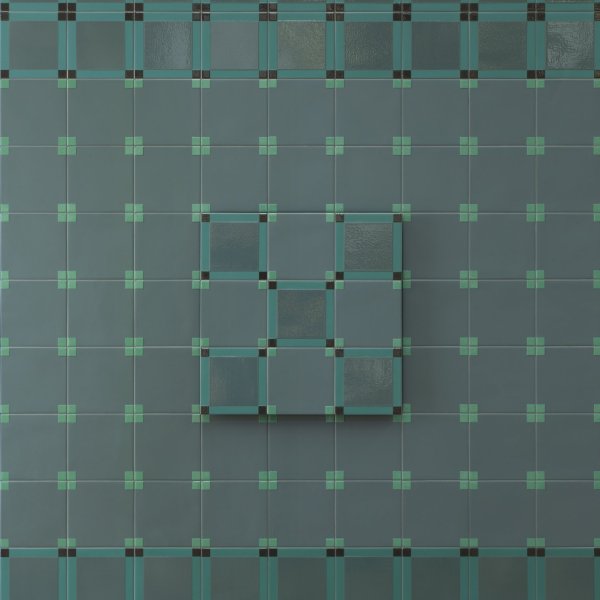
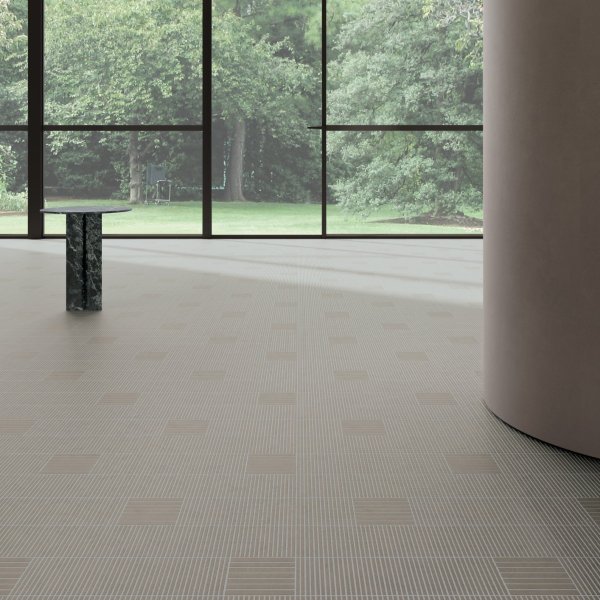
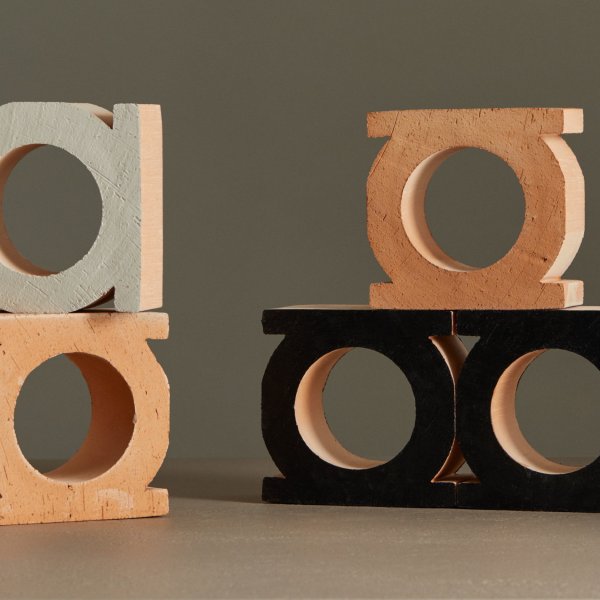
Designer ceramic tile Futura by 41zero42 in a 6x6 inch format on a restroom wall

From the Bauhaus to the beat generation: the sources 41zero42 prints on the Futura data sheet

41zero42
Futura T Az
Futura T Az Guide price — every project is bespoke

Let's discuss your project

Trade terms for professionals and design studios

Most tile collections borrow their story from a place or a technique. Futura borrows it from a reading list. In the text 41zero42 prints on the collection's own information sheet, the sources run from the Bauhaus and Pierre Chareau to, in the manufacturer's own words, the beat generation and cyber style. An Italian tile factory in Fiorano Modenese naming Kerouac's decade alongside Weimar is not a marketing flourish; it explains why the same collection can produce a room that reads austere and a room that reads loud, depending on which of the 24 references you pick.

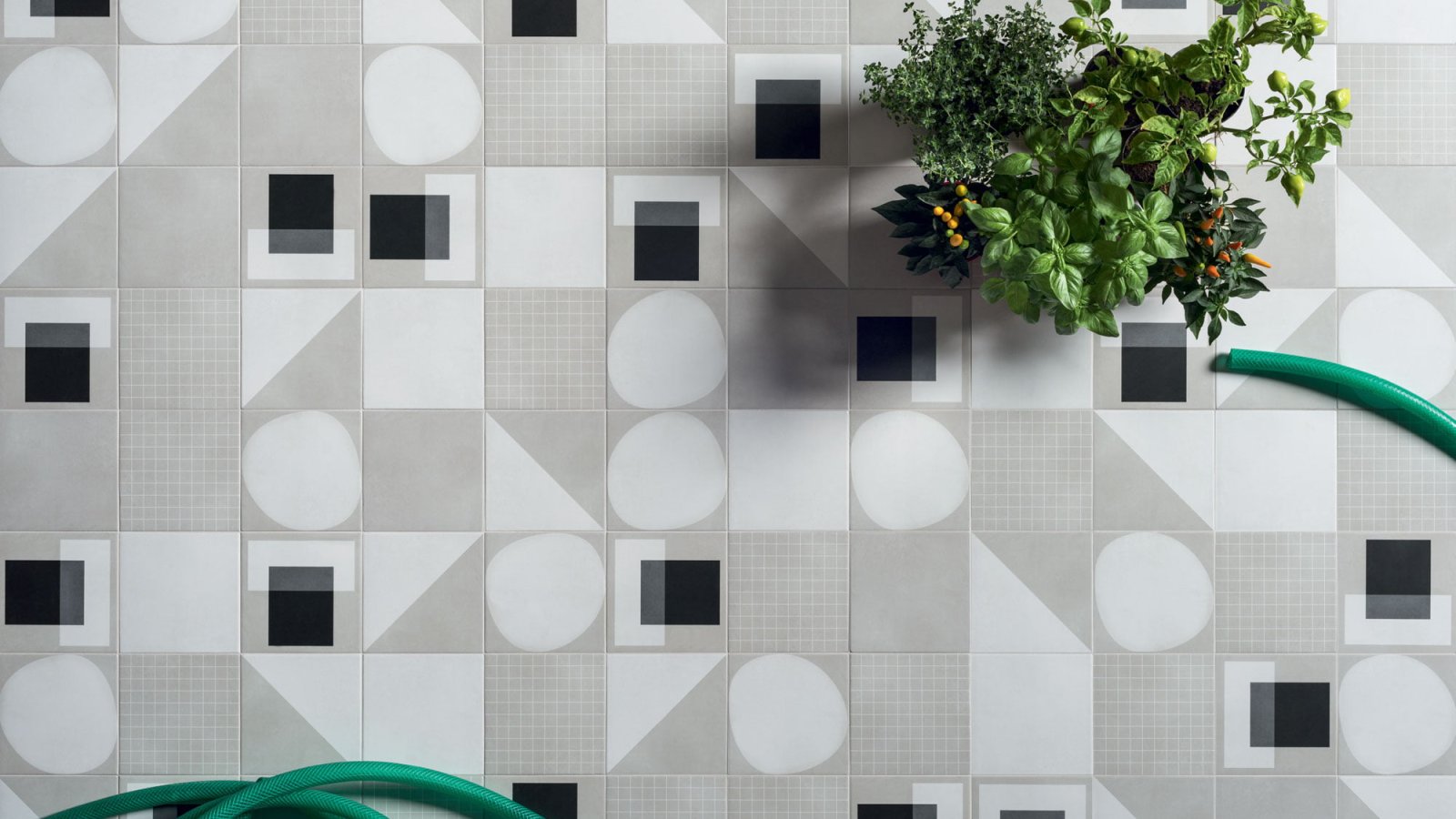
The catalogue backs it up. Five grounds — Grey, the cement tone the whole collection turns around, then Rose, Black, White and Blue — carry four decorative families, Half, Grid, Drop and T, plus four pictorial designs named Triangles, Microchip, Tubes and Bird. Underneath, the specification is plain: HD digital glazed porcelain, 6×6 in at 3/8 in, matt, with abrasion class IV, a DCOF of 0.50, R10, stain class 5, absorption at 0.3% and ANSI V1. La Mercanti handles the import from Italy and fixes the ratio of grounds to decors on the plan, while a twenty-four-piece alphabet is still easy to edit.

Technical information based on data declared by the manufacturer.

Collection: Futura, 41zero42
Manufacturer: 41zero42, Fiorano Modenese (Modena), Italy
Technology: HD digital glazed porcelain, BIaGL group
Size and thickness: 6×6 in (15×15 cm), 3/8 in (10 mm) — the collection's only size
Finish: matt (natural)
Grounds (5): Grey — the cement grey that is the collection's main color — White, Black, Blue, Rose
Decorative families (4): T (White, Blue, Rose) · Drop (White, Blue, Rose, Black) · Grid (White, Blue, Rose, Black) · Half (White, Black, Blue, Rose)
Pictorial designs (4): Bird, Tubes, Microchip, Triangles
References: 24, each with its own code (4100516 Grey through 4100539 T Blue)
Appearance: inspired by handmade cement tiles; the manufacturer declares a semi-industrial process with variations in flatness and wedging and small irregularities on the glazed surface, plus a slight tone variation between grounds and decors
Recommended grout: Mapei 110 Manhattan for every color
Joint: 3/4 mm (about 1/8 in) recommended; the manufacturer states that the same caliper between references is not always guaranteed
Water absorption: 0.3% (ISO 10545/3 and ASTM C373, required ≤0.5%)
Breaking strength: 46 N/mm² (ISO 10545/4, required ≥35)
Stain resistance: class 5 (ISO 10545/14 and ASTM C1378, required ≥class 3)
Thermal shock, frost, chemicals: unaffected (ASTM C484, C1026, C650)
Slip resistance: R10 (DIN EN 16165)
Abrasion: class IV (ASTM C1027) — PEI IV
Dynamic coefficient of friction: DCOF 0.50 (required >0.42)
Aesthetic class: V1 (ANSI A137.1)
Packing: 22 pieces per carton, 5.4 sq ft, 24 lb; 125 cartons per pallet, 673 sq ft, 3,004 lb
Declared sources: the Bauhaus, Pierre Chareau and the Maison de Verre, the beat generation, cyber style, handmade cement tiles

La Mercanti USA Llc — your partner for Italian design and contract supply.
Los Angeles, CA, USA · +1 855 335 8079 · info@lamercanti.us
Supply, quotes, specifications and project support across the United States and North America.

Let us know which finishes you'd like to explore

$ 180

Credited in full toward your purchase

FAQ

What are the slip and abrasion numbers for a commercial floor?

41zero42 declares R10 under DIN EN 16165, a dynamic coefficient of friction of 0.50 against the 0.42 threshold, and abrasion class IV under ASTM C1027. Stain resistance is class 5, the top of the ISO 10545/14 scale.

What happens at a cut edge?

The manufacturer's laying instruction asks for cut areas to be sealed with silicone, and for wet areas to be waterproofed with dedicated products before the tile goes on. A 6×6 in module produces many cuts, so that detail belongs in the spec rather than on site.

Is 6×6 the only size?

Yes. Futura exists in one size and one thickness, 6×6 in at 3/8 in, for all 24 references. Everything else in the collection is color and pattern, which keeps the schedule short and the cuts consistent.

How is the material packed for shipping?

22 pieces per carton, 5.4 sq ft, 24 lb. A pallet carries 125 cartons, 673 sq ft and 3,004 lb, which is the figure a freight desk needs when the order leaves Italy.

Does the tile look machine-made or handmade?

Deliberately in between. The manufacturer writes that a semi-industrial process was chosen to obtain the perception of a handmade product, and lists what comes with it: variations in flatness and wedging, small irregularities in the glaze, a slight tone shift between grounds and decors.

How to read the Futura data sheet before writing the spec

Five lines on 41zero42's sheet that decide whether the tile belongs in a commercial specification, in the order a specifier checks them.

Start with absorption

0.3% under ISO 10545/3 and ASTM C373 puts Futura in the BIaGL group: a glazed porcelain body, not a wall tile, which is what lets it take a floor.

Read the two floor numbers together

R10 and DCOF 0.50 describe slip; abrasion class IV describes wear. A commercial floor needs both, and the sheet publishes both.

Check the aesthetic class

ANSI A137.1 rates Futura V1, while the text declares a deliberate tone variation between grounds and decors — read them as one statement, not a contradiction.

Note what is not claimed

The sheet declares frost resistance but does not list exterior use among the collection's applications: for a terrace, ask La Mercanti to confirm the application with the manufacturer in writing.

Transfer the codes, not the names

Write the reference numbers into the schedule alongside the names, so the 24-piece collection cannot be ordered by description alone.

You May Also Like