
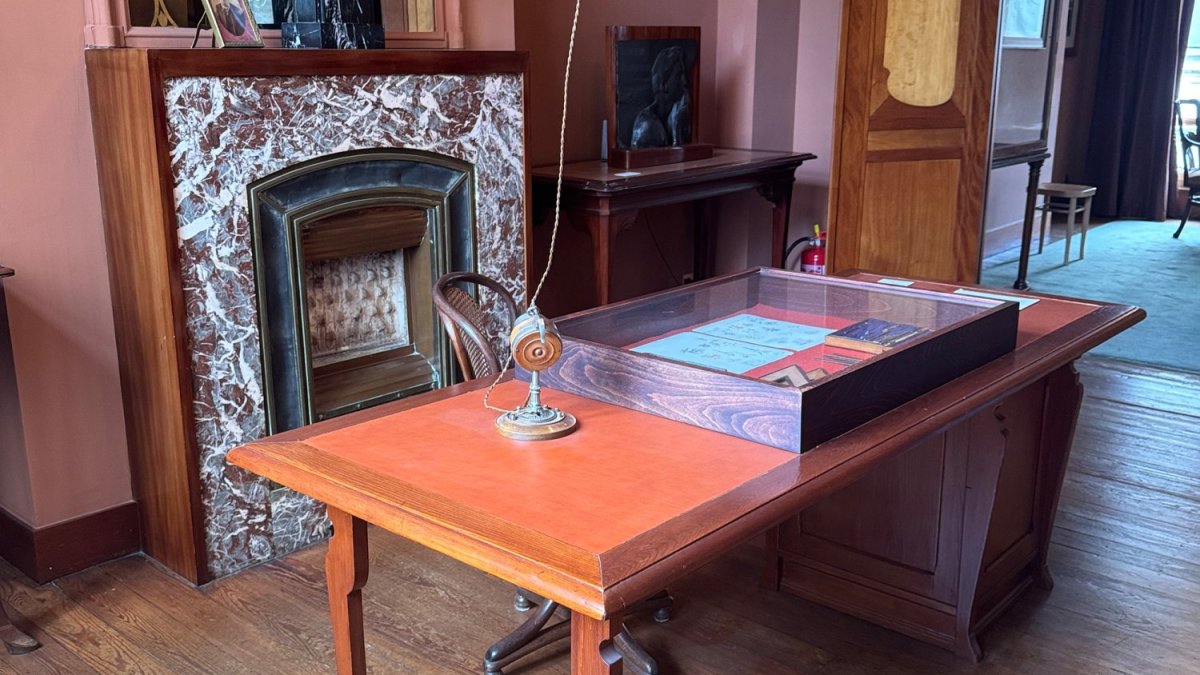
When SC Johnson's Administration Building opened in Racine, Wisconsin, in 1939, Frank Lloyd Wright had planned more than 40 pieces of furniture for it, and, in the company's words, "the brick was designed to fit the building." On Sunday, October 25, I stood in a Brussels house that had put its furniture into the plan nearly four decades before Racine: the Horta Museum on Rue Américaine.
My thesis, which an architect is free to dispute: whoever draws the room should also draw the chair. An office works when its furniture enters the project while someone is still deciding where daylight will land. Ordering desks and seating after the build-out, for a plan drawn by someone else for other reasons, means arriving late to your own office.
In Horta's house, the rooms came with their objects
Horta built the house between 1898 and 1901 on two adjoining lots he had bought in 1898, as his home and his workshop, and kept it until the 1919 sale. The museum opened in 1969, and since 2000 the house has belonged to the UNESCO listing of his major town houses, with the Hôtel Tassel, the Hôtel Solvay and the Hôtel van Eetvelde. The label in his office says the walls were originally paneled with built-in furniture that also framed the fireplace, and the fireplace is all that remains of that layout. For the same house he designed the coat hooks, the door handles and the lamps. At the Hôtel Solvay he designed every single detail, down to the tableware and the doorbell.
Racine's version of this idea is still a working office. In 1936 H.F. Johnson Jr., the third generation to lead SC Johnson, sought out Wright. Ground had already been broken for a new administrative office, and he scrapped the old plans. Among the furniture Wright planned were rolling file carts for the Great Workroom, and the brick came in nearly 200 special shapes. Steelcase produced the furniture in magnesite and cast aluminum.
Then there are the chairs. Wright's three-legged aluminum chairs, color-coded by department, would tip over if their occupants did not have both feet on the floor. Several employees fell out of them, and so did Wright, and a fourth leg was later added to most of them.
I read that as the second half of Horta's lesson. Drawing the room and the chair together is the right start, and the chair still has to be judged by the body that will sit in it, before the order.
The cast and the sample do the same job
A panel in Horta's studio describes the route a design took through the house. On some sleepless nights, it says, "designs would flow thick and fast from his pen." The sketch went down to a draftsman (Horta had nineteen as of 1901), who scaled it to size. Below, in the basement, three sculptors turned the drawing into a cast. Horta closely supervised each stage, and after a cast had passed muster it went out to the craftsman, who was expected to reproduce it exactly. A furniture project today can run the same line under other names: drawing, sample or prototype, production. My reading is that the middle step exists in both so the question gets settled while changing your mind still costs a sketch.
Here is how I would carry that chain into the architect's opening meeting.
The sketch becomes a plan with furniture on it
Desks, seating and storage go on the first drawing, next to the windows and the circulation, before anyone signs off on walls and outlets.
The scale becomes the distances you will live with
Write down the window-to-work-surface distance and the gap between the desk and the visitor's chair, because those two numbers shape every working day. Get them right on paper and daylight reaches the work where it is needed, while the guest sits at a distance that suits a conversation. The best wall in the room stays clear, since the storage was planned somewhere else. A room that holds together makes me credit whoever works in it with having thought it through. In October I wrote about the executive desk and what a room tells visitors about its occupant; Horta's house adds that the story starts on the floor plan.
The cast becomes the sample in your hands
Sit in the chair for longer than a minute and hold its finish up in the light of the actual room. Touch the fabric before any quantity goes on the order. When a project calls for designer chairs, asking to try one first is how you step into the chain at the right point. Designers who want the furniture specified while the plan is still open come to us through our Trade Program for Architects and Interior Designers, which puts the specification in writing before the client sees a number.
The craftsman becomes the order
Horta's craftsman was expected to reproduce an approved cast exactly; an order should do the same with an approved sample. If your plan reaches that point with empty rooms, put the furniture back on the drawing first. A sample is a chair's last chance to be refused.
Quick answers
Where is the Horta Museum, and what was it?
In Saint-Gilles, Brussels, at numbers 23 and 25 of Rue Américaine: the house and studio Victor Horta built for himself between 1898 and 1901 and sold in 1919. The museum opened in 1969; the house has been on UNESCO's World Heritage List since 2000, with the Hôtel Tassel, the Hôtel Solvay and the Hôtel van Eetvelde.
Was Horta a furniture designer too?
Yes. He typically drew a building's furniture too. For his own house he designed the lamps, the coat hooks and the door handles, and his office walls were paneled with built-in furniture. At the Hôtel Solvay he designed every detail, down to the doorbell.
What furniture did Frank Lloyd Wright design for Johnson Wax?
According to SC Johnson, more than 40 pieces for the Administration Building in Racine, Wisconsin, which opened in 1939. Steelcase made them in magnesite and cast aluminum. His three-legged chairs could tip over if the sitter did not keep both feet down, and a fourth leg was later added to most of them.
When is the right time to choose office furniture?
In my view, at the architect's opening meeting, while light, circulation and walls are still open, so desks and seating are drawn into the plan. Before the order, a sample in hand does the work the sculptors' cast did in Horta's studio.