Already have something in mind?
Trade terms for professionals and design studios
Already have something in mind?
Trade terms for professionals and design studios
ICF says it in so many words: the Void Chair does not simply replace upholstery with mesh. That sentence sets it apart from most task seating for the office on the market, where a stretched net stands in for foam and nothing else changes. A load-bearing perimeter frame in aluminum defines the volume; a suspended double textile membrane fills it with tension instead of material, adapting to the body and spreading its weight. ICF calls it comfort by engineering: geometry, tension and elasticity doing the work layers usually do. Design Khodi Feiz.
What you see is how it works. Frame, membrane and the connections between them remain legible; nothing is boxed in, and the logic of the chair is also its look. It counts in an executive suite or around a table of conference room chairs, where a chair is seen from behind as often as from the front.
ICF files the Void under four catalog headings, task chairs first, then executive, meeting and multipurpose, and names the home office too. One structural principle carries more than one back height, different arm types, and fixed or swivel bases; the membrane comes bare, with a slim Soft Pad, or fully upholstered. Which of those builds can be ordered is subject to ICF's final product program. La Mercanti books the seating test before the quote, because a surface that works by tension is judged sitting down, not reading a spec.

Let us know which finishes you'd like to explore
The phrase is on the central panel of ICF's booth at Orgatec 2026, under the heading A Study in Lightness: the Void Chair occupies the space between structure and sculpture, treating negative space as volume and making the space in-between an essential part of its character. On the product page the same idea is put more bluntly: empty space here is not absence but an active part of the design. In practice the chair is drawn as an outline, the perimeter frame, and the body is held by a textile stretched across that outline rather than by mass inside it. What you look through is doing the work.
Because, in ICF's words, the way the Void is built becomes part of its aesthetic language, and there is no need to hide the logic of the chair. Frame, membrane and connections stay visually legible: the aluminum perimeter runs around seat and back where you can follow it, and the points where arms and base meet it are not covered. For a buyer this is useful beyond looks. A chair that shows its construction can be inspected at a glance, from behind as well as from the front: in ICF's words, what you see is how it works.
Khodi Feiz is an industrial designer who founded Feiz Design Studio in Amsterdam in 1998 together with Anneko Feiz-van Dorssen, a graphic designer; the studio works across product design, furniture, branding and strategic design. The clients it publishes include Alessi, Artifort, Cappellini, Philips, Samsung, Logitech, Offecct and Swedese. The studio sums up its approach as clarity, concept and context, and Feiz's line on the first explains the Void better than any spec sheet: the simpler the project, the harder it gets, because there is no guise of complication to hide behind.
Through tension and elasticity, which is exactly what ICF says the membrane is there for. The load-bearing part is the aluminum perimeter frame; across it hangs a double textile membrane that defines the three-dimensional seat and back and, under a body, adapts to the body so the weight is distributed across the surface, in ICF's words. ICF calls the result a responsive surface: it gives, and it comes back. The whole surface works at once, which is why ICF speaks of tension and elasticity rather than thickness.
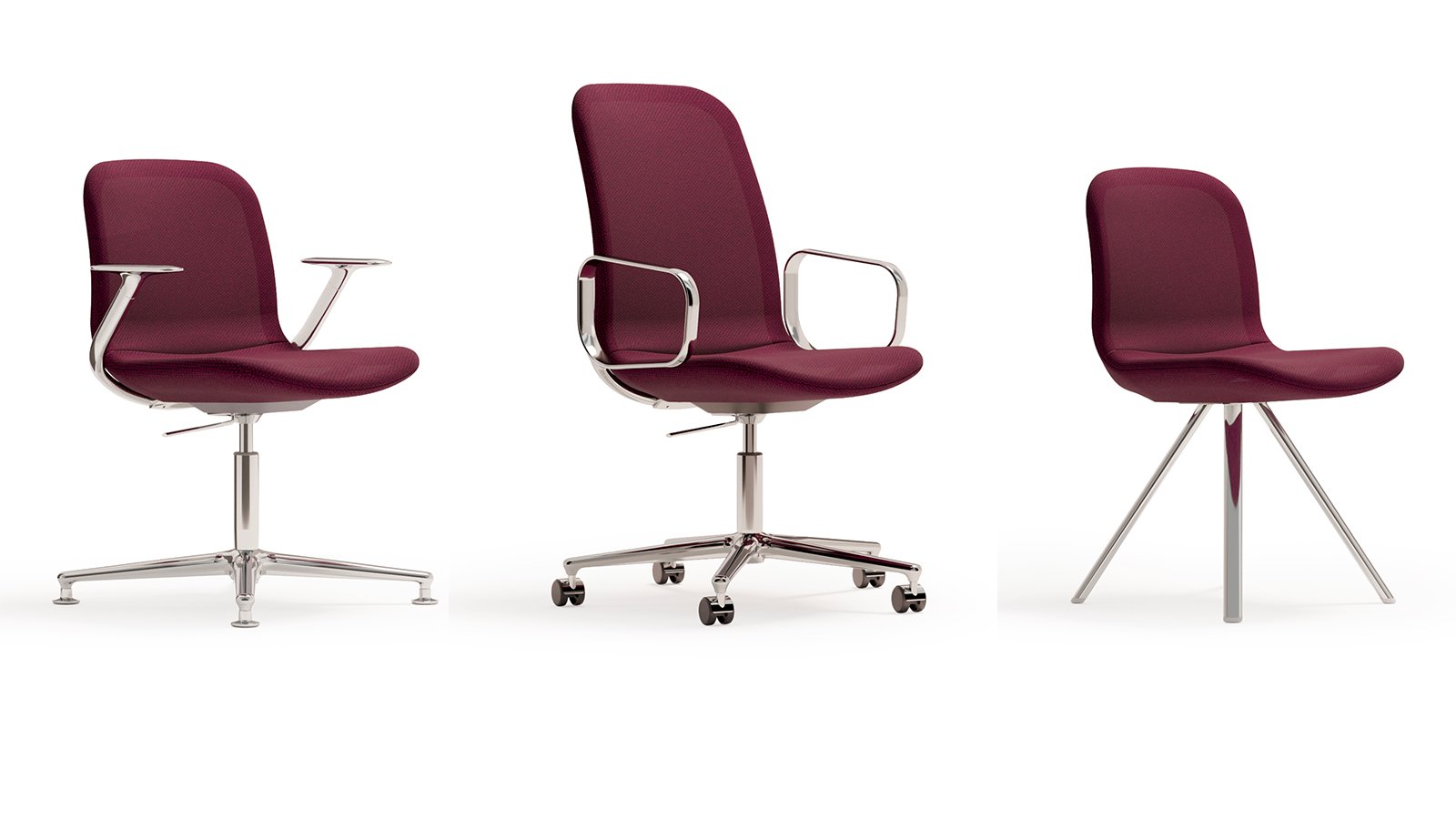
Yes, as one of the design options ICF names: the structural membrane in its most essential form, a slim Soft Pad, and a fully upholstered interpretation, each offering different tactile and visual qualities. In the images ICF has published, the upholstered versions read as a smooth, closed surface with a stitched edge and the frame still legible beneath the fabric, so the chair keeps its outline even when nothing shows through. Which upholstered builds are in the final product program is for ICF to confirm; La Mercanti checks that with ICF for each request.
ICF says the orderable versions of the Void follow its final product program, so a request gets a truer answer when it arrives already sorted. Five points, in the order a specifier would list them.
Start with where the Void Chair will stand, chosen among the settings ICF declares: a workstation, a meeting room, an executive office, a home office, a collaborative or hospitality space. The room decides most of what follows, and it is the line ICF itself puts first when it describes the family as conceived for meeting, home-office and executive use.
Write down whether the base should turn or stay put. ICF declares fixed or swivel bases as part of the system; in the images it has published the swivel versions sit on a five-star base with casters or a four-star base with glides, the fixed ones on four straight legs or a trestle. Say which one the room calls for, and say it as what the images show, since the orderable program is ICF's to confirm.
ICF declares different back heights across the family without numbering them, so the request names the use rather than a figure: meeting, home office or executive, the three configurations ICF names. State the use and let the height follow from the program; anything more precise than that would be invented.
ICF names arm options without describing them. The images it has published show three answers: a closed ring in polished aluminum, an open T-shaped arm, and no arms at all. Put the one you mean in the request, with the picture that shows it, and treat it as a preference that ICF will match against the final program rather than as a catalog line you are entitled to.
Last, the surface. ICF offers the structural membrane in its most essential form, a slim Soft Pad, or a fully upholstered interpretation, and describes the difference as tactile and visual. Choose by how the chair should feel and read in that room, and leave fabric names and colors for the confirmation stage; a request that invents them only slows the answer down.