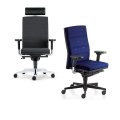
mr.24 task chair by Sedus in blue fabric with high back and adjustable armrests

Rated for 441 lb and 24/7: mr.24, the Sedus control room chair tested with raised load cycles

Sedus
Task chair
mr.24 Most Requested Task chair
$ 9,113

From our design team in Italy — within 24 hours

Trade terms for professionals and design studios

The GS certificate for mr.24 reads like a job description: office work chair, control room use, for a user weight up to 441 lb (200 kg), 24 hours a day, 7 days a week. TÜV Rheinland ran the safety tests to DIN 4573, the German standard for chairs in continuous use, and states that they were carried out with higher load cycles than an ordinary office chair sees. The certificate is valid through September 27, 2028, and a second one, for harmful substances, runs to October 2030.

What that buys a dispatch center or a security desk is a chair that can be handed from one shift to the next without a checklist. Among task and ergonomic chairs mr.24 is the one whose numbers were set by the test bench: a Similar mechanism opening to about 32° with tension set by hand crank, a Schukra lumbar support moving 2¾ in up and 1⅝ in out, a 2 in quilted seat pad, edges wrapped in polyurethane, and pads that swap out when the fabric gives up before the frame does.

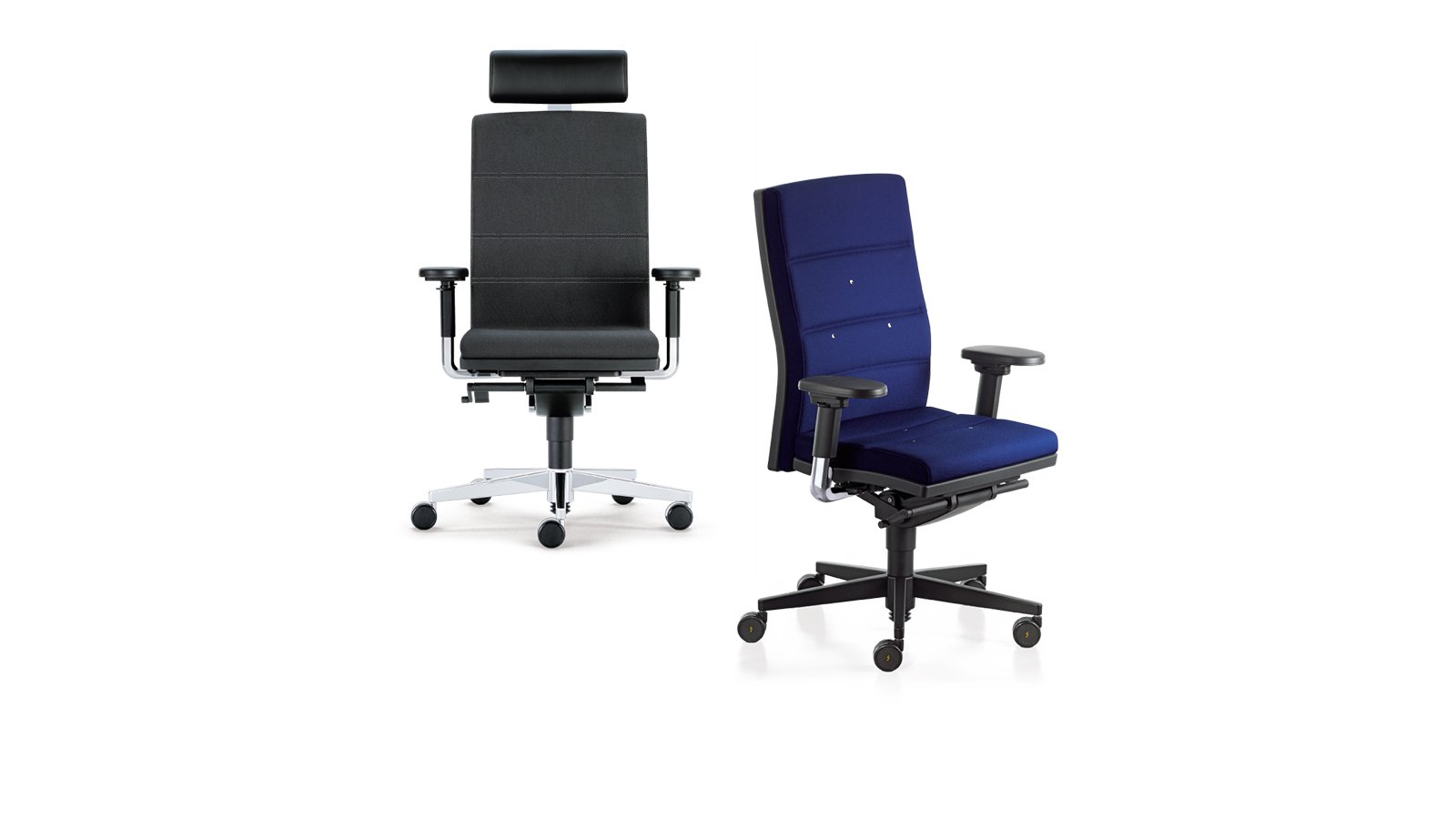
Who sits where decides the version. Operators upright at a console take the plain chair; anyone who leans back to watch a wall of screens takes the tilting vinyl neck support; where the chair doubles as a supervisor seat the leather comfort cushion goes on; and desks with keyboard trays get the armless build. The floor and the body decide the rest: soft casters on hard floors, the 1⅜ in deeper seat for larger builds, a polished base, fabric or leather. For an operations floor laid out as an open plan workspace, the rating on the certificate is the number that matters. La Mercanti puts those pounds on the chair label and on the order.

Technical information based on data declared by the manufacturer.
  • Collection: mr. 24, swivel chair for 24-hour use
  • Manufacturer: Sedus Stoll AG, Dogern, Germany
  • Design: Michael Kläsener, Sedus Design Team
  • Declared use: control rooms, continuous use over three shifts, shift work
  • Versions: without neck support · with functional neck support · with comfort neck support · with neck support, without armrests
  • User weight: recommended up to 441 lb (200 kg), stated on the product label
  • Standards: ANSI/BIFMA X5.1; DIN EN 1335-1:2023 Type A in the configuration with gas cartridge and standard sliding seat
  • Mechanism: Similar with synchronized springs; seat-to-back ratio 1:2.7; backrest tension adjustable from 124 to 337 lbf (550-1500 N); tilt to about 32°, lockable in 11 positions
  • Height adjustment: Sedo-Lift hydraulic rack system, 16½-20½ in (420-520 mm); alternatively gas cartridge DIN EN 16955 class 4, 15⅝-20½ in (390-520 mm)
  • Seat: anatomical, slightly concave with pelvis support and rounded front edge; 2 in (50 mm) quilted padding, polyurethane edge profile, replaceable pad; sliding 16¾-19½ in (425-495 mm), width 18⅞ in (480 mm); larger seat 18⅛-20⅞ in (460-530 mm) on request
  • Backrest: high, fully fabric-covered; 1⅝ in (40 mm) foam plus ⅜ in (10 mm) non-woven; replaceable pad; Schukra lumbar support adjustable in height (2¾ in, 70 mm) and depth (1⅝ in, 40 mm)
  • Neck supports: functional in black vinyl, 2 in (50 mm) height and 22.5° tilt, black powder-coated stem; comfort in black leather (cushion color on leather versions), chrome stem, 2 in height
  • Armrests: 3D with soft-touch or Gel-Pad tops, leather on request; height 4⅜ in (110 mm), depth 3⅛ in (80 mm), width 2 × 2 in (50 mm) tool-free plus 2 × ⅝ in (15 mm) with a TX40 key; lockable in any position
  • Base and casters: die-cast aluminum, black or polished; twin casters Ø 2½ in (65 mm) with load-dependent braking, hard for soft floors or soft for hard floors
  • Covers: Scala leather in 14 colors; Phoenix fabric (3 colors listed, 21 in the wider range), Pure (4), Umber; backrest available in a different cover
  • Dimensions: overall height 29⅛-37 in (740-940 mm), 29⅛-39⅜ in (740-1000 mm) with neck support; width across armrests 25⅝-30¾ in (650-780 mm); backrest 25⅝ in (650 mm)
  • Materials (EPI): 62.2 lb (28.22 kg) without packaging; aluminum 27.1 %, solid wood 17.9 %, steel 15.2 %, plastics 28.4 %; recycled content 23.1 %, recyclability 99 %; covers not glued, CFC-free foams, chrome III
  • Certificates: GS TÜV Rheinland LGA (DIN EN 1335-1/-2, DIN 4573, up to 441 lb, valid to 09/27/2028); TÜV Rheinland Ergonomics approved; TÜV tested for harmful substances (valid to 10/15/2030); AGR seal; BS 5459-2:2000; OEKO-TEX Standard 100 fabrics
  • Warranty: 5 years; 30 years on the Sedo-Lift, declared by Sedus
  • Planning files: CAD dxf/dwg, Revit, SketchUp, EPI, user instructions
La Mercanti USA Llc — your partner for Italian design and contract supply.
Los Angeles, CA, USA · +1 855 335 8079 · info@lamercanti.us
Supply, quotes, specifications and project support across the United States and North America.

Let us know which finishes you'd like to explore

$ 180

Credited in full toward your purchase

FAQ

How is the backrest tension on mr.24 set for a heavier or lighter user?

With a hand crank on the Similar mechanism. Sedus gives the range as 550 to 1500 N, roughly 124 to 337 lbf, and prints the conversion 10 N = 1 kg on its own sheet. Pull the knob out, turn it clockwise for more resistance, push it back in; a lighter colleague on the next shift turns it the other way.

Does mr.24 use a gas cylinder for height?

Not as standard. It uses the Sedo-Lift, a hydraulic rack-and-pinion unit with a 16½ to 20½ in range that Sedus describes as nearly wear-free, with no cylinder to fail or replace, and covers with a 30-year guarantee. A gas cylinder with a 15⅜ to 20½ in range is available as an alternative.

What covers are available for mr.24?

Scala leather in fourteen colors, or three fabrics: Phoenix polyester with three colors on the list and twenty-one in the wider range, Pure recycled polyamide in four colors, and Umber in New Zealand wool. The backrest can be ordered in a different cover from the seat.

Which parts of mr.24 can be replaced over its service life?

The seat pad and the back pad are both listed as replaceable, and the covers are not glued to the foam. Casters pull out by hand and swap between the hard and soft types. Sedus asks that pads and the height column be handled by specialist staff, which La Mercanti arranges through the dealer channel.

How wide is mr.24 with the armrests fitted?

Between 25⅝ and 30¾ in (650-780 mm), because each armrest slides 2 in inward or outward without tools and a further ⅝ in per side with a TX40 key. The seat itself is 18⅞ in wide. Overall height is 29⅛ to 37 in, or up to 39⅜ in with a neck support.

How to set up mr.24 at the start of a shift

A chair that changes user three times a day has to be reset three times a day. Five steps from the Sedus manual, in the order they matter on mr.24.

Sit on the whole seat

Push back until the seat of mr.24 is fully occupied; only then does the backrest make contact and support. Slide the seat with the lever underneath if your thighs end short of the front edge or hang over it.

Set the height by the elbow rule

Lift the lever with your weight on the seat to lower mr.24, or with the seat unloaded to raise it. Stop when the forearm rests flat on the desk with the elbow at about 90° and the feet flat with the knee at about 90°.

Bring the lumbar support to your lower back

With the backrest unloaded, turn the height knob until the curve of mr.24 meets the third and fourth lumbar vertebrae, then use the second knob to push the curve forward or ease it back.

Match the tension to your weight

Pull the crank out and turn it clockwise for more resistance, counterclockwise for less, then push it back in. Sedus recommends leaving mr.24 unlocked so the back follows you instead of holding one position.

Hand it over with the armrests where you left them

Armrest height, depth and width are the last adjustments and the first the next user changes. La Mercanti suggests a card at each mr.24 station listing the settings each shift prefers.