You've found the piece. Now the project.
Trade terms for professionals and design studios
You've found the piece. Now the project.
Trade terms for professionals and design studios
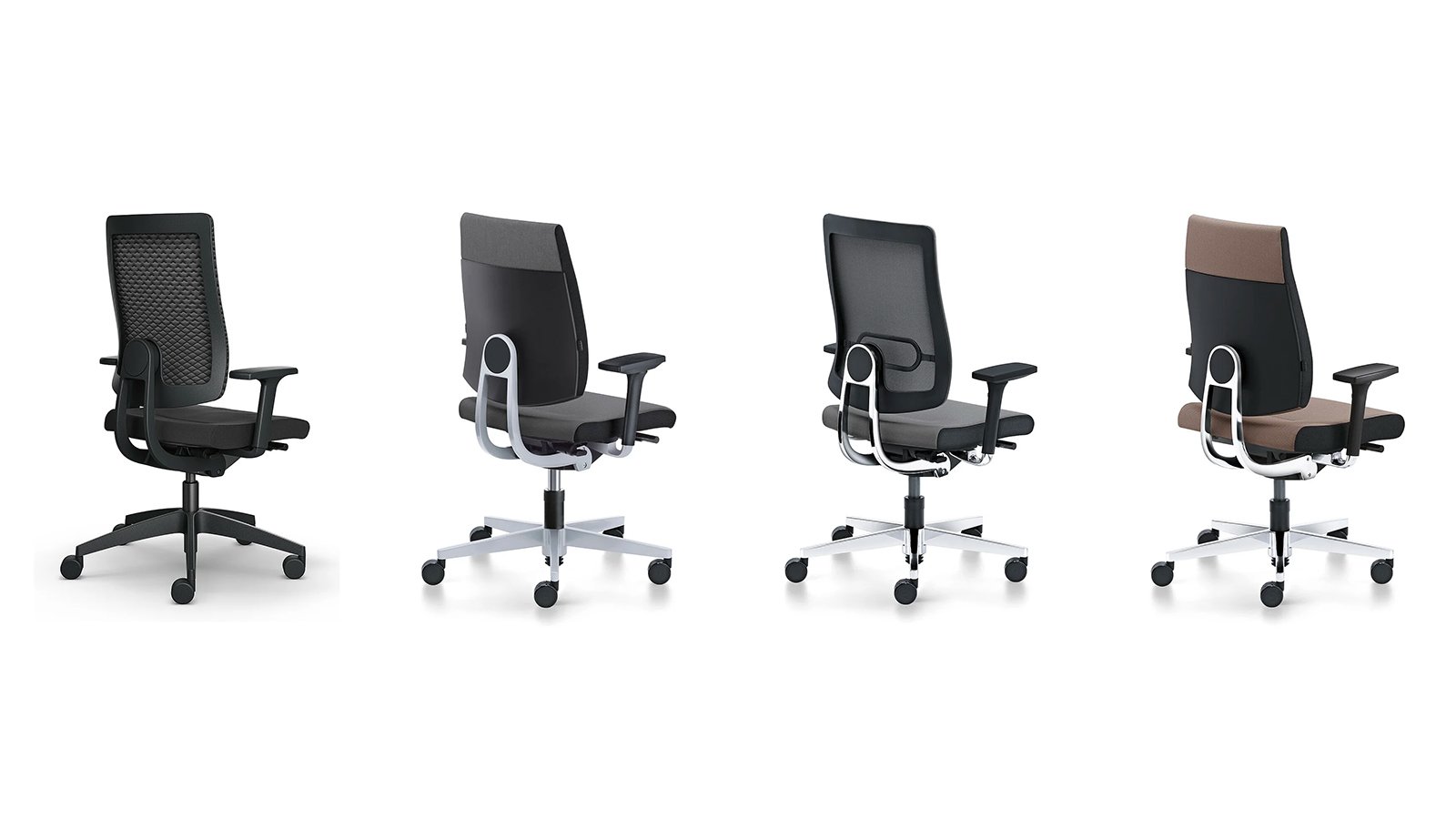
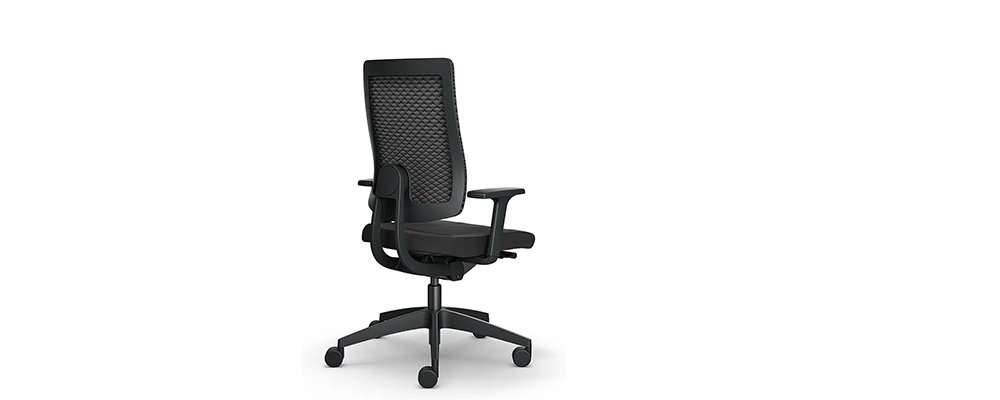
From across the room, the back of black dot air reads as mesh. Up close it is AIR KNIT, a three-dimensional knit with a quilted surface, and Sedus describes it as upholstery. It comes in light gray, blue, black, beige and olive green, tested to at least 50,000 Martindale. The seat can take a different fabric from the back. Everything else follows the family's ergonomic task seating: a patented back that moves 15° rearward and 8° to the side, 287 lb rated, Made in Germany.
On an open-plan floor, pick the version by how the back should feel. Want padding? Go for black dot, at 20.5, 23.2 or 24.4 in. Want a taut, breathable surface with a memory effect? That is net, a membrane in five colors of its own. Want the quilted hand? air. Seats that get no rest call for 24, in membrane or upholstered, rated to 331 lb. The redesigned generation, black dot next, was shown at Orgatec: three backs, two mechanisms (for desk sharing and for assigned desks), six membrane colors, and a patent-pending seat-depth adjustment with a range of 2.8 and 3.9 in.
Visitors sit on the four-leg model or the cantilever, each with a padded or a membrane finish; black dot and net also come in a counter build for high desks. La Mercanti holds the five knit colors up against the room's finishes and settles on one with you.

Let us know which finishes you'd like to explore
Sedus builds it for continuous use. The 24 is rated to 331 lb, against 287 lb on black dot, net and air. It also makes a sliding seat, 4D armrests and thicker padding standard. For 24-hour use, Sedus limits the fabrics to Phoenix, Pure and Umber plus leather, so the cover choice has to be made together with the chair.
Only the upholstered black dot does, at 20.5, 23.2 and 24.4 in. Net, air and 24 each have a single back height, the tallest one, while the new next is chosen by type of back: membrane, 3D or upholstered. That matters beyond proportion: the optional headrest belongs to high-back versions, so a low or medium back rules it out from the start. The mechanism underneath stays the same, which leaves stature, room and the headrest as the things to weigh.
The headrest adjusts 3.1 in in height and 25° in tilt, and Sedus ties it to reclining: when you lean back, it helps the muscles around the shoulders. It comes in black vinyl on fabric chairs and in the selected leather on leather chairs. The coat hook is not sold separately, since it comes with the headrest, so anyone wanting a place for a jacket on the chair is choosing both at once.
Sedus declares 99 % recyclability in its environmental sheets. On the bd-102 model, metals make up 66.6 % of the weight and plastics 31.4 %, with 32.38 % recycled content. Covers are not glued on and foams are free of CFCs. Figures vary by model, so bd-220 and bd-233 visitor chairs have their own metal shares, 46.2 % and 52.3 %, and the right sheet depends on the exact code.
Because height and width work differently. Height changes with a button, in a range of 7.9 to 11.8 in, whenever the user wants. Width is set with a Torx TX40 wrench, which makes it a setting to fix at installation and leave alone. If people need to change width themselves, the 4D armrests do that with a lever under the seat, and the pad also swivels 24° in and 12° out.
Sedus boils a good setup down to five moves at your own desk, in this order: seat height, full use of the seat, lumbar position, back tension and a backrest left free to move.
Start your black dot with height. To lower it, stay seated and pull the lever up; to raise it, stand and pull the same lever, then release at the right point. You want about 90° at the elbows with forearms on the desk, and about 90° at the knees with feet flat. If the desk is too high and cannot come down, add a footrest.
Use the whole seat, or your back never reaches the backrest. If your chair has the optional sliding seat, press and hold the finger plate, push the cushion to the position you want, then release and it locks. If it has seat tilt, take your weight off, pull the lever out, swivel it to the angle you need and let go.
Lean forward so the backrest is unloaded, then slide the lumbar support up or down. Sedus aims it at the L3 and L4 vertebrae, the stretch where your spine curves forward the most. On net and air with the depth option, turn the inlay until the pressure feels right, up to 0.4 in. Then sit back and check how it meets your lower back.
Pull out the handle, crank it clockwise for more resistance or counterclockwise for less, and push it back in. Test it by leaning back: the backrest should follow you without pushing and without giving way. The range runs from 450 to 1500 N, so this is the control to reset whenever the chair goes to someone of a different build.
For dynamic sitting, pull the lever up, release it and lean into the backrest, and it unlocks by itself. When you need a fixed position, lean back to the angle you want and press the lever down and release: it holds in one of 11 positions. Sedus recommends shifting often between forward and reclined postures rather than leaving the back locked all day.