Let's discuss your project
Trade terms for professionals and design studios
Let's discuss your project
Trade terms for professionals and design studios
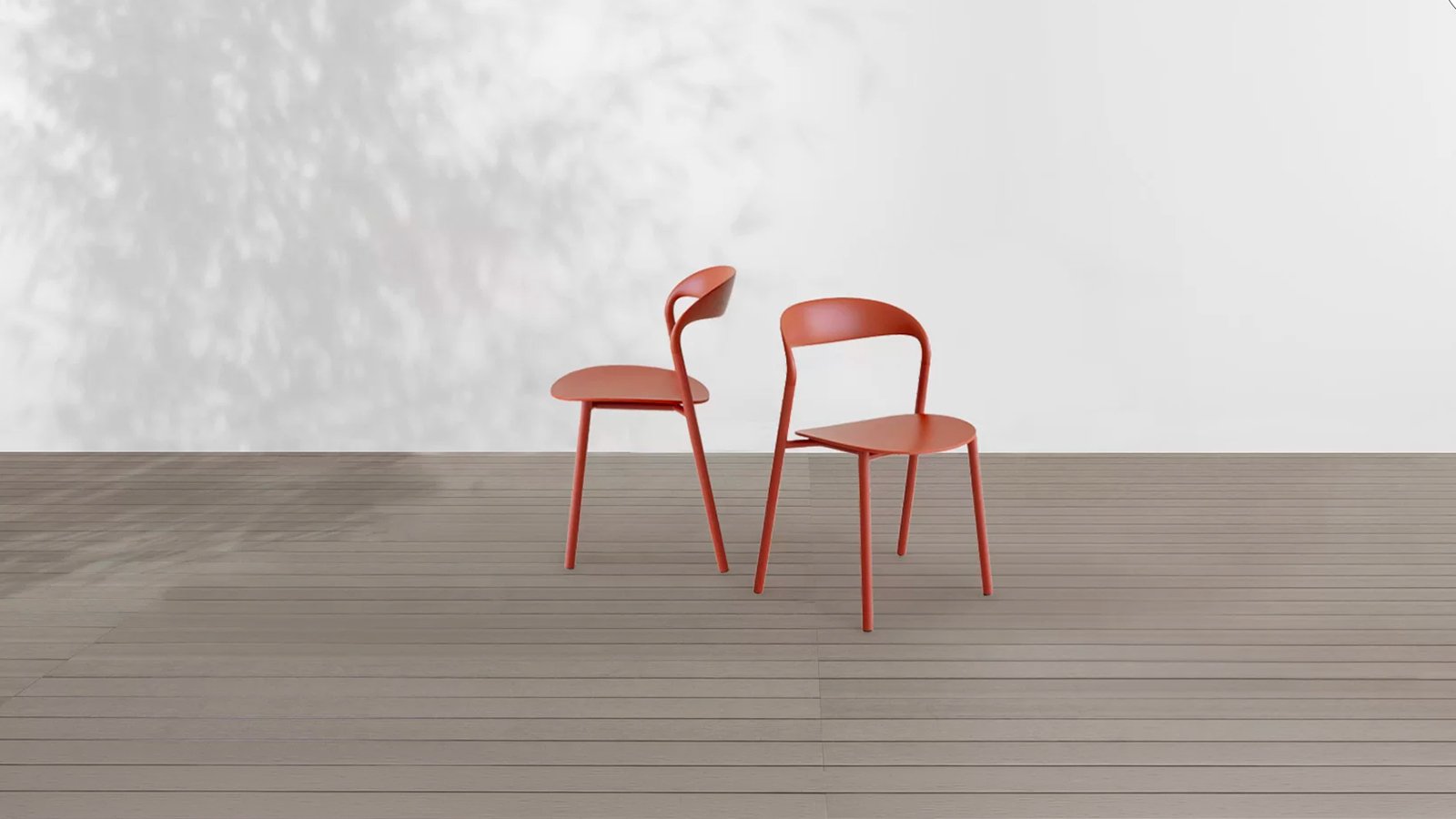
Lapalma labels its HAWI stools in the terms a US spec writer already uses: a counter stool with the seat at 25 5/8 inches and a bar stool at 29 1/2. Add the four-legged chair, whose seat sits at 18 1/8 inches for dining and meeting tables, and a single design covers the three working surfaces of an office. In the drawings only the legs grow, which is why it belongs with the Italian chairs with a signature.
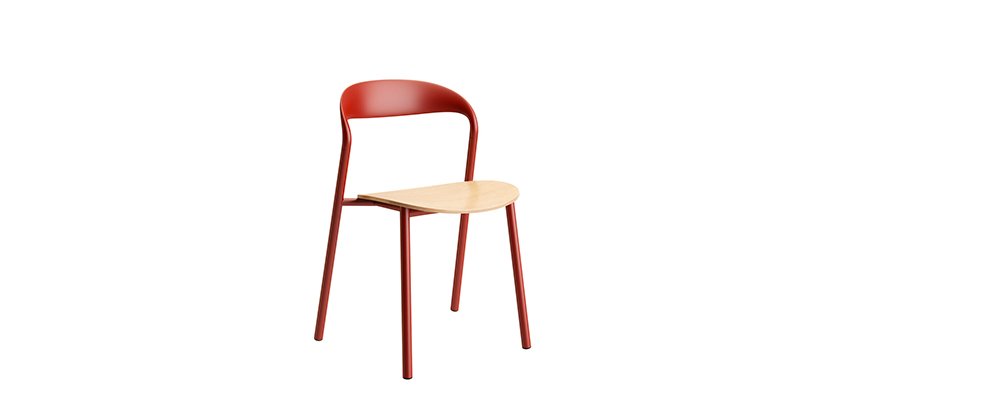
Mario Ferrarini designed it for Lapalma. The collection made its debut at the 2024 Salone del Mobile as a stacking chair, and the stool followed in 2025. On the chair and both fixed stools the rear leg climbs beyond the seat to become the backrest, a band that grows lighter as it climbs. The frame is powder-coated steel; seat and back are polypropylene, with the seat also offered in plywood, fabric or faux leather.
Five members make up the family: the stacking side chair, a swivel chair on a four-spoke base, and three Italian counter and bar stools, two fixed on four legs and a swivel one whose seat adjusts anywhere from 20 7/8 to 30 3/4 inches. For the patio, the side chair and the two fixed stools exist in an outdoor edition on stainless steel. We see it in offices where the café, the meeting table and the terrace should read as one project. La Mercanti puts a tape measure to the client's tables and counters before saying which of the heights goes where.

Let us know which finishes you'd like to explore
On the indoor chair and on the two four-legged stools, Lapalma specifies nylon glides with integrated felt. The outdoor edition stands on polyethylene glides instead. For a floor plan that mixes a wood-floored café with a paved patio, it helps to note on the schedule which edition goes where, since that also decides what meets the floor.
Yes. Lapalma declares EPD certification for the stackable chair and for the two four-legged stools, and lists it for the chair on the four-star swivel base as well. For a project collecting environmental documentation for a green building submittal, those four versions can go into the package with their declaration attached, alongside the recycled content of the polypropylene.
The S420 chair is tested to EN 1728:2012 and to EN 16139:2013 level 2, which Lapalma labels “Extreme”. For a US cafeteria or training room, that gives the specification a named test reference for the version people pull out, push back and stack most often, and it is the S420 that carries it.
Lapalma builds the side chair and both fixed stools in an outdoor edition too. The frame becomes AISI 304 stainless steel, powder-coated in polyester, the glides become polyethylene, and seat and back stay polypropylene with the same dimensions as the indoor pieces. A company with a roof terrace can carry the café design outside by specifying the outdoor edition.
Yes: for the two outdoor stools Lapalma offers a waterproof protective cover as an accessory, and lists both stools as stackable. On a terrace used mostly in the warm months, the stools can be stacked and covered whenever nobody is using them. We order the covers together with the stools, so the count matches from day one.
All five HAWI versions share polypropylene seats and backs, and the seat is where a project makes it its own. Five steps through the finishes Lapalma offers, from recycled polypropylene to the client's fabric.
Every HAWI starts from a seat and back in polypropylene, and Lapalma states that it is post-industrial recycled material, between 75 and 90 percent depending on the color. It is the finish we put where wiping down happens several times a day, such as a cafeteria or a coffee point.
The seat can also be multilayer plywood, in two finishes Lapalma calls blanched oak and open-pore black. The back stays polypropylene, so the outline does not change. We like the oak in pale rooms and the black under a dark frame, where it keeps the whole chair in one register.
Where people stay longer, the seat can be upholstered in fabric, with the collections grouped by Lapalma in categories A to D, or in Valencia faux leather. Picking the category early keeps the schedule readable, because the same fabric can then run across chairs and stools in one project.
Lapalma also accepts material supplied by the client, the COM route. It is the answer when an interior designer has already picked the textile for banquettes or drapery and wants the HAWI seats to pick it up exactly, so the furniture reads as part of the same interior scheme.
With the seat decided, the powder-coated frame comes in color names shared with the polypropylene, from black and white to brick, olive and pistachio. A wood or upholstered seat on a frame matching the back keeps the chair quiet; a contrasting frame makes the line from leg to back stand out.