Let's discuss your project
Trade terms for professionals and design studios
Let's discuss your project
Trade terms for professionals and design studios
Sedus writes it on the spec sheet of the bench line: the look recalls restaurant and café furniture, American Diner. The se:café high diner takes the idea literally, two high benches facing each other with a 55⅛ × 27½ in (1,400 × 700 mm) table in between, a padded screen at the back and, if you want it, a wireless charger flush in the tabletop. It is the booth every American knows from the road, engineered in Germany for an office floor and delivered with a GS safety mark.
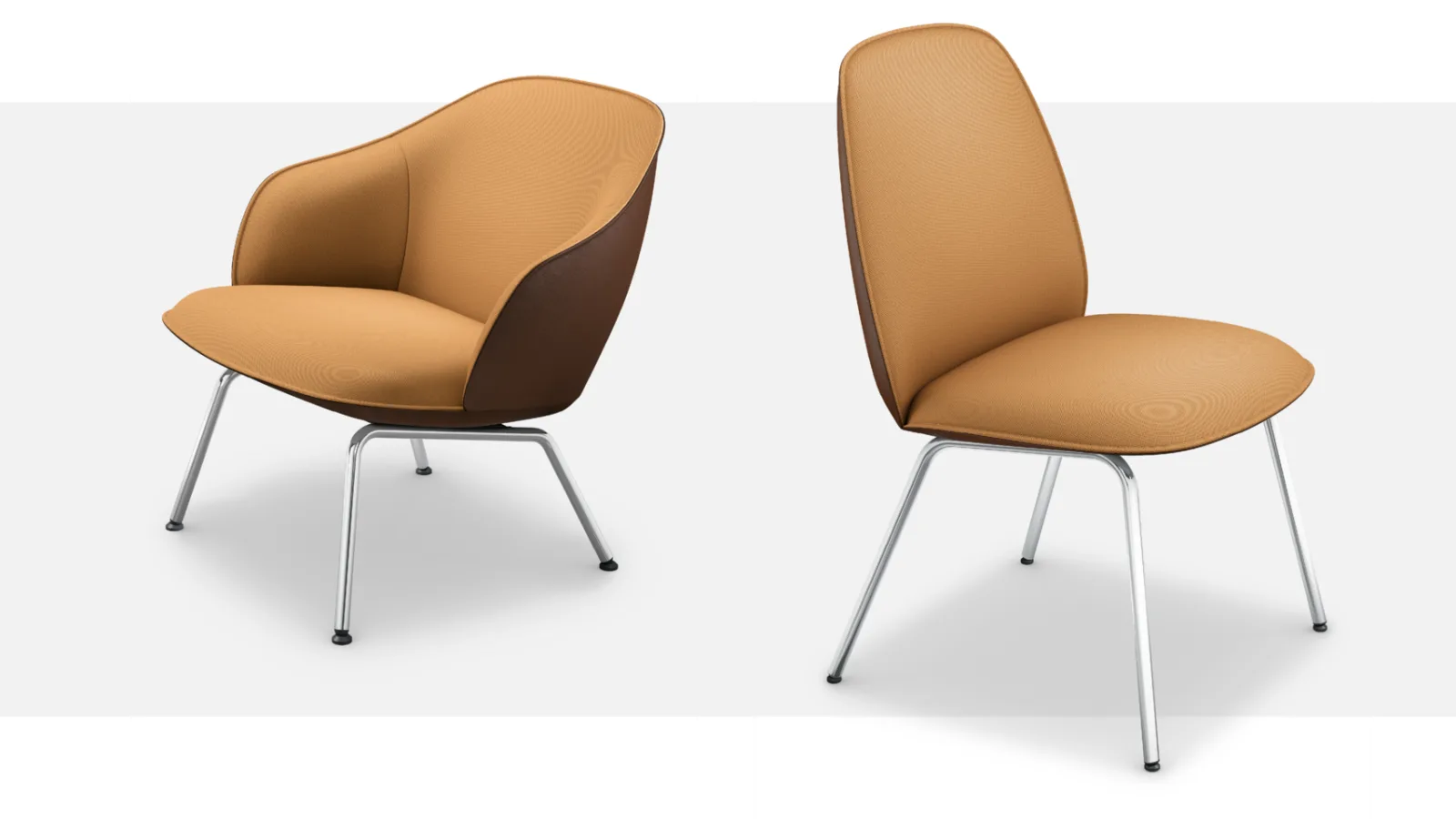
The booth is one of three lines. Konstantin Thomas also signed the backless bench, 63 in (1,600 mm) wide, and the solid wood café chair in beech or ash. Falk Blümler drew the upholstered se:café soft chair, the lounge chair and the stool. Put together they furnish the break area of a headquarters, and they double as guest chairs beside a reception desk, where visitors would rather sit at a table than in a row.
Sorted by seat height: the soft chair at 17½ in (445 mm) and the wooden chair for tables, the two lounge chairs lower, stool and high bench up at 24⅝ or 30¾ in (625 or 780 mm) like bar stools, the diner with its table at 35⅜ or 41⅜ in (900 or 1,050 mm). La Mercanti writes both heights, seat and table, into the order line before the booth is confirmed.

Let us know which finishes you'd like to explore
It depends on the frame under it. Sedus recommends the soft chair, lounge chair and stool for users up to 287 lb (130 kg) on the skid and 4-leg steel frames and up to 243 lb (110 kg) on the 4-leg wooden frame. The wooden chair is tested to 287 lb, and on the benches the limit applies per seat, again 287 lb on steel and 243 lb on wood.
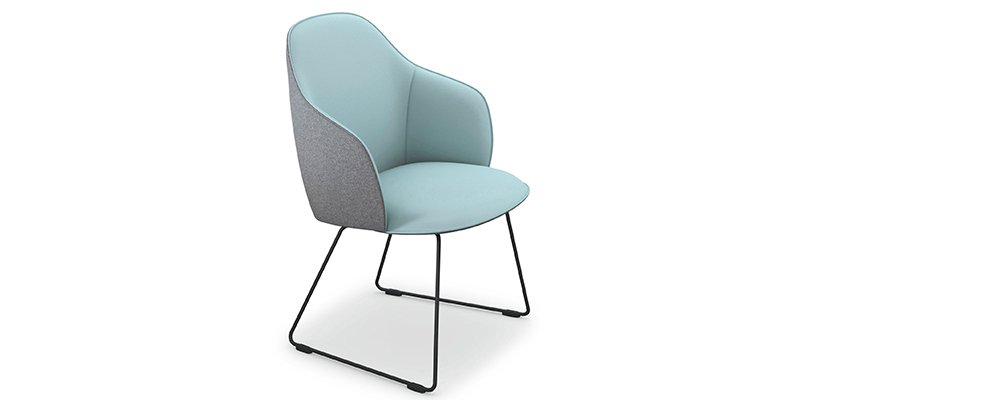
Three. A skid frame in curved ½ in (12 mm) tube, powder-coated or chromed; a 4-leg steel frame in ⅞ in (22 mm) tube; and a 4-leg wooden frame with an aluminum support and legs in beech or ash. The same three frames are offered on the lounge chair and the stool, and on the stool the foot rail follows the frame color on steel while it is always black on wood.
Yes, for two of its products. The soft chair and the wooden chair are GREENGUARD certified under UL 2818, tested to ANSI/BIFMA M7.1 and X7.1 in a seating environment with a ventilation rate of 24.8 m³ per hour, which is the reference a US project team usually asks for. Both certificates are downloadable from the product page.
Yes. On the se:café soft chair, lounge chair and stool the three surfaces are configured independently, and the perimeter seam is stitched in a thread that follows the cover color. Sedus sets one rule: color combinations stay within a single fabric collection, while leather and imitation leather can be mixed with each other and with any fabric.
Removable, and it goes on without tools. The cushion is about ⅝ in (17 mm) thick with ⅜ in (10 mm) of PUR foam and has an anti-slip underside, so it simply rests on the veneered seat and can be swapped at any time. It is offered in selected fabrics, leather and imitation leather; it is not made for the Viennese cane version.
On se:café the cover is not one choice but three, and the order form has to say which one goes where. Five steps starting from what the eye sees first.
On a se:café soft chair the outer back is what a visitor sees walking in; on a bench the eye lands on the upper cushion. Name that cover first, in the collection and color the room needs, and let the other surfaces follow it.
Sedus allows color combinations only within a single collection, so the second step is to lock the collection before touching colors. Leather and imitation leather are the exception: they combine with each other and with any fabric on every se:café product.
The soft line lets the seat, the inside of the back and its outside differ; the high bench pairs the upper seat with the inner back and the lower seat with the outer back. Write the surface names on the order, not just the color codes.
The taut, formal finish is standard on se:café; the pleated, informal finish is optional and cannot be combined with leather, imitation leather or SILVERTEX. If the project wants pleats, the fabric decision in step two has already ruled those covers out.
The double topstitched seam takes a thread in the cover color automatically. What still needs a line on the order is the frame finish, chosen from eight steel colors or three woods, plus the flame-retardant version with One or Step fabrics where the building code asks for it. La Mercanti sends the physical swatches before the order is placed.