What did you have in mind?
Trade terms for professionals and design studios
What did you have in mind?
Trade terms for professionals and design studios
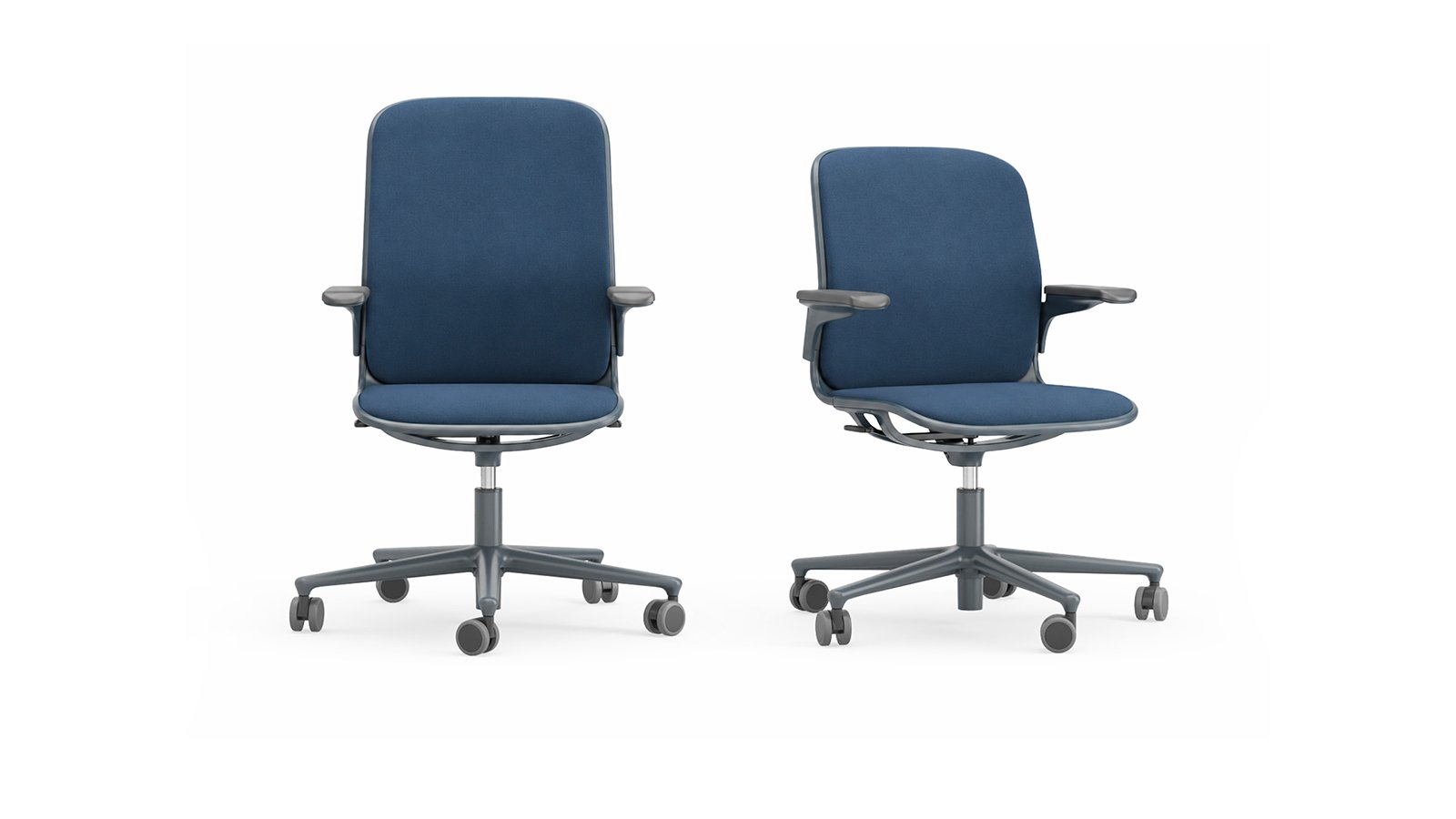
Most executive chairs sell their mechanism. ICF sells the opposite, and puts it in writing: the Cloud Chair stands apart from the highly technological models and bets on simplicity aimed at well-being. A sitter finds a lever on the right for height, one on the left for the tilt lock and a sleeve between seat and back for tension; nothing else to learn. Among Italian-made executive chairs that is a position, not a gap.
Simplicity here is a construction. A perimeter of extruded aluminum carries two suspended membranes in nylon mesh, elastic mesh or a fabric-or-leather sandwich; the membrane adapts to the body and moves with the synchronized tilt. Sottsass Associati signed it in 1998; the sheet adds that seat and back angles follow modern ergonomic principles for a balanced swing.
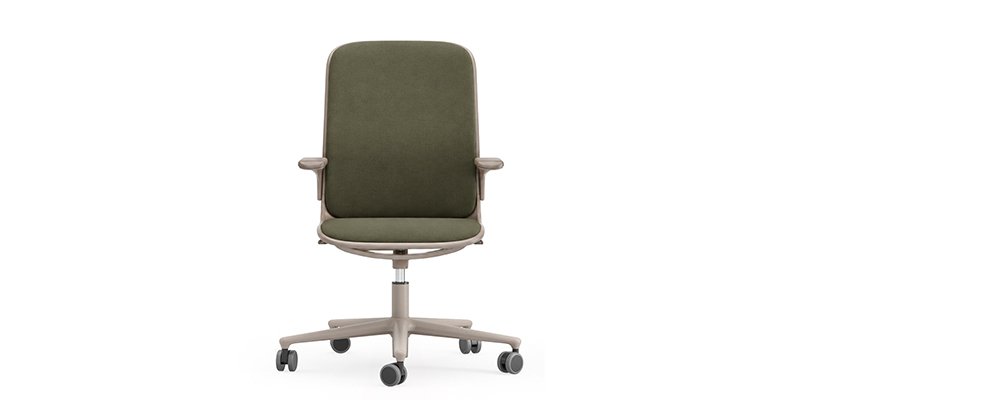
Three back heights carry the same frame: low, 32 5/8 to 37 3/4 in overall; medium, 35 3/8 to 40 1/2 in; high, 39 3/8 to 44 1/2 in. Each comes as Task, open arms with a polyurethane pad for operative and executive desks, or Meeting, closed aluminum arms for conference rooms and visitors, on four-star glides or five-star casters, from the executive suite environment to the guest side of the desk. La Mercanti gives the buyer the complete list of what a sitter will ever touch on this chair, two levers and one sleeve, so that the simplicity reads as the design and not as something left out.

Let us know which finishes you'd like to explore
Three families. Polished, code 47; chrome-plated, code 55; and powder-coated in seven colors, among them 111 Warm black, 100 white and 070 Soft grey. Frame and arms share the finish, and the base is polished or chrome-plated to match. One line from the care sheet is worth keeping: chrome holds its shine over the years, while polished aluminum oxidizes naturally. For a chair that will live in the same corner office for a decade, that is the real difference between the two bright finishes.
No, and that is the point of the frame. The extruded aluminum perimeter holds two separate membranes, one for the seat and one for the back, each suspended in its own section of the frame. Both are in the same family of materials, nylon mesh, elastic mesh, or a fabric-or-leather laminate with a technical core, but they can be ordered in different categories, mesh behind and fabric beneath for instance. Each membrane stays suspended, so neither is a cushion on a board.
From floor to the top of the back, with the gas lift fully down and fully up: the low back runs 32 5/8 to 37 3/4 in, the medium back 35 3/8 to 40 1/2 in, the high back 39 3/8 to 44 1/2 in. Width and depth do not move with the back height; only the arm version changes the width. The three heights share frame, mechanism and arms, so a floor can mix them without the row looking like three different chairs.
Two sets of rooms, read off the arm. The Task version is the one ICF declares for operative desks and executive desks, and the user manual covers chairs for screen-based work in a class of their own. The Meeting version is declared for conference rooms and visitor seating; the same manual files visitor and community seating under its own references. In an American project that means one reference can cover the private office, the conference room and the guest side of the desk.
Yes, in one form only. The all-mesh Cloud is coded XX and comes exclusively with the elastic mesh, the two-tone membrane that ICF describes as fully breathable with air circulation; the catalogue footnote says so in as many words. The nylon mesh does not make an all-mesh chair. If the back is mesh and the seat is upholstered, the code changes to BX, CX, FX or EX according to the seat covering, and the seat and back then come from two different cards.
Every Cloud Chair rests on one of two bases, and each base meets the floor in its own way. Five steps run from the floor material to the spare set, using only what ICF declares for the chair.
Start where the Cloud Chair will live, not with the chair. Hard floors, which ICF lists as marble, parquet and tiles in general, are the case the stock caster is built for. Carpet is a different case, and the chair has an answer for it, but only if the floor is named on the order rather than discovered on delivery day.
The five-star base rolls on casters of 2 1/2 in diameter with a soft tread, the compound that grips hard surfaces without marking them. They carry an automatic locking brake to EN 12529:2001, the norm ICF names for the caster, so an empty chair is not the one that rolls away from a desk in a conference room.
On carpet a soft tread sinks and drags. ICF offers the same caster with a hard tread on request, and the request belongs on the order rather than in a complaint afterwards. One line, hard tread for carpet, is enough; the rest of the chair, base included, stays as it is.
The four-star base does not roll at all. It rests on glides of 1 1/2 in in black nylon with a soft rubber center, which is what keeps a conference table free of chairs drifting off their marks. Remember what travels with that base: the tilt swings freely but has no lock, because glides and the non-locking tilt are the pair ICF ties together under the ending 08.
Two accessory references exist for the floor: SAR5, a set of five casters for the Cloud Chair in grey and black, and SAF5, a set of five black glides. Writing one of them on the purchase order means a building that changes its floor finish in three years does not have to change its chairs, and a facility manager has a reference to quote instead of a description.