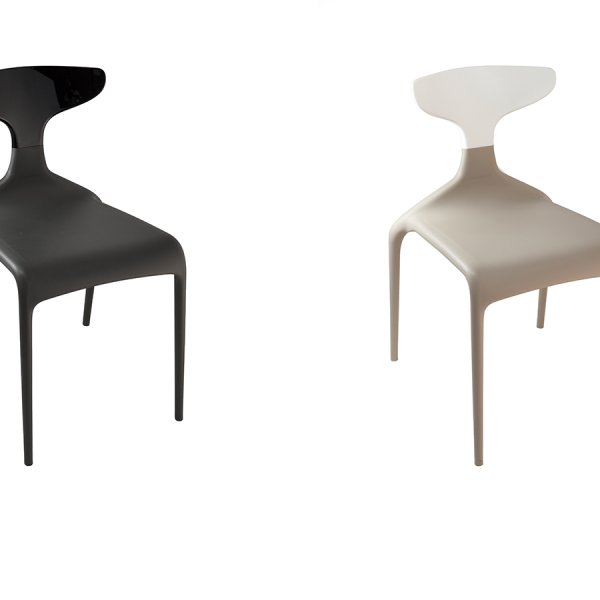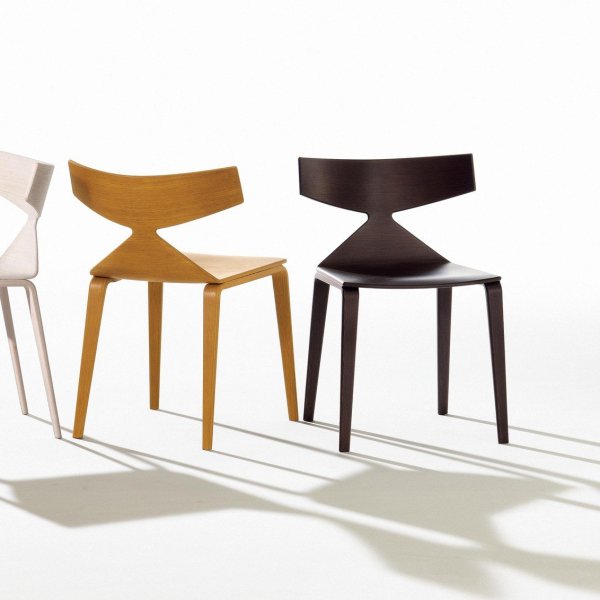
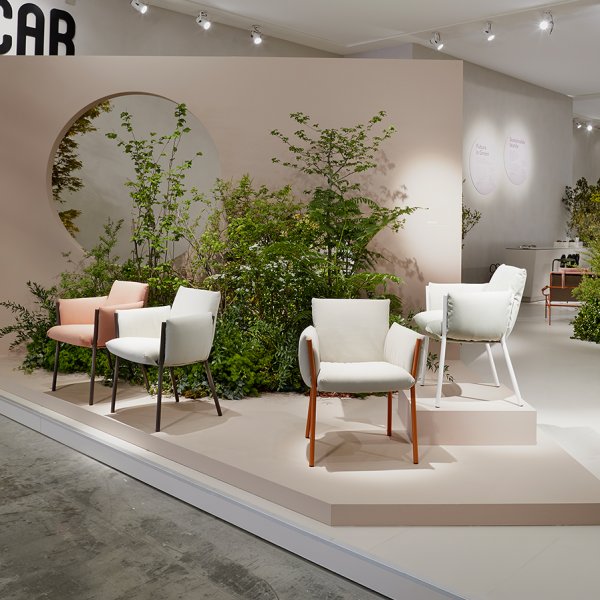
Brezza
$ 2,309
Every project has one seat that outworks the rest of the furniture combined: the chair guests photograph in the lobby, the one a client mentions on the way out. Italian designer chairs hold that role because they were drawn to hold it — pieces developed with named designers by manufacturers who treat a chair as a small work of architecture. Specifying one is not an exercise in reciting icons. It is reading the scrutiny each room will apply — from how far, by whom, for how many years — and choosing the piece built to pass it.
The selection curated here covers what a real American project needs: sculptural lounge chairs for statement corners, dining and side chairs built for hospitality service, and families from producers like Pedrali that carry one design language across four-leg, sled, swivel and stool versions. That family depth separates a chair you can build a project on from a one-off that photographs beautifully and coordinates with nothing. Contract construction underneath, in every case — these are pieces engineered for the Friday-night dining room as much as the design-fair booth, with the finish quality that survives forensic attention at arm’s length.
La Mercanti supports architects, designers and owners across the United States with spec sheets, finish samples and white-glove delivery — signature Italian seating, specified without guesswork.
Work the photo back to a producer before you work it into a budget. Most chairs that stop an American client mid-scroll come from a small circle of Italian manufacturers with named designers, and the piece almost always exists as a documented collection: an official model name, a designer attribution, a finish card and, crucially, a family of versions. Identify the producer, then request the contract documentation for the US market — the same silhouette often ships in more than one build, and hospitality service needs the contract one. From there the reference becomes a real spec line: producer, model, base type, shell material, finish code, upholstery grade.
The step teams skip is checking the family. The lobby chair in the photo may have the sled-base, counter-stool and outdoor siblings that let one design language carry the whole project. Translate the image into producer-plus-model-plus-finish before pricing anything, or procurement will translate it into the nearest lookalike for you.
It survives if it was engineered as a contract product, and Italian designer seating usually was — the distinction between 'design piece' and 'commercial piece' barely exists in Italy, where the same factories supply museums and 300-cover restaurants. What to verify is concrete: contract test documentation against the ANSI/BIFMA family of standards for the American market, frame joinery that is welded or mechanically fixed rather than glued, seat pads that replace without reupholstering the shell, and a stacking or ganging option if the room turns over for events. Weight matters too — a dining chair a server can move with one hand gets treated better for a decade.
The honest tell is the producer’s client list, which in Italy is public pride: manufacturers like Pedrali build the same chairs for flagship hospitality that they photograph for design fairs. Ask for the test reports with the first quote. A supplier who has them sends them the same day.
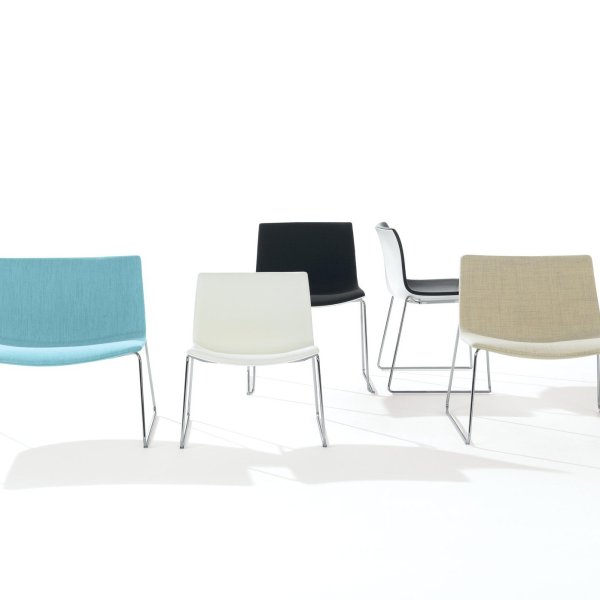
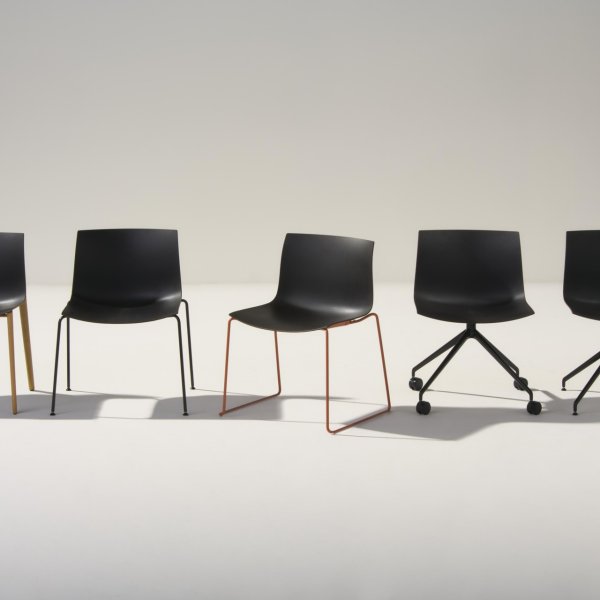
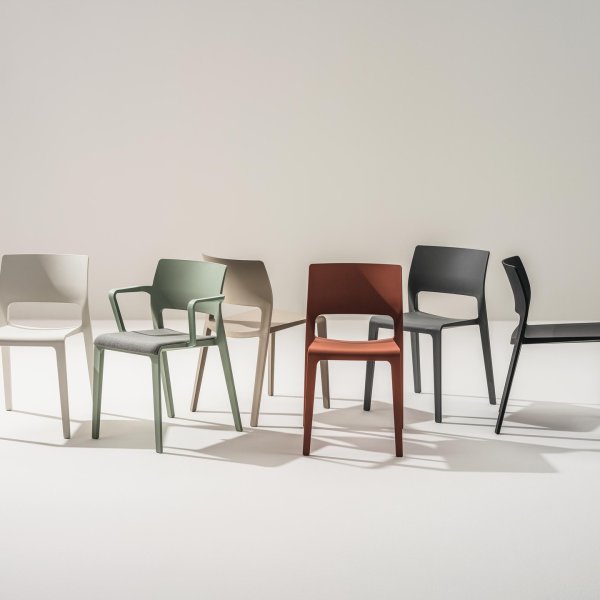
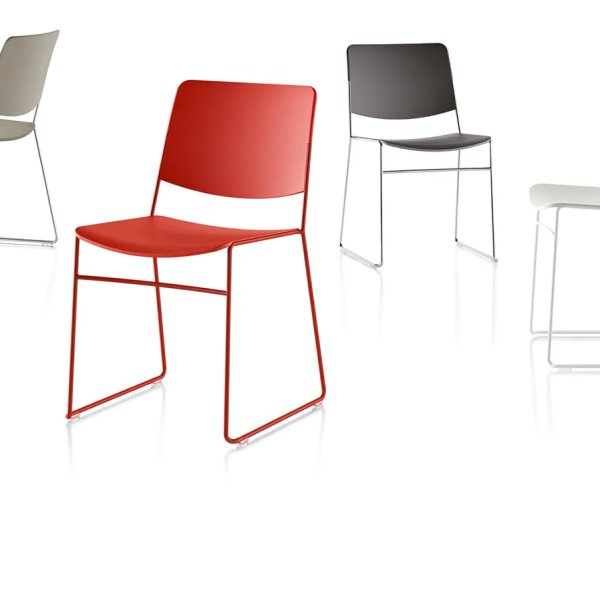
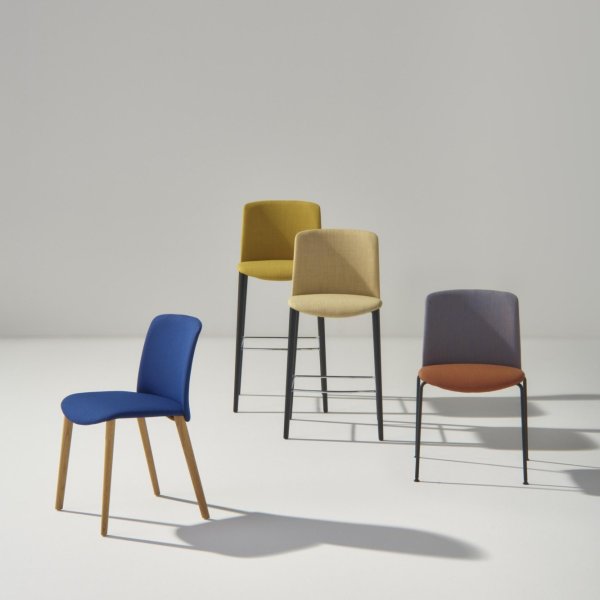
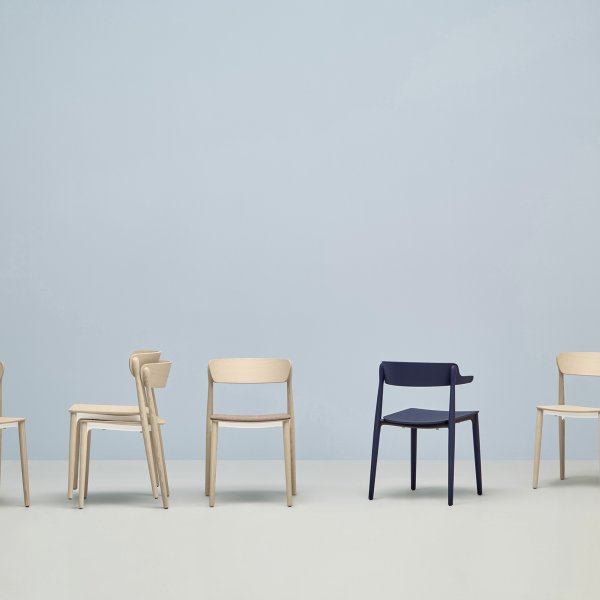
Work in families and assign versions by role. The strong Italian collections carry one design language across a dozen builds — lounge and side versions; four-leg, sled, swivel and stool bases; bare shell through fully tailored — which lets a project repeat its point of view without repeating its objects. The expressive lounge build takes the space where the interior speaks loudest; the restrained siblings carry the dining floor and the huddle rooms at volume; the counter-height version ties the café into the same scheme. Coherence lives in the shared geometry of shell and leg, not in literal repetition, and two hundred seats drawn from one family read as a decision where two hundred sourced lookalikes read as a spreadsheet.
The payoff is operational as much as visual: one producer relationship, one finish palette to control, one spare-parts story for the decade ahead. Map the count by version before pricing — which rooms take the expressive build, which take the workhorses — and the project scales without going quiet or loud in the wrong places.
It works when the family was designed as a system, and that is the thing to verify collection by collection. The strong Italian programs carry one shell across four-leg, sled, swivel and counter-height bases, several upholstery levels, and a true outdoor build — meaning UV-stable polypropylene or treated timber, drainage in the seat geometry and hardware that shrugs off humidity, rather than the indoor shell carried through a patio door. When the terrace version is a real outdoor product, the project gains something rare: continuity from the dining room to the rooftop bar that guests read as intent, never as repetition.
Confirm two details before committing the whole schedule to one family: that the outdoor finish palette overlaps the indoor one closely enough to read as related, and that every version you need is in current production rather than available on request. A family that covers three of your four rooms is a compromise wearing a system’s name.
A designer chair enters an American project as an image and survives it as a specification. Between those two states, most of the value gets won or lost: the wrong version ordered, the family that didn't cover the terrace, the substitution nobody caught until install week. This is the four-part brief worth building before a single chair is priced — it takes an afternoon and protects the design intent all the way to the punch list.
Before any shopping, write one line per room stating what the seating is for dramatically rather than functionally: this lobby needs one commanding presence; this dining room needs sixty seats that support the architecture without competing with it; this founder’s office needs a single lounge chair that signals taste privately. The brief comes first because it prevents the most common failure in statement interiors — a collection of individually beautiful chairs assembled into visual noise.
Make each line specific enough to act on: who reads this seating, from what distance, in what light, and for how long they stay in it. A lobby piece is read from thirty feet in ten seconds; the chair opposite a founder’s desk is studied up close for an hour; a dining seat is judged by how gracefully it disappears while taking real service. The role decides silhouette, material and finish level before taste enters the conversation. And the supporting seats deserve the most attention, not the least, because there are more of them and people touch them more often — a great supporting chair still carries real quality in the joinery, the finish, the way it takes weight; it simply holds that quality quietly instead of demanding the first glance.
Write the briefs into the design narrative the client sees. When the owner can read what each room’s seating was asked to do, the budget conversation about the expensive commissions gets dramatically easier.
The reference image is one version of what is usually a system. Before committing, pull the full collection documentation and check what the family actually contains: four-leg, sled, swivel and counter-height bases; side and lounge versions; upholstery levels from bare shell to fully tailored; and a true outdoor build if the project has a terrace — UV-stable materials and weather-rated construction, never the indoor shell wheeled through a patio door. Strong Italian programs from producers like Pedrali or Lapalma routinely carry one design language across a dozen versions, which is what lets a single collection serve the restaurant floor, the private dining room and the rooftop without repeating itself.
Check production status while you are in the documents: every version you need should be in current production. 'Available on request' is a phrase that means a scheduling conversation you do not want during install week.
A chair without family depth can still be the protagonist. It just cannot be the system — budget it as a single sculptural purchase and build the chorus from a collection that scales.
Turn the choice into a specification that survives other hands. The line item should carry producer, official model name, designer attribution, base type, shell material, finish code and upholstery grade — precision that does two jobs at once: it makes the order unambiguous, and it makes substitution visible, because a lookalike cannot match a fully described original on paper. Attach the contract test documentation for the American market, the ANSI/BIFMA family, requested from the supplier at quoting stage rather than after award.
Insist on physical samples for anything guests will touch: the actual finish on the actual timber, the upholstery in the specified grade, ideally one complete chair delivered to the site. Finishes read differently under a project’s real lighting than in a catalog scan, and putting the client’s most skeptical stakeholder in the sample chair through a full agenda item has killed more bad seating decisions than any rendering review ever has.
For hospitality quantities, get the sample chair approved formally and recorded as the control standard. When sixty chairs arrive on the dock, the question 'does this match' needs an object to point at.
Hospitality seating is a fleet, and fleets take casualties. Write attic stock into the order — a sensible reserve of complete chairs plus replaceable seat pads in the specified upholstery — so a damaged unit comes out of the back room in the correct finish the same week, instead of waiting on production. Confirm with the producer how finish and upholstery continuity is handled on reorders: established Italian manufacturers hold their specifications stable across production runs, which is exactly why the original spec package matters — it is the document a reorder gets checked against two years later.
Photograph and file the approved installation. Finishes age, fabrics get discontinued, and the maintenance team that inherits the space was not in the room when decisions were made. A one-page seating register — model, finish codes, fabric references, supplier contact — turns every future repair into a ten-minute task.
This is unglamorous work, and it is what separates interiors that still look specified in year eight from the ones quietly diluted by every replacement cycle. The chair was chosen to be remembered; the paperwork is what keeps it recognizable.